Cultivation Methods and Key Technical Points for Edible Pumpkin Shoots
How are edible pumpkin shoots cultivated? Please give some guidance. During cultivation, pumpkins are generally not treated with pesticides, and their young fruit, mature fruit, flowers, leaf stalks, and tender shoots can all be eaten as vegetables. Stir-frying the tender shoots in particular yields a mild, crisp, and tender texture with a fresh, delicious flavor, truly an excellent vegetable that is highly favored by consumers. Yuan'an, Hubei Province...
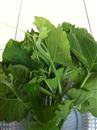
How are edible pumpkin shoots cultivated? Please give some guidance.
During cultivation, pumpkins are generally not treated with pesticides, and their young fruit, mature fruit, flowers, leaf stalks, and tender shoots can all be eaten as vegetables. Stir-frying the tender shoots in particular yields a mild, crisp, and tender texture with a fresh, delicious flavor, truly an excellent vegetable that is highly favored by consumers. In recent years, vegetable growers in Yuan'an County, Hubei Province, have planted pumpkins in open fields and greenhouses and harvested the tender shoots for sale on the market, achieving relatively high economic returns. Compared with other leafy vegetables, this cultivation method has the advantages of low input, short time, and good returns. When cultivating pumpkins to harvest tender shoots, pay attention to the following points:
Land preparation and fertilization. Use wide-row drilling. Apply sufficient basal fertilizer all at once, with 2000--2500 kg of decomposed organic fertilizer and 50 kg of compound fertilizer per mu. Use deep furrows and high beds, with a bed width of 2 m and a furrow depth of 20 cm. The soil should maintain a certain level of moisture at sowing.
Sowing. Choose local varieties with vigorous vine growth, with a seeding rate of about 3 kg per mu, sown in early April. Before sowing, first sun-dry the seeds for 1--2 days, remove shriveled and deformed seeds, soak the seeds until they absorb enough water, then remove them and soak them in 50°C water for another 1--2 hours, and sow after drying. Drill the treated seeds and cover them with about 2 cm of fine soil. After emergence, thin the seedlings and set the plants at a spacing of 20 cm.
Field management. To enhance heat and moisture retention, cover with agricultural film or rice straw after direct sowing to promote seed emergence. After emergence, apply one additional seedling-promoting fertilizer, while thinning the seedlings and loosening the soil by cultivating. When 3--4 leaves have formed, finalize the stand at a spacing of 20 cm. The thinned seedlings can be used for transplanting or eating. After the transplanted seedlings recover, apply seedling fertilizer in a timely manner. Pay attention to drainage on rainy days to prevent waterlogging, and keep the soil in the beds consistently moist. When the leaves reach 6--9 and the vines reach 30--40 cm in length, the first harvest can be carried out. After the wounds on the harvested plants heal and new leaves grow, apply another seedling-promoting fertilizer to speed up the growth of branches and vines. After that, apply fertilizer and water once after each harvest, using dilute manure water or 1% urea solution as a top dressing.
Harvesting for market. When the main vine has grown to 6--9 leaves, promptly pick the tender shoots, leaving only 4 leaves at the base to promote the growth of new shoots from leaf buds. When the new shoots grow beyond 30 cm, leave 1--2 axillary buds and continue harvesting. A single pumpkin vine can be harvested repeatedly for tender shoots, and in summer and autumn, unopened flowers and flower stalks can also be harvested for market. If planted at high density, they can be harvested all at once; if transplanted, they can be harvested in batches.
Click to get more pumpkin cultivation techniques
Click to get more vegetable cultivation techniques