What causes yellowing leaves in rice?
Why do rice leaves turn yellow? Please explain. Yellowing of rice leaves is a common phenomenon, and its symptoms mainly fall into the following situations, which should be carefully identified and treated accordingly. 1. Toxic yellowing ① Hydrogen sulfide poisoning. The root system turns black and has a rotten egg smell, with few and thin white roots; the old leaves at the base appear yellow...
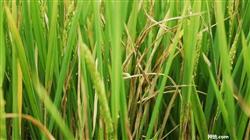
Why do rice leaves turn yellow? Please explain
Yellowing of rice leaves is a common phenomenon, and its symptoms mainly fall into the following situations, which should be carefully identified and treated accordingly.
1. Toxic yellowing
① Hydrogen sulfide poisoning. The root system turns black and has a rotten egg smell, with few and thin white roots; the old leaves at the base take on a yellow-brown color, the leaf tips wither and yellow, then the old leaves die, leaving only one or two green new leaves at the top.
② Organic acid poisoning. The rice plant's root system shrinks, few new roots develop, the root epidermis sloughs off, the leaf color turns yellow, or the plant becomes stunted; in severe cases the lower leaves wither and yellow and die. Any paddy field suffering from toxic yellowing should be drained and sun-dried immediately to improve soil permeability and increase oxygen to expel toxins. Combined with intertillage, apply quick-acting nitrogen, phosphorus and potassium fertilizers when re-flooding after sun-drying the field, to improve the nutritional conditions of the rice plants. In paddy fields with excessive organic acids, soil amendments such as quicklime can be applied to neutralize the acidity and eliminate harmful substances.
2. Nutrient deficiency yellowing
① Nitrogen deficiency yellowing. It mainly starts from the tips of the old leaves turning yellow, then gradually spreads from the stem leaves to the heart leaf, and finally develops until the whole plant turns yellow-green. In severe cases, the leaf tips and leaf margins wither and yellow inward, the seedlings grow slowly, and from a distance the seedlings look entirely yellow. When such symptoms appear, quick-acting nitrogen fertilizers such as urea and ammonium bicarbonate should be applied in time.
② Potassium deficiency yellowing. It mainly occurs in high-yield paddy fields where large amounts of nitrogen and phosphorus have been applied. In the early stage it shows as slow growth, short plant shape, few tillers, upright leaves, and the top leaves clustered. The new leaves are dark green and lusterless; the tips of the lower old leaves turn yellow first, with reddish-brown spots of varying sizes, which then spread along the leaf veins toward the base, and finally the whole leaf turns reddish-brown, some even withering and dying, looking from a distance as if scorched by fire. This is the typical potassium deficiency red blight. When such symptoms appear, drain the field immediately, use intermittent irrigation, and apply potassium fertilizer in time (such as potassium chloride, plant ash, etc.).
③ Zinc deficiency yellowing. It mainly occurs in cold-waterlogged fields in mountainous areas, and the peak incidence generally appears about 20 days after transplanting. The midrib at the leaf base yellows first, then becomes yellow-red or reddish-brown spots, the leaves become narrower, the veins become brittle and break easily, the leaves age relatively quickly, new leaves grow slowly and are narrow, and the base and midrib lose green and turn brown. It can be remedied with fertilizers such as zinc sulfate, for example by spraying 0.1% zinc sulfate on the foliage several times, which works very well.
3. Yellowing caused by fertilizer damage or pesticide damage. Improper application of fertilizers such as ammonia water and ammonium bicarbonate, as well as pesticides, can cause toxic yellowing, causing blocks and patches of rice leaves to turn bright yellow or golden yellow, and sometimes the yellow leaves have scorched spots. When pesticide damage is severe, spots appear on the leaves, with loss of green, scorching or withering, or yellowing, and some plants even die entirely. If discovered in time, deep water can be immediately introduced into the field, or clean water can be sprayed on the rice plants, which can reduce the degree of pesticide damage. In addition, after fertilizer damage or pesticide damage occurs, quick-acting fertilizers such as urea should be applied to strengthen crop growth and enhance resistance.
4. Yellowing caused by disease infection
① Yellow leaves caused by bacterial leaf blight. It generally appears first at the leaf tip or leaf margin, first producing yellow-green or dark green spots, which then spread along the leaf veins into streaks, appearing grayish-white, with a clear boundary between the diseased part and the healthy part, and the lesions often bear yellow-brown "bacterial ooze".
② Yellow leaves caused by bacterial leaf streak. The heart leaf withers and dies yellow-brown, resembling false dead-heart seedlings; there are brown streaks on the leaves and leaf sheaths, and after breaking the midrib on the lesions, yellow "bacterial ooze" can be seen. When infected in the later stage, the leaf top to more than half of the leaf withers and yellows, looking fiery red from a distance.
③ Yellow leaves caused by rice bacterial foot rot. The heart leaf wilts and curls, and some have already turned yellow and died, resembling the dead-heart seedlings caused by the damage of the striped stem borer and the yellow stem borer, but the stem base often turns black, the stem nodes become hard and brittle, break easily, and have a putrid smell.
The yellow leaves caused by bacterial leaf blight, bacterial leaf streak and bacterial foot rot are all caused by infection with bacterial diseases. If pesticides such as carbendazim and Yeqingshuang are selected for timely control, and the field is sun-dried at the appropriate time to improve soil permeability and enhance the rice's own resistance. Applying fertilizer once after the disease has been brought under control is helpful for controlling its spread.
5. Physiological premature aging. Yellow leaves spread from bottom to top, and the diseased leaves mostly appear orange-yellow with a certain metallic luster, occurring in patches or throughout the field, with no lesions and no bacterial ooze on the yellow leaves. Physiological premature aging yellow leaves are a physiological yellowing phenomenon caused by the decline of root activity in the late growth stage of rice, or by dehydration or nutrient depletion, and some are related to the variety. The control methods are to select rice varieties resistant to premature aging, prevent the paddy field from drying out too early in the late stage, and maintain moist irrigation, etc.
Click to get a massive amount of rice cultivation techniques
Click to get a massive amount of grain cultivation techniques