How to cultivate rice well? Detailed explanation of key planting techniques
How to cultivate rice well? If you want to grow rice well, you can refer to the following methods: 1. Field plot selection. Choose a blank field with smooth drainage and irrigation and no water leakage. 2. Timely and even sowing. The sowing period is late April. For hybrid rice, sow 1 kg per mu. Sow when 80% of the seeds have broken their hulls and turned white. Divide into sections and weigh before even sowing. After sowing, press the seeds into the soil so that no grains are exposed, to help increase the emergence rate. At the three-to-four-leaf stage of the seedlings, do a good job of thinning dense areas and filling sparse areas.
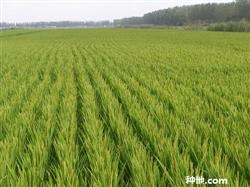
How to cultivate rice well? Please advise
If you want to grow rice well, you can refer to the following methods:
1. Field plot selection. Choose a blank field with smooth drainage and irrigation and no water leakage.
2. Timely and even sowing. The sowing period is late April. For hybrid rice, sow 1 kg per mu. Sow when 80% of the seeds have broken their hulls and turned white. Divide into sections and weigh before even sowing. After sowing, press the seeds into the soil so that no grains are exposed, to help increase the emergence rate. At the three-to-four-leaf stage of the seedlings, do a good job of thinning dense areas and filling sparse areas.
3. Level the field surface. The main field must be leveled. Divide it into sections 3 m wide and open furrows, with furrow width 20 cm and furrow depth 15 cm. After dividing into sections, use a flat board to drag and level the section surface, then sow after it has settled.
4. Reasonable fertilization. For direct-seeded rice, never apply nitrogen fertilizer in a one-sided way. The fertilization principle is "eat small meals more often." Apply 35 kg of 40% compound fertilizer per mu as base fertilizer. Apply 7.5 kg of potassium chloride per mu as tillering fertilizer, and later apply panicle and grain fertilizer according to seedling condition.
5. Chemical weed control. 1. Pre-sowing weed control. For fields with many weeds, 7-10 days before sowing, on a sunny day when the field has no water, use 1 kg of 10% glyphosate or 200 mL of 41% Roundup per mu, mixed with 50 kg of water and spray, or when preparing the field, combine with base fertilizer application and mix in 2 packets of bensulfuron-methyl per mu, applying before harrowing the field. This can effectively control many broadleaf weeds such as arrowhead, monochoria, and Ammannia. 2. Post-sowing application. At the two-leaf-one-heart stage of the seedlings, use six packets (6 g per packet) of the Yelao brand "Yangbao" per mu. Mix each packet of "Yangbao" with 10-15 kg of water and spray evenly. Before application, the section surface should be moist with no obvious standing water. On the second day after application, water must be let back into the field and a thin water layer of 1-3 cm maintained for 3-5 days, after which normal field water layer management is resumed. Never allow water to submerge the seedling heart leaves.
6. Scientific water management. After sowing, keep the section surface moist without standing water. On sunny days, maintain water level with the furrows; on cloudy days, keep half-furrow water; on rainy days, drain the section furrow water. This helps early rooting and early emergence. After full emergence, irrigate with running water on sunny days. At the two-leaf-one-heart stage, irrigate with shallow water to promote tillering.
7. Persist in early field drying. Direct-seeded rice tillers early and abundantly, has a large population, and has shallow roots, so field drying should be done early to promote downward root growth, reduce ineffective tillering, increase the panicle-bearing rate, and prevent lodging. In principle, achieve "one early" and "two heavy," and generally carry out three processes of exposing and drying the field. The first is to drain and dry the field on the second day after sowing. For the degree of field drying, as long as "a person walking in the field does not sink in," water can be added early; in terms of time, generally 7-10 days is enough. The second is at the late tillering stage, when the total number of stem and tiller seedlings reaches 90% of the expected panicle number, begin drying the field for tying. During the tillering stage, mainly use shallow-water moist irrigation. For the degree of field drying, it is appropriate that "white roots appear in the main field and chicken-foot cracks appear in the field." From booting to heading, mainly use shallow-water irrigation. After the milk-ripe stage, drain in time and let the field dry. After the field is dry, irrigate in time with "running" water, implementing alternating wet and dry conditions. Never irrigate with deep water for a long time or cut off water too early.
Click to get a massive amount of rice planting techniques
Click to get a massive amount of grain planting techniques