Key Management Techniques for Autumn Planting of Purple Cabbage
How do you manage purple cabbage planted in autumn? Here is an introduction to how to manage it at each stage. The key management points for each stage of autumn-planted purple cabbage are as follows: First, seedling stage management. 1. Pay attention to preventing pests and diseases at the seedling stage. Autumn purple cabbage is generally sown in early July, and the seedling stage mainly requires preventing damage from fungi and soil-dwelling pests. To prevent seed-borne bacteria and soil-borne diseases, the seeds can be dressed with Miaojundi at a 1:1 ratio; to prevent soil-dwelling pests, before sowing, the seedbed surface can be sprayed with chlorpyrifos 1500x solution. At the same time, note that after emergence, every 7 days, spray the leaves with Amistar 1500x solution to prevent diseases such as damping-off and seedling blight at the seedling stage.
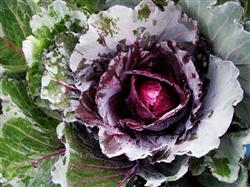
How do you manage purple cabbage planted in autumn? Please explain how to manage it at each stage.
The key management points for each stage of autumn-planted purple cabbage are as follows:
First, seedling stage management
1. Pay attention to preventing pests and diseases at the seedling stage
Autumn purple cabbage is generally sown in early July, and the seedling stage mainly requires preventing damage from fungi and soil-dwelling pests. To prevent seed-borne bacteria and soil-borne diseases, the seeds can be dressed with Miaojundi at a 1:1 ratio; to prevent soil-dwelling pests, before sowing, the seedbed surface can be sprayed with chlorpyrifos 1500x solution. At the same time, note that after emergence, every 7 days, spray the leaves with Amistar 1500x solution to prevent diseases such as damping-off and seedling blight at the seedling stage.
2. Pay attention to watering when the soil is dry
In water management, Master Ma says to water when the soil is dry. Recently, because outdoor temperatures are high, the air is dry, and water evaporates quickly, and purple cabbage has a weak root system, so pay attention to timely watering.
3. Pay attention to timely film covering
Right now is a hot and rainy season, so the seedling bed should be shaded and protected from rain. After sowing, promptly set up small arched frames over the seedling bed. Older greenhouse film with poorer light transmission can be used, which can prevent rain damage and sunburn to the seedlings.
Second, management after transplanting
Purple cabbage is cultivated in beds, with bed width generally 1.75 m, plant and row spacing both 45 cm, and about 2500 plants per mu. Before heading, purple cabbage leaves spread over a large area, and excessive plant density can easily cause leaf overlap and lead to infection by pathogens. In addition, because summer temperatures are high and weeds grow quickly, pay attention to timely weed removal, especially after the rows close, to prevent pests and diseases from breeding on the weeds.
After transplanting, first lightly water 1-2 times to help the seedlings recover, and afterward reasonably adjust the fertilizer amount according to plant growth. Master Ma says that after transplanting, water-soluble fertilizer is mainly applied by flushing. During the one and a half months after transplanting, 2.5-5 kg of Fangrun (20-10-30) can be used per mu each time. After entering the heading stage, 5-7.5 kg of Fangrun (20-10-30) can be used. During the growing process of purple cabbage, the main focus is preventing bacterial black rot and soft rot, and streptomycin sulfate and copper-ammonia complex 1000x solution can be used alternately for prevention.
In addition, throughout the entire growing period of purple cabbage, attention should be paid to controlling pests such as cabbage caterpillars and striped flea beetles. Emamectin benzoate 2% or beta-cypermethrin 20% 1000x solution can be used regularly for control.
Click to get more cabbage growing techniques
Click to get more vegetable growing techniques