Detailed Explanation of Wheat Pest and Disease Control Methods
How to control wheat pests and diseases? Please provide guidance and an introduction. For controlling wheat pests and diseases, you can refer to the following control methods: Stripe rust: In early spring, adopt the strategy of "detect one spot, treat a whole patch," carrying pesticide during scouting and blocking the center of infection; in spring, combine spot treatment with general treatment, and for severely affected fields and fields with susceptible varieties, carry out a second spray treatment depending on the condition...
How to control wheat pests and diseases? Please provide guidance and an introduction.
For controlling wheat pests and diseases, you can refer to the following control methods:
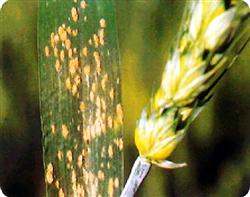
Stripe rust: In early spring, adopt the strategy of "detect one spot, treat a whole patch," carrying pesticide during scouting and blocking the center of infection; in spring, combine spot treatment with general treatment, and for severely affected fields and fields with susceptible varieties, carry out a second spray treatment depending on the condition. Choose fungicides such as triadimefon, diniconazole, propiconazole and tebuconazole and spray at the required dosage, and promptly check for missed spots and respray. In spring epidemic areas, at the heading stage, combine with aphid control and adopt "one spray for three controls," implementing specialized unified prevention and control, choosing triadimefon, propiconazole or diniconazole-type fungicides and spraying at the required dosage.
Fusarium head blight: Adopt a strategy based on preventive spraying at the heading and flowering stages. According to weather forecasts, in the southwest wheat region and the Huang-Huai wheat region, at the early heading and flowering stage of wheat, if there are more than three consecutive rainy days, seize the clear weather to spray, choosing carbendazim, tebuconazole, phenamacril, prochloraz and others at the required dosage; if rain occurs within 3 hours after application, a supplementary spray is still needed when the weather clears. In the Yangtze River Basin wheat region, if continuous rainy weather occurs, wheat growth stages are uneven, and the flowering period lasts more than 7 days, a second application is needed 5-7 days after the first application to ensure control efficacy.
Aphids: There are two damage stages, seedling aphids and ear aphids, and the strategy of "spot-treat seedling aphids, main-treat ear aphids" should be adopted. When the number of aphids per 100 plants in the field reaches 500 and the ratio of beneficial insects to pests is greater than 1:500, choose acetamiprid EC, imidacloprid, pirimicarb and other insecticides and spray at the required dosage. In wheat regions where resistance to imidacloprid and acetamiprid has developed, it is not advisable to use a single insecticide; it can be reasonably mixed with low-toxicity organophosphorus pesticides for spraying.
Red spider mites: In the northwest wheat region, the period from green-up to jointing; in the southwest wheat region, the period from seedling stage to early-spring jointing; and in the north China wheat region, the period from green-up to heading are key control periods. Agricultural control measures such as deep ploughing, weeding, increasing fertilizer application, crop rotation or comprehensive irrigation, and shaking wheat plants can be adopted. When the average number of spider mites on a 33 cm single row exceeds 200, choose abamectin, pyridaben and others and spray at the required dosage. Grasp the timing of the first application well and spray evenly and thoroughly.
Wheat blossom midge: Adopt a control strategy combining pupal-stage and adult-stage control. Pupal-stage control should be carried out under the guidance of technical personnel. For wheat fields where the population density in each survey quadrat (10 cm long, 10 cm wide, 20 cm deep) reaches more than 2 insects, when the larvae rise to the soil surface to pupate, choose chlorpyrifos, isofenphos-methyl and others at the required dosage, mix with fine soil to make poisonous soil, and spread it evenly along the wheat rows; or use chlorpyrifos or isofenphos-methyl granules mixed with fine soil and spread evenly on the soil surface; watering after application can improve efficacy. Adult-stage control should be carried out in the early stage of adult emergence, when the average number of adults caught by sweep netting in the field is more than 1 per net, or when parting the wheat rows with both hands and visually observing, 2-3 adults can be seen at a glance; choose chlorpyrifos, beta-cypermethrin, dimethoate and other insecticides and spray at the required dosage; dichlorvos mixed with an appropriate amount of wheat bran or fine soil can also be spread evenly in the field in the evening for fumigation.
Click to get more wheat cultivation techniques
Click to get more grain cultivation techniques