When is the best time to control wheat fusarium head blight
When is the best time to control wheat fusarium head blight? Please advise. The fusarium head blight pathogen levels are generally high, mostly exceeding the epidemic threshold. Once an epidemic occurs, it not only seriously affects wheat yield but also causes the wheat to lose its usable value. According to observations, under drought conditions, most wheat varieties are susceptible to fusarium head blight. In particular...
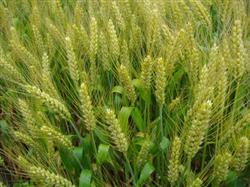
When is the best time to control wheat fusarium head blight? Please advise
The fusarium head blight pathogen levels are generally high, mostly exceeding the epidemic threshold. Once an epidemic occurs, it not only seriously affects wheat yield but also causes the wheat to lose its usable value. According to observations, under drought conditions, most wheat varieties are susceptible to fusarium head blight. Fields with high water and fertilizer levels are especially prone to frequent outbreaks, and some new wheat varieties suffer even more severe infection. Fusarium head blight not only affects wheat yield but can also cause wheat grains to rot and deteriorate, and the toxins secreted by the pathogen can also poison humans and livestock.
Fusarium head blight of wheat is a disease that is difficult to completely control. Most farmers do not choose disease-resistant varieties when sowing, and if control is not timely, they will suffer relatively large losses. According to observations over the past two years, wheat fusarium head blight rarely occurs from the jointing stage to the booting stage, and mainly harms wheat ears from the heading stage to the full flowering stage. During this period, temperatures are relatively high, so it spreads very quickly. Most farmers know little about fusarium head blight and do not pay enough attention to its control, and in the early stage of the disease it is difficult to notice without careful observation. If control is not timely and continuous rainy weather occurs during the full flowering stage, a large number of bleached white ears will appear in the field within a few days, and at that point even spraying pesticides as a remedial treatment will be very difficult to bring under control. In contrast, wheat fields with timely control have significantly milder disease incidence.
Because the control window is relatively short, when individual glumes on wheat ears are seen turning white and dry, and red spots are present, pesticides should be sprayed promptly for control. You can also act according to weather changes, preferring early over late. Since wheat fusarium head blight is a fungal disease, from the flag leaf emergence stage to the early heading stage of wheat, use 100 grams of carbendazim or 50 grams of diniconazole (Heguoli) per mu, add 30 kg of water, and spray for control; the effect is relatively good. Since fusarium head blight mainly harms the wheat ears, be sure to use a sprayer with good atomization, and raise the spray boom as high as possible, focusing the spray on the ears so that the wheat ears receive the pesticide evenly. Also, depending on weather conditions, at most 7 days apart, carry out a second control treatment when wheat is at full heading and blooming heavily. If the weather is continuously overcast and the disease is severe, one more control treatment is still needed in the early grain-filling stage of wheat to achieve a relatively good control effect. According to observations, if control is done only once from the heading stage to the grain-filling stage of wheat, even a relatively large spray volume cannot achieve a relatively good effect. Therefore, the author suggests that farmers must seize the timing when carrying out control.
Click to get more wheat cultivation techniques
Click to get more grain cultivation techniques