How should spring sorghum be planted so it grows well?
How is spring sorghum planted well? Please give an introduction. Sorghum cultivation can be divided into two types: spring cropping and autumn cropping. The sowing period for spring cropping is about late March to mid-April of the lunar calendar, and the time should not be too early, because sowing early brings low temperatures, slow growth, and the plants are prone to dying when cold spells occur. For autumn cropping, sowing is chosen between late May and late June of the lunar calendar...
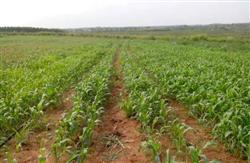
How is spring sorghum planted well? Please give an introduction.
Sorghum cultivation can be divided into two types: spring cropping and autumn cropping. The sowing period for spring cropping is about late March to mid-April of the lunar calendar, and the time should not be too early, because sowing early brings low temperatures, slow growth, and the plants are prone to dying when cold spells occur. For autumn cropping, sowing is chosen between late May and late June of the lunar calendar, and the time should not be too late, so as to avoid low temperatures in the middle and late growth stages, which affect growth and delay the maturity period. The cultivation process is roughly as follows:
Land preparation: First spread compost over the cultivated land, then plow to a depth of 12~15 cm (4~5 in), fully break up the soil clods, remove weeds, and rake the soil surface level. Then dig planting furrows 4~6 cm deep at a row spacing of 50 cm.
Sowing rate: About 15~20 kg of seed is needed per hectare. Seed can be purchased from the local township farmers' association.
Sowing method: Sowing methods are divided into dibbling and drilling. Generally, drilling is the main method: sow the seed evenly in the planting furrows and then cover with soil about 3 cm thick.
Fertilization method:
(1) Spring cropping and autumn cropping: Spread compost in the field before land preparation, then plow it into the soil. Apply the full amount of phosphate fertilizer and half the amount of nitrogen and potassium fertilizer as base fertilizer before sowing, and apply the remaining half of the nitrogen and potassium fertilizer 30 days after sowing.
(2) Ratoon cultivation: Apply half the amount of fertilizer 10 days after harvesting the main crop, and apply the remaining half 30 days after harvesting the main crop. Fertilizer should be applied 10~15 cm away from the plants to avoid damaging them.
Field management:
(1) Thinning and replanting: 20~25 days after sowing sorghum, when the seedlings are 15 cm tall, carry out the first thinning. When the seedlings are 25~30 cm tall, carry out the second thinning, and finally maintain a plant spacing of about 10 cm. If missing plants are found, dig up vigorous seedlings that are to be removed during thinning and use them for replanting.
(2) Cultivation and weeding: During the sorghum growth period, carry out cultivation and weeding 2~3 times according to the occurrence of weeds. Especially in the early growth stage, pay special attention to removing weeds completely so as not to affect development. If herbicide is used, it should be sprayed after sowing and covering with soil but before emergence.
(3) Hilling: After the first cultivation and weeding, immediately apply topdressing beside the plants and mound soil around the stems of the plants to prevent lodging and promote development.
(4) Irrigation and drainage: Sorghum is drought tolerant, but if drought occurs during the young ear formation stage (about 35 days after sowing), (about 60 days after sowing), and the milk-ripe stage (about 75 days after sowing), it greatly affects yield, so appropriate irrigation should be carried out. In rainy seasons, standing water should be drained at any time to avoid pests and diseases and to prevent prolonging the maturity period.
Ratoon (regrowth) cultivation:
(1) Stem cutting: At the time of spring crop harvest, immediately cut the stems 1~2 cm above the ground. The earlier the stem cutting is done, the better.
(2) Fertilization: The amount, types, and timing of fertilizer application are carried out as described above.
(3) Bud thinning: After stem cutting, each plant may sprout 2~5 shoots, but in principle each plant should keep two vigorous shoots, and the remaining shoots should be removed as early as possible to avoid absorbing nutrients.
(4) Other management: Operations such as cultivation and weeding, harvesting, and conditioning are all the same as those in general sorghum cultivation methods.
Click to get more sorghum cultivation techniques
Click to get more grain cultivation techniques