What are the nutritional characteristics of sorghum? Read this one article to understand
What are the nutritional characteristics of sorghum? Please note that the main utilized parts of sorghum include the grain, rice bran, and stalks. Among these, the main nutrient contents in the grain are: crude fat 3%, crude protein 8-11%, crude fiber 2-3%, and starch 65-70%. 1. Protein The grain generally contains 9-11%, of which about 0.28% is lysine, ...
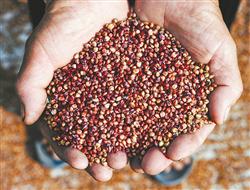
What are the nutritional characteristics of sorghum? Please introduce
The main utilized parts of sorghum include the grain, rice bran, and stalks. Among these, the main nutrient contents in the grain are: crude fat 3%, crude protein 8-11%, crude fiber 2-3%, and starch 65-70%.
1. Protein The grain generally contains 9-11%, of which about 0.28% is lysine, 0.11% methionine, 0.18% cystine, 0.10% tryptophan, 0.37% arginine, 0.24% histidine, 1.42% leucine, 0.56% isoleucine, 0.48% phenylalanine, 0.30% threonine, and 0.58% valine. The contents of leucine and valine in sorghum grain are slightly higher than in corn, while the content of arginine is slightly lower than in corn. The contents of other various amino acids are roughly equal to those in corn. The crude protein content in sorghum bran reaches about 10%, in fresh sorghum distillers grains it is 9.3%, and in fresh sorghum vinegar residue it is about 8.5%. The protein content of sorghum stalks and sorghum husks is relatively low, at about 3.2% and 2.2% respectively.
Sorghum protein is slightly higher than that of corn, and its quality is likewise poor, lacking lysine and tryptophan, with low protein digestibility, because sorghum prolamin has more intermolecular cross-linking, and there are very strong binding bonds between protein and starch, making it difficult for enzymes to enter and break it down.
2. Fat The fat content is 3%, slightly lower than that of corn, and the saturated fatty acid content in the fatty acids is also slightly higher, so the melting point of the fat is also slightly higher. The linoleic acid content is also slightly lower than that of corn. The crude fat content in by-products of sorghum processing is relatively high. The crude fat content of air-dried sorghum bran is about 9.5%, and that of fresh sorghum bran is about 8.6%. In distillers grains and vinegar residue it is 4.2% to 5% respectively. The crude fat content in the grain is relatively low, only about 3.6%, and the content in sorghum stalks and sorghum husks is also relatively low.
3. Nitrogen-free extract Nitrogen-free extract includes starch and sugars, is the main component of forage sorghum, and is also the main energy source for livestock and poultry. The content of nitrogen-free extract in forage sorghum varies between 17.4 and 71.2%. Sorghum stalks and sorghum husks contain more crude fiber, with contents of about 23.8% and 26.4% respectively. The starch content is comparable to that of corn, but sorghum starch granules are highly covered by protein, so the digestibility of sorghum starch is lower than that of corn, and its effective energy value is equivalent to 90-95% of corn. Although the nutritional value of sorghum stalks and sorghum husks is not as good as that of concentrate feed, they have a wide range of sources and a low price, and can reduce feeding costs.
4. Minerals and vitamins The calcium and phosphorus contents among minerals are comparable to those of corn, and about 40-70% of the phosphorus is phytate phosphorus. Among vitamins, the contents of B1 and B6 are the same as those of corn, and the contents of pantothenic acid, niacin, and biotin are greater than those of corn, but the utilization rates of niacin and biotin are low. According to analysis by the Central Health Research Institute (1957), each kilogram of sorghum grain contains thiamine (vitamin B1) 1.4 mg, riboflavin (vitamin B2) 0.7 mg, and nicotinic acid 6 mg. In the green leaves of sorghum before maturity, the crude protein content is about 13.5%, and the riboflavin content is also relatively rich. The grain and stems and leaves of sorghum all contain a certain amount of carotene, especially when used as green feed or silage, when the content is relatively high.
5. Tannin is a water-soluble polyphenolic compound, also called tannic acid or tannin. Tannin has a strongly bitter and astringent taste, affecting palatability; tannin can bind with proteins and digestive enzymes, affecting the utilization rates of proteins and amino acids. Feeding tannin to chicks causes joint swelling, producing a tibial dyschondroplasia-like condition similar to that caused by other nutrient deficiencies.
Click to get more sorghum cultivation techniques
Click to get more grain cultivation techniques