Heat-Tolerant Cauliflower Cultivation Methods and Key Growing Techniques
How do you grow heat-tolerant cauliflower? Here is an introduction to heat-tolerant cauliflower cultivation methods you can refer to: 1. Variety selection: choose cauliflower varieties with strong growth, good heat tolerance, strong disease resistance and early maturity. 2. Sow at the right time: the sowing period should be determined according to the characteristics of the variety and the climate conditions of each region...
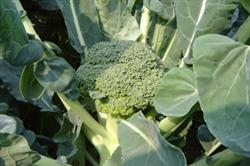
How do you grow heat-tolerant cauliflower? Here is an introduction
For heat-tolerant cauliflower cultivation methods, you can refer to the following methods:
1. Variety selection
Choose cauliflower varieties with strong growth, good heat tolerance, strong disease resistance and early maturity.
2. Sow at the right time
The sowing period should be determined according to the characteristics of the variety and the climate conditions of each region. The suitable sowing period in the Zhengzhou area is from June 20 to July 10.
3. Grow strong seedlings
The standards for strong seedlings are: calendar seedling age reaching 20-25 days, physiological seedling age reaching 4-5 true leaves, relatively large leaf area, thick stems and well-developed roots. Before raising seedlings, prepare nutrient soil with sterile field soil (preferably taken from plots that have not grown cruciferous vegetables) and decomposed organic fertilizer in a 6:4 ratio. For every cubic meter of nutrient soil, mix in 500 grams of compound fertilizer, 100 grams of carbendazim and 100 grams of trichlorfon, mix evenly and then make pots. Before sowing, first water the nutrient pots thoroughly; after the water has seeped in, sow the seeds, sowing 1-3 seeds per pot. After sowing, cover with a layer of fine dry soil 0.5-1 cm thick. It is best to cover the seedbed with a shade net to prevent heavy rain from washing it away.
4. Reasonable close planting
When the calendar seedling age reaches 20-25 days and the physiological seedling age reaches 4 true leaves, they can be transplanted. Cauliflower has well-developed roots and a relatively high fertilizer requirement. Before transplanting, apply sufficient base fertilizer, applying 10 cubic meters of high-quality farmyard manure or more than 200 kg of cake fertilizer plus 25 kg of compound fertilizer per mu. After preparing the land, form ridges 15 cm high with a top width of 50 cm, with a ridge furrow width of 50 cm. Plant diagonally on both sides of the ridge at a plant spacing of 40 cm, with 2,500-3,000 plants per mu.
5. Field management
After transplanting, water heavily twice in succession to promote seedling growth. After that, when watering, follow the principle of letting the soil surface dry and then become moist, ensuring root growth. After the 9th true leaf of the seedling appears, keep the ground often moist. Combined with watering, apply 5 kg of urea per mu every 10 days. After the curd appears, apply 20 kg of urea per mu at one time, and spray the leaves with potassium dihydrogen phosphate or Jianzhibao solution.
6. Harvest at the right time
When the flower branches at the base of the curd are slightly loose, it can be harvested. At this time, the curd has fully grown and has good quality.
Click to get more cauliflower cultivation techniques
Click to get more vegetable cultivation techniques