What causes hollow main stems in broccoli?
What causes hollow main stems in broccoli? Please explain the prevention and control methods. Hollow main stems in broccoli, without rotting, are caused by physiological disorder. If the variety chosen and planting management are inappropriate, causing physiological disorder in the plant, hollow stems will form, seriously affecting the quality and commercial value of the marketable curd, and causing...
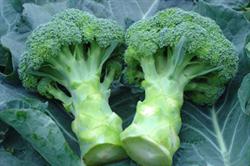
What causes hollow main stems in broccoli? Please explain the prevention and control methods.
Hollow main stems in broccoli, without rotting, are caused by physiological disorder. If the variety chosen and planting management are inappropriate, causing physiological disorder in the plant, hollow stems will form, seriously affecting the quality and commercial value of the marketable curd, and causing losses.
I. Symptoms of hollow main stems
The hollowing mainly forms during the curd maturity stage. Initially, several small oval gaps form within the stem tissue. As the plant grows and matures, the small gaps gradually expand and connect into a large gap, causing the stem to form a cavity. In severe cases, the cavity extends onto the flower stalk. The surface of the cavity becomes lignified and turns brown, but does not rot. No pathogens can be detected in the discolored tissue.
II. Causes of hollow main stems
1. Excessive plant and row spacing during planting, and excessive nitrogen fertilizer application, especially during the curd growth stage, cause the plant to grow too rapidly, which easily triggers hollowing.
2. Water shortage or improper watering during the vegetative growth stage and curd growth stage easily causes hollow stems.
3. Broccoli is a cool-season crop, with a suitable growing temperature of 15-22°C. If the planting season is arranged improperly and the curd growth stage encounters high temperatures (above 25°C), the curd grows too rapidly, which easily causes hollowing.
4. Severe boron deficiency in the field can induce changes in the cell wall structure of the stem tissue, causing degeneration of the stem tissue, accompanied by lignification, leading to hollow formation.
5. Different varieties have certain differences in susceptibility to hollowing. Some varieties have broad adaptability and are not prone to hollowing, while some varieties are prone to hollowing.
III. Prevention and control measures
1. Choose varieties that are not prone to hollowing.
2. Sow at the appropriate time, cultivate strong seedlings, transplant at the appropriate time, and stagger the curd growth stage to avoid high-temperature weather.
3. Based on the characteristics of the variety used, plant at a reasonable density. The suitable plant spacing is 30-45 cm, and row spacing is 60-70 cm.
4. Fertilizer and water management. Water management: Keep the soil alternating between dry and moist; generally water once every 5-7 days. Fertilizer management: With sufficient base fertilizer applied, apply 6-8 kg of nitrogen fertilizer per mu with irrigation, following the principle of small amounts applied multiple times, and increase the application of phosphorus and potassium fertilizers during the curd growth stage. For boron-deficient soil, apply 0.5 kg of boron fertilizer per mu as base fertilizer, then apply another 0.5 kg as top dressing or root drenching.
5. Harvest at the appropriate time. Harvest can be done 10-15 days after the curd appears. If too early, the curd has not fully grown and the yield is low; if too late, hollow stems easily form, and the curd easily becomes loose with withered buds, losing its commercial value.
Click to get more cauliflower growing techniques
Click to get more vegetable growing techniques