What methods can improve the quality of lettuce when growing it?
How can lettuce quality be improved when growing lettuce? Please give guidance. To improve lettuce quality when growing lettuce, you can refer to the following methods: 1. Environmental requirements: the most suitable growing temperature is 16-22°C during the day and 10-12°C at night, but it can tolerate high temperatures of 30°C and low temperatures of minus 1°C; it likes light...
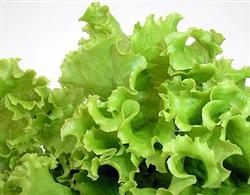
How can lettuce quality be improved when growing lettuce? Please give guidance.
To improve lettuce quality when growing lettuce, you can refer to the following methods:
1. Environmental requirements: the most suitable growing temperature is 16-22°C during the day and 10-12°C at night, but it can tolerate high temperatures of 30°C and low temperatures of minus 1°C; it likes light and dislikes shade; it is suited to moist soil conditions and is not tolerant of drought; it requires a balanced supply of nitrogen, phosphorus, potassium, and trace elements.
2. Variety selection: for open-field planting in summer and autumn, temperatures are high in the early stage and low in the later stage, so it is advisable to choose early-maturing, heat-tolerant, bolting-resistant varieties such as "Jingyou No. 1", "Yuhu", "Baisheng", "Huangdi", and "Kaisar Wang".
3. Sowing and raising seedlings at the proper time: in most areas around Beijing, sowing begins around July 20; in northern cool areas such as Yanqing, Huairou, and Miyun, sowing and seedling raising can be done from July 5-10. Planting should be done in batches according to sales volume, with the last batch around August 10. Use about 20 grams of seed per mu, requiring 20 sq m of seedbed. Build low plastic tunnels and cover them with agricultural film and shade netting to block rain and lower the temperature. Transplant the seedlings once at the 2-3 leaf stage, with a spacing of 6-8 cm, and a seedling age of 30 days; they can be transplanted to the field at 6 leaves.
4. Land preparation and transplanting: apply 2500 kg of decomposed organic fertilizer per mu, or 800 kg of "Yite" brand active organic fertilizer, and form tile-ridged high beds 80-90 cm wide and 15 cm above the ground, with a bed surface 50 cm wide and a furrow 40 cm wide. Transplant two rows on the slopes of the bed surface, with a row spacing of 40 cm and a plant spacing of 30-35 cm, giving 4200-5000 plants per mu. Transplant with soil balls, try not to damage the root system, and water promptly after planting.
5. Field management: never allow drought or flooding irrigation; generally water once about every 10 days, and do not let the soil lack water during the heading stage. After the seedlings recover, apply one topdressing of active organic fertilizer at 200 kg per mu, placed in holes near the root system; at the early heading stage, apply 25 kg per mu of "Yite" brand vegetable special fertilizer in holes. In the middle and late growth stages, spray foliar fertilizer 2-3 times at intervals of about 7 days, using a mixture of monopotassium phosphate at 300 times dilution plus urea at 500 times dilution.
Click to get more lettuce growing techniques
Click to get more vegetable growing techniques