How to prevent lodging when growing sesame? Introduction to practical tips
What common diseases affect sesame? An introduction to the common diseases of sesame: 1. The main diseases of sesame 1. Sesame stem spot blight Sesame stem spot blight, commonly known as "black root disease" or "black stalk disease," is the most important disease in sesame production, generally affecting 10%-15% of plants, and up to 60%-80% in severe cases, mainly occurring when sesame is flowering...
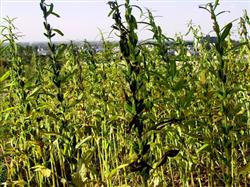 How should sesame be prevented from lodging when grown? Please introduce the methods
Lodging in sesame is a major enemy in sesame production. Once lodging occurs, it can reduce yield by 10%-50% in mild cases, or 70%-80% in severe cases, seriously affecting the yield and quality of sesame and restricting the development of sesame production.
To prevent sesame lodging, you must start from the time of sowing. In addition to applying more organic fertilizer and phosphorus and potassium fertilizer, spraying the growth-inhibiting hormone "paclobutrazol" at the 1-2 pairs of true leaves stage (the earlier the better) can inhibit vegetative growth during the seedling stage, promote root development, increase the number of roots and make them penetrate deeper, lower the height of the stem below the pods and the pod-bearing position, and avoid a top-heavy plant that may lodge in strong wind and heavy rain. The method is to use 80 grams of paclobutrazol per mu mixed with 50 kg of water for spraying. At this time, thinning the seedlings early is also necessary. If the clustered seedlings do not spread out after full emergence, the young stems will grow upward too quickly, wasting nutrients, and the plants will be spindly, with shallow roots and poor resistance, making them prone to lodging in the middle and late stages. After sesame emerges, the clustered seedlings should be spread out immediately so that the leaves do not touch each other, and the seedlings should be thinned to a stand at the 3-4 pairs of true leaves stage.
In addition, 10-15 days after the start of flowering in sesame, spraying 4-5 grams of mepiquat chloride per mu can inhibit ineffective flowering and capsule setting on the upper part, control continued growth of the top, reduce competition for plant nutrients by ineffective capsules on the upper part, strengthen the nutrient supply source for effective capsules, and achieve plump capsules and full seeds, resulting in increased yield.
Click to get more sesame cultivation techniques
Click to get more food crop cultivation techniques