How to grow lettuce? A detailed guide to growing methods
How do you grow lettuce? Here is a detailed introduction to the methods. Lettuce cultivation can follow the methods below: 1. Soil selection. Choose slightly acidic loam or clay loam that is rich in organic matter, fertile, with strong water and fertilizer retention, good aeration, and convenient drainage and irrigation. 2. Variety selection. Choose glass lettuce...
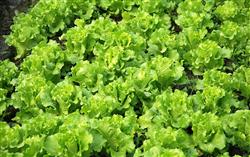
How do you grow lettuce? Here is a detailed introduction to the methods
Lettuce cultivation can follow the methods below:
1. Soil selection. Choose slightly acidic loam or clay loam that is rich in organic matter, fertile, with strong water and fertilizer retention, good aeration, and convenient drainage and irrigation.
2. Variety selection. Choose glass lettuce, head lettuce, curled-leaf lettuce, Caesar, and others.
3. Sowing and raising seedlings
1. Sowing period: Lettuce is generally sown from August to February of the following year, and the most suitable sowing period is from mid-October to mid-December; it can also be sown from early March to early May, but the growth period is short and the yield is low. In winter and early spring, cultivation can be done in large or small sheds, and in summer, cultivation can be done under shade nets or shaded frames.
2. Seed treatment before sowing: When sowing in the high-temperature season, the seeds must be subjected to low-temperature germination encouragement. The method is: first soak in well water for about 6 hours, rub and wash, then remove and wrap well in wet gauze, and place at 15-18°C to encourage germination, or hang in a water well to encourage germination, or store in a refrigerator (about 5°C) for 24 hours, then place the seeds in a cool place and keep them moist to encourage germination. "920" can also be used to encourage germination, that is, soak the seeds in 200 mg of "920" per kilogram for 24 hours before germination, which can smoothly allow lettuce seeds to sprout after 2-3 days of dormancy; when 80% of the seeds show white, they should be sown in time.
3. Sowing and raising seedlings: Apply 1500 kg of decomposed farmyard manure and 20 kg of superphosphate per mu to the seedling bed, plow and mix evenly, then level. Glass lettuce is generally sown from September to January of the following year, and head lettuce is best sown from October to December. For seedling raising and transplanting, 20-30 sq m of seedbed is needed per mu of cultivation field, with a seeding rate of 25-30 g. Before sowing, water thoroughly to the bottom, mix the seeds evenly with an equal amount of wet fine sand, then broadcast, and cover with about 0.50 cm of soil. Seedling-stage management should be strengthened; when there are 2-3 true leaves, thinning or seedling separation should be done in time. For seedling raising in winter and spring, in large sheds or open fields, attention should be paid to keeping the seedbed moist, controlling watering, and preventing excessive humidity. For open-field seedling raising in summer, be careful to cover with shade nets to block sunlight and rain, cool down, and retain moisture, spraying water 2-3 times a day to keep the soil moist.
4. Field planting. Glass lettuce seedlings are about 25 days old and can be planted when they have 4-6 true leaves, with a plant-row spacing of 14 x 18 cm; head lettuce seedlings are 30-35 days old and are planted when they have 5-6 true leaves, with a plant-row spacing of 17 x 20 cm and a bed width of 80-90 cm. The planting soil should be given 4000-5000 kg of organic fertilizer and 20 kg of superphosphate per mu, or 50 kg of compound fertilizer. When planting, roots should be protected with soil, and planting water should be given in time. The planting depth should be enough to bury the roots, and the heart leaves must not be buried. When planting in the high-temperature season, the frame should be set up and shade nets covered on the morning of the planting day, and transplanting should be done after 4 p.m. For winter and spring cultivation, plastic film mulching can also be used. For large-shed cultivation, the daytime temperature should be controlled at 12-22°C; if too low, attention should be paid to heat preservation, and if too high (above 24°C), the shed should be opened for ventilation, cooling, and dehumidification. Under normal circumstances, the skirt film of the large shed can be left open.
5. Field management. Lettuce requires more fertilizer and should be fertilized frequently and generously. 5-6 days after planting, apply a small amount of quick-acting nitrogen fertilizer; after 15-20 days, apply 15-20 kg of compound fertilizer per mu; after 25-30 days, apply 10-15 kg of compound fertilizer, but human urine must not be used as topdressing in the middle and late stages. After planting, the water requirement is high, so watering should be timely according to the weather after seedling recovery and the soil moisture condition, generally once every 5-7 days; in the middle and late stages, watering should be controlled and not excessive. For large-shed cultivation, the humidity inside the shed should be controlled, and watering should be controlled 5 days before harvest.
6. Pest and disease control. Lettuce mainly suffers from sclerotinia rot, soft rot, and aphid damage. First, disease-resistant varieties should be selected, starting with pollution-free cultivation management, and prevention should be done carefully. Aphid damage mostly occurs in autumn, winter, and spring, and can be sprayed with 40% dimethoate emulsifiable concentrate at 600-800 times dilution, or 50% pirimicarb at 2000-3000 times dilution, etc. Sclerotinia rot occurs in February-March and can be sprayed with 50% procymidone wettable powder at 1000-1500 times dilution, etc. Soft rot is prone to occur in hot and rainy months and can be sprayed with 47% kasugamycin-copper wettable powder at 1000 times dilution, or 77% copper hydroxide wettable powder at 500 times dilution, etc. Stop using pesticides 15 days before harvest.
Click to get more lettuce cultivation techniques
Click to get more vegetable cultivation techniques