Summer Lettuce Planting Methods and Key Technical Points
How to plant lettuce in summer? Here is an introduction to the methods. For growing lettuce in summer, you can refer to the following methods: 1. Choose good varieties. For summer cultivation of lettuce, choose heat-tolerant varieties that are not prone to bolting, such as Kaisa, Huangdi, Xialu, Luhu, etc., and sow them in 3 to 4 batches from May to June. 2. Cultivate strong...
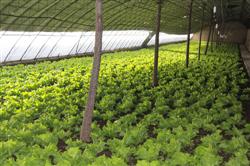
How to plant lettuce in summer? Here is an introduction to the methods
For growing lettuce in summer, you can refer to the following methods:
I. Choose good varieties
For summer cultivation of lettuce, choose heat-tolerant varieties that are not prone to bolting, such as Kaisa, Huangdi, Xialu, Luhu, etc., and sow them in 3 to 4 batches from May to June.
II. Cultivate strong seedlings
1. Soaking seeds to promote germination. Lettuce seeds are small, direct sowing is difficult to master, and seedling emergence uniformity is poor, so seedling raising and transplanting are generally used. The seedling bed should be leveled and raked fine. Each mu requires 25 grams of seed and 10 sq m of seedling bed area. Soak the seeds to promote germination before sowing. First soak them in clean water at about 20°C for 4 to 6 hours. After draining the water, wrap the seeds in gauze and place them at 15°C to 20°C to promote germination. They can also be suspended above the water surface of a well for low-temperature germination, or placed in a refrigerator at 5°C to 10°C for 24 hours, then placed in a cool indoor place and kept moist to promote germination. Sow after the seeds show white.
2. Sowing and raising seedlings. Before sowing, water the seedling bed thoroughly. After the water seeps down, mix the seeds evenly with fine sand and broadcast them, cover with sieved fine soil 0.3 to 0.5 cm, and cover with a shade net or reed curtain. The seedling age is generally about 25 days. During the seedling stage, keep the soil moist. Remove the shade net when the young seedlings show their heart leaves, and water lightly once. To prevent washing out the young roots of the seedlings and causing lodging, cover with a thin layer of fine soil after watering. Thin to a stand when there are two true leaves, remove weeds in the bed at the same time, and water once. Transplant in time when the seedlings grow to 4 to 5 true leaves.
III. Planting on high beds
Before planting, prepare beds while preparing the land and apply sufficient base fertilizer. Apply 2500 kg of decomposed organic fertilizer and 25 kg of superphosphate per mu. In summer, small high beds are generally used for planting, with a bed width of 70 cm and two rows per bed, with a plant spacing of 25 to 30 cm. Planting can be done on a sunny afternoon or on a cloudy day, with soil balls attached. The planting depth is best when the soil ball is level with the bed surface, and the heart leaves must not be covered. After planting, water promptly to help the seedlings recover, and cover with a shade net to lower the ground temperature. When covering with a shade net, follow the principle of covering during the day and uncovering at night, covering on rainy days and uncovering on cloudy days, to create a suitable growing temperature for lettuce and prevent rain from washing the soil.
IV. Field management
1. Cultivation. Carry out timely cultivation 3 to 5 days after planting to preserve soil moisture. Before the rows close, generally carry out 1 to 2 shallow cultivations to promote early root growth.
2. Watering. During the growing period, water evenly and frequently with small amounts to keep the bed surface moist, and do not let it become too dry or too wet.
3. Topdressing. Because lettuce is mainly eaten raw, do not use human feces and urine or chicken manure for topdressing. Mainly use chemical fertilizers. Generally topdress 3 to 4 times: once 15 days after the seedlings recover, once at the rosette stage, and once at the heading stage. Each time apply 5 to 8 kg of urea per mu, flushed with water, but do not apply too much to prevent lettuce tipburn. During the growing period, foliar spraying of potassium dihydrogen phosphate can be done appropriately to improve disease resistance and eating quality.
4. Pest and disease control. Lettuce has very few pests and diseases, with only a small amount of aphids, which can be controlled promptly with high-efficiency, low-toxicity pesticides.
V. Harvest in batches
Because lettuce planting density is relatively high and the main product is crisp and tender leaves, loose heads can be harvested successively for market 30 days after planting.
Click to get more lettuce growing techniques
Click to get more vegetable growing techniques