What are the key points for lettuce planting and management in summer?
How should lettuce be managed when planted in summer? Please explain the management methods. For summer planting, attention must first be paid to fertilizer and water management. Because summer temperatures are high, sunlight is strong, ground evaporation is high, and crop transpiration is also high, frequent watering is needed in the early stage after transplanting to keep the soil moist. Entering the rainy season from July to August, after each heavy rain, timely...
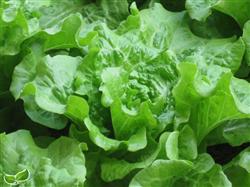
How should lettuce be managed when planted in summer? Please explain the management methods.
For summer planting, attention must first be paid to fertilizer and water management. Because summer temperatures are high, sunlight is strong, ground evaporation is high, and crop transpiration is also high, frequent watering is needed in the early stage after transplanting to keep the soil moist. Entering the rainy season from July to August, after each heavy rain, drainage should be carried out promptly and cool water should be irrigated to lower the temperature, so as to protect the leaves. In the later growth stage, water should be appropriately controlled, and no watering should be done 2-3 days before harvest to prevent head splitting. Lettuce has a relatively short growth period, and topdressing should mainly use chemical fertilizers, but attention should be paid to increasing potassium fertilizer to balance nitrogen and potassium, about 15 kg each time.
Second, attention should be paid to the prevention and control of pests and diseases. The main diseases of summer lettuce are downy mildew, viral disease, and gray mold, as well as sclerotinia rot and leaf spot, etc. Downy mildew can be controlled with 75% chlorothalonil 600 times solution, or 40% enhanced metalaxyl 500 times solution, or 58% metalaxyl mancozeb 500 times solution; gray mold can be controlled with 50% secukemie, or 50% iprodione 1000-1500 times solution, or 50% thiophanate methyl 500 times solution; for the control of viral disease, in addition to selecting disease-resistant varieties and disease-free good seeds, it should also be combined with the control of aphids, using fenvalerate, menazon, or pirimicarb, etc. to promptly control aphids and eliminate transmission. In addition, attention should also be paid to the prevention and control of physiological diseases and nutrient deficiency symptoms. For example, boron deficiency in lettuce often causes slow growth of veins and leaf margins in new leaves, wrinkled and curled leaf surfaces, and uneven leaf color, like the symptoms of mosaic virus disease. In severe cases, leaf tips and leaf margins dry up and scorch, and terminal bud growth is inhibited or dies. Therefore, attention should be paid to boron application. Various organic fertilizers contain boron, and when necessary, increase the application of borax as a base fertilizer or spray boron fertilizer on the leaves.
For summer cultivation, generally little or no intertillage should be done to prevent increasing soil temperature. For those not covered with plastic film, surface weeding should be the main method. In the early growth stage, generally 2-3 weedings should be done. Entering August, when the temperature decreases somewhat, the shade shed or shade net can be removed and the plants can enter a natural growth state.
In the late heading stage of lettuce, soft rot and head splitting often occur. Soft rot is mainly caused by excessively high temperature inside the head. Therefore, the shade shed should not be removed too early; it is more appropriate to remove it when the daily average temperature falls below 20°C. Head splitting is mainly caused by excessive soil moisture, so watering should be controlled in the later growth stage. In addition, to prevent soft rot, it is best not to use human excrement and urine as topdressing.
Summer lettuce generally has fewer leaves per head and should be harvested in time. If harvested late, the head will not only grow larger but will actually become looser and looser, reducing quality. Harvesting is generally done in the early morning to prevent leaf wilting.
Click to get more lettuce planting techniques
Click to get more vegetable planting techniques