Summer Greenhouse Chinese Cabbage Planting Methods and Technical Key Points
How do you plant greenhouse Chinese cabbage in summer? Please give an introduction to the planting methods. By summer, solar greenhouses generally can only be used as open ground, and their facilities cannot be fully utilized. If Chinese cabbage is planted in them, it can not only enrich the variety of vegetables on the market, but also bring considerable economic benefits. The key cultivation points are as follows. 1. Select varieties...
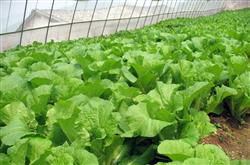
How do you plant greenhouse Chinese cabbage in summer? Please give an introduction to the planting methods
By summer, solar greenhouses generally can only be used as open ground, and their facilities cannot be fully utilized. If Chinese cabbage is planted in them, it can not only enrich the variety of vegetables on the market, but also bring considerable economic benefits. The key cultivation points are as follows.
1. Select varieties. Choose heat-tolerant Chinese cabbage varieties suitable for summer cultivation, tolerant of high temperature and high humidity, strongly disease-resistant, and relatively early-maturing.
2. Modify the greenhouse. The solar greenhouse film should be intact, not leak rain, and the site should be high-lying. Dig drainage ditches 30 cm wide and 40 cm deep around it. At the top, open a 20 cm wide vent. Also open a 92 cm wide vent at the base of the greenhouse, then cover it tightly with insect netting from west to east. In case of heavy rain, the vents should be closed promptly, and all vents on the north wall should be fully opened and covered with insect netting. In this way, on the one hand it can ventilate and cool down, and on the other hand it can avoid rain and prevent insects.
3. Prepare the soil and make beds. Before plowing, apply 4000-5000 kg of decomposed organic fertilizer and 25-30 kg of compound fertilizer per mu, then plow 20-25 cm deep, level the soil, and make beds 50 cm wide.
4. Direct sowing indoors. For direct sowing, open shallow holes along the beds at a plant spacing of 30-40 cm and water thoroughly. After the water seeps down, sow 3-4 seeds per hole, then cover with 1.2-1.5 cm of soil. After sowing, irrigate once lightly, irrigate again the next day, and irrigate a third time after the seedlings emerge uniformly. At the cross stage, thin the seedlings for the first time. At 3-4 true leaves, final thinning is done, leaving 1 plant per hole. After thinning and final thinning, water once each time to ensure uniform and strong seedlings, about 3500-4000 plants per mu.
5. Fertilizer and water management. After thinning, apply 3-4 kg of urea per mu; at the rosette stage, apply 10-15 kg of urea per mu. Water immediately after fertilizing, and afterward water once every 4-5 days according to soil moisture. At the heading stage, apply 25-30 kg of urea plus 50 kg of decomposed cake fertilizer per mu as a combined topdressing. During this period, water heavily, once every 3-4 days, ensuring the soil is moist but not dry; in the late heading stage, control water appropriately, and watering in the evening is best. Stop watering 4-5 days before harvest.
6. Prevent and control diseases and pests. Because the insect netting is closed, insect sources and heavy rain invasion are isolated, so there are fewer diseases and pests, and basically no spraying is needed. If the closure is not tight, at the seedling stage use 2.5% deltamethrin 500 times liquid to control aphids and also prevent viral disease; during the growth period, use BT emulsion to control cabbage caterpillars and the like; the main diseases are downy mildew and soft rot. For the former, use 25% metalaxyl 800 times liquid; for the latter, use new streptomycin or agricultural streptomycin 200 times liquid spray for control.
Click to get more Chinese cabbage planting techniques
Click to get more vegetable planting techniques