Detailed Explanation of Summer Cabbage Planting Methods and Technical Key Points
How to plant summer cabbage? Please provide a detailed introduction to the methods. Summer cabbage can be planted by referring to the following methods: 1. Variety selection. Choose excellent varieties that are heat-tolerant, disease-resistant and have tight heads, such as Xiayou No. 2, Xiayou No. 3, Xiayang, etc. 2. Apply sufficient base fertilizer and sow at the right time. After the wheat harvest, promptly hoe away the wheat stubble...
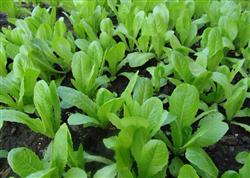
How to plant summer cabbage? Please provide a detailed introduction to the methods.
Summer cabbage can be planted by referring to the following methods:
1. Variety selection. Choose excellent varieties that are heat-tolerant, disease-resistant and have tight heads, such as Xiayou No. 2, Xiayou No. 3, Xiayang, etc.
2. Apply sufficient base fertilizer and sow at the right time. After the wheat harvest, promptly hoe away the wheat stubble. For every 667 sq m of land, apply 3000-4000 kg of decomposed barnyard manure and 10 kg each of potassium sulfate and superphosphate, then plow and level the soil, and make small high ridges about 10 cm high and about 50 cm wide. Draw shallow furrows on the ridges for hole sowing, with a hole spacing of 25-30 cm. If the surface can be covered with black shade netting after sowing, the emergence rate can be increased. If the land is vacated relatively late, seedlings can be raised 15-20 days in advance in nutrient pots. The suitable sowing period for summer cabbage is early to mid-June.
3. Strengthen field management. After emergence, thin and fill in seedlings in good time, keeping large seedlings and strong seedlings while removing weak seedlings, mixed seedlings and small seedlings. Thinning starts from the cross stage, gradually increasing the spacing between thinned plants. When the cabbage forms a rosette (5-6 leaves), final thinning is done. For watering during the seedling stage, master the practice of 3 waterings for emergence and 5 waterings for stand establishment. The 3 waterings during emergence mainly serve to preserve soil moisture and lower temperature, and the 4th and 5th waterings are the thinning water and the final thinning water. After watering or rain, cultivate in time. In combination with the final thinning water, apply 1 fertilizer for plant development, using 10 kg of urea per 667 sq m, or 15 kg of ammonium sulfate applied in holes or furrows and then covered. The fertilizer application point should be 8-10 cm away from the plants to minimize damage to roots and leaves. For summer cabbage, 10-15 days before head formation, water once thoroughly, then cultivate and practice water control to shift the growth center from outer leaves to the head. When it is observed that the summer cabbage leaves become thicker and darker in color, and the outer leaves are green, the water control period ends. When watering the first water after the water control period, apply 1 more fertilizer for head development, with the same type and amount as the plant development fertilizer; the fertilizer is best applied with the water. Throughout the entire growth period of summer cabbage, water quality has a great influence on its yield and quality. Lack of water can cause bolting and lead to reduced yield. Therefore, during the head-forming stage of summer cabbage, special attention should be paid to maintaining sufficient soil moisture, watering promptly when the soil surface turns white, and stopping watering 5-7 days before harvest. This is the key to obtaining a bumper harvest of summer cabbage. The main diseases are soft rot and viral disease, and the main insect pests are cabbage caterpillars and aphids. In addition to chemical control, keeping water from covering the stem base when watering and avoiding excessive planting density can reduce the occurrence of diseases.
Click to get more cabbage planting techniques
Click to get more vegetable planting techniques