Goji berries like fertilizer but dislike excessive moisture. What should be noted in field management?
Goji berry is a deciduous small shrub in the Solanaceae family, also known as wolfberry and gounaizi root, and is a well-known ornamental fruit plant. Its flowering period is from June to September, and its fruiting period is from September to October. Its leaves, roots, and fruits can all be used as medicine. When grown in pots, the old roots can also be made into exposed-root bonsai. Goji berry has a wide range of adaptability and is not strict about soil. It is tolerant of drought, barren conditions,...
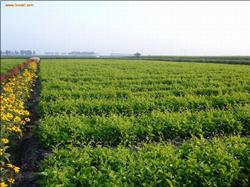
Goji berry is a deciduous small shrub in the Solanaceae family, also known as wolfberry and gounaizi root, and is a well-known ornamental fruit plant. Its flowering period is from June to September, and its fruiting period is from September to October. Its leaves, roots, and fruits can all be used as medicine. When grown in pots, the old roots can also be made into exposed-root bonsai. Goji berry has a wide range of adaptability and is not strict about soil. It is tolerant of drought, barren conditions, salinity, alkalinity, and sandy wasteland, and grows best in well-ventilated sandy loam.
Propagation is often done by cuttings. The specific method is:
1. Prepare the seedling bed. After deep plowing the seedling bed, apply 1500 to 2000 kg of base fertilizer or 100 kg of chemical fertilizer per mu, level it, and make beds.
2. Collect cuttings. Before the goji berry branches sprout in spring, while pruning large goji berry seedlings, collect cuttings and cut them into 10 to 15 cm long stem cuttings.
3. Cuttings. Soak the cuttings in rooting powder solution for 24 hours. Open furrows in the seedbed at a row spacing of 30 cm, insert the cuttings at a plant spacing of 5 cm, with the cuttings planted 5 to 10 cm deep in the soil. Before transplanting large seedlings to establish the plantation, open furrows in the field at a row spacing of 1 m and a plant spacing of 33 cm, with planting furrows 30 to 40 cm deep. Apply 2000 kg of base fertilizer per mu, and 2000 seedlings can be planted per mu.
Field management
1. Carry out intertillage and weeding in a timely manner to prevent weeds from growing densely, competing with the plants for nutrients, and spreading diseases and pests.
2. Topdressing. Goji berry likes fertilizer and has a relatively long flowering and fruiting period, so attention should be paid to fertilization during the budding, flowering, and fruiting stages. Generally, fertilize 2 to 3 times during the growing period to promote seedlings, strengthen stems, and increase fruit.
3. Pruning and branch training. Goji berry has strong branching ability and vigorous new branch growth. Every year before early spring sprouting, cut off old branches; in summer, cut off excessive vegetative branches; in autumn, cut off old branches and diseased and pest-infested branches. Branch training can reduce diseases and pests, enhance ventilation and light penetration, and reduce nutrient consumption. For newly planted goji berry seedlings, remove the top when the main trunk is 60 cm high, and select and retain 3 to 5 side branches. In the second year, cut the selected 3 to 5 side branches back to 30 cm to form the first layer of the canopy. In subsequent years, train them year by year to form a three-layer "floor-upon-floor" canopy and increase fruit set. If making bonsai, before sprouting in the second spring, cut off thick goji berry branches and insert them as cuttings, and they can bloom and bear fruit the following year.
4. Water management. Goji berry dislikes excessive moisture and poor drainage, but excessive drought also affects its growth and development, so drainage and irrigation should be carried out in a timely manner according to local conditions.
5. Disease control. The main diseases of goji berry are black fruit disease and root rot, which mostly occur in the rainy season. When black fruit disease occurs, flower buds, flowers, and fruits turn black, and under humid conditions the diseased parts have red mucus. At the early stage of the disease, spray Bordeaux mixture (1:1:200) or 50% carbendazim 1000 times solution for control. When root rot occurs, the stem base of the diseased plant turns black and rots, the aboveground branches and leaves turn yellow, and eventually the whole plant dies. Diseased plants should be pulled out immediately, and the soil around the diseased plants should be disinfected with lime or 70% quintozene. At the early stage of the disease, irrigate the roots with 50% carbendazim 1000 to 1500 times solution for control.