What are the key points of pollution-free bitter melon cultivation techniques?
How do you grow pollution-free bitter melon? Here is an introduction to the cultivation method. Pollution-free bitter melon cultivation can refer to the following methods: For variety selection, choose varieties with short vines, short internodes, small leaves, strong stress resistance, early maturity, high yield, and good storage quality, such as Huadu Green Bitter Melon, which has robust plant growth. It has strong disease resistance, and from the 3rd leaf it begins to set the 1st female flower, bears many fruits, and has thick flesh, tender texture, and good quality.
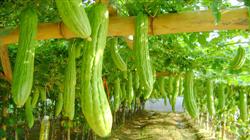
How do you grow pollution-free bitter melon? Here is an introduction to the cultivation method
Pollution-free bitter melon cultivation can refer to the following methods:
For variety selection, choose varieties with short vines, short internodes, small leaves, strong stress resistance, early maturity, high yield, and good storage quality, such as Huadu Green Bitter Melon, which has robust plant growth. It has strong disease resistance, and from the 3rd leaf it begins to set the 1st female flower, bears many fruits, and has thick flesh, tender texture, and good quality.
Cultivation season and crop rotation arrangement
Early spring, autumn delayed, and winter-spring crops can be cultivated in solar greenhouses and plastic tunnels. For the early spring crop, sow from late December to late January, and transplant from mid-February to mid-March. For the autumn delayed crop, sow and raise seedlings from late July to mid-August, and transplant from early September to late October. For the winter-spring crop, sow and raise seedlings from early October to early November, and transplant from mid-November to late December.
Seedling raising
Raise seedlings in nutritional pots inside the shed. The seedling substrate is mixed with peat and vermiculite at a volume ratio of 2:1, and into 1 cubic meter of the mixed substrate add 10 kg of dried chicken manure, and mix evenly. Arrange the nutritional pots neatly in the seedbed, water the substrate thoroughly, and sow after the water infiltrates. Use 1 seed per pot, sow dry seeds directly, and after sowing cover with 0.5 cm of seedling substrate. Before emergence, keep the temperature at 25-30 degrees Celsius; after emergence, keep the daytime temperature at 20-25 degrees Celsius and the nighttime temperature at 10-15. Spray the seedbed with water 1-2 times every morning or evening using a watering can to prevent the substrate from compacting and drying out. After the seedlings emerge, keep the soil alternately dry and moist. If the seedlings grow weakly, spray foliar fertilizer with a 0.2%-0.3% concentration potassium dihydrogen phosphate aqueous solution.
Transplanting
Transplant when the seedlings have 3 leaves and 1 heart, with a seedling age of 35-45 days. Before transplanting, prepare the land, dig cultivation troughs in a north-south direction, with an inner diameter width of 0.48 m, a depth of 0.15 m, and a trough spacing of 0.8 m. Lay 1 layer of plastic film at the bottom of the trough to isolate it from the soil, and fill the trough with 2-3 cubic meters of substrate. The cultivation substrate ratio is peat: cinder 4:6. Before filling the trough, each cubic meter of substrate needs to be mixed with an additional 5 kg of dried chicken manure and 0.5 kg of 15:15:15 nitrogen-phosphorus-potassium compound fertilizer. Turn the cultivation substrate evenly and level it, and water once so the substrate absorbs water fully. After the water infiltrates, dig holes and transplant at a rate of 1 row per trough, so that the substrate is slightly higher than the seedling stem, with a plant spacing of 0.4 m, and water lightly after planting.
Management after transplanting. Temperature management: Before flowering, keep the daytime temperature in the shed at 20-25 degrees Celsius and the nighttime temperature at 13-15 degrees Celsius. After flowering, keep the daytime temperature in the shed at 25-30 degrees Celsius and the nighttime temperature at 12-15 degrees Celsius. If continuous cloudy weather occurs, strengthen insulation measures so that the daytime temperature is not lower than 18 degrees Celsius and the nighttime temperature is not lower than 8 degrees Celsius. Fertilizer and water management: Before flowering, focus on control, water and fertilize less; after flowering, begin fertilizing and watering. Bitter melon roots like moisture but are not tolerant of waterlogging, so the amount of water per irrigation should not be too large; water frequently in small amounts. Generally water once every 2-3 days. After every 2 waterings, apply 1 fertilizer with the water, each time applying 5-7.5 kg of 15:15:15 nitrogen-phosphorus-potassium compound fertilizer per 1/15 hectare. Use drip irrigation under natural pressure from a water storage tank. Establish an independent water storage tank for each shed, with a length of 4 m, a width of 1.5 m, and a height of 2 m, and the bottom of the tank should be 0.5 m above ground level. To prevent shading and occupying too much planting area, the water tank should be built along the gable wall of the greenhouse or tunnel. Plastic pipes can be used for both the main pipeline in the shed and the drip irrigation tape in the cultivation troughs. Lay two drip lines in each trough, and cover the drip tape with 1 layer of narrow plastic film 0.1 mm thick to prevent drip irrigation water from spraying outward and evaporating. Plant adjustment: Use the shed frame to build 2 layers of trellis 20-30 cm below the film for the vines to climb and grow. After the vines trail, use hanging strings to guide the vines onto the trellis. When the plant grows to the trellis leaves, pinch the top to promote side branch sprouting; keep 1-2 female flowers on the side vines, and after the 2nd fruit, leave 2-3 leaves and pinch the tip. Artificial pollination: After covering with film, artificial pollination must be carried out for normal fruit set. Pick fully opened male flowers from 8-10 a.m. and pollinate flower to flower. Fruit bagging: After flowering and fruit set, bag the fruits. The bag is 800 mm long, 80 mm wide, and 0.08 mm thick, and is a colorless transparent polyethylene film bag. Put the film bag over the fruit, then tie the mouth of the film bag at the fruit stalk with string, but not too tightly, to prevent affecting the lateral growth of the fruit stalk and at the same time maintain a certain air permeability. Fruit bagging can prevent pesticides from being sprayed directly onto the fruit.
Pest and disease control. Bitter melon has relatively strong resistance to pests and diseases, and generally serious pests and diseases rarely occur. Only when humidity is high are anthracnose and phytophthora blight likely to occur, and when humidity is low it is susceptible to damage from aphids, whiteflies, and others. For anthracnose, 80% anthracnose thiram wettable powder at 800 times dilution can be used for control, once every 5-7 days, for 2-3 consecutive applications. For aphids and whiteflies, 80% dichlorvos emulsifiable concentrate can be used for dark-fire fumigation, or biological pesticides with no pesticide residues can be selected for control.
Harvesting. 12-15 days after flowering is the suitable harvest period. Harvesting should not be too late, so as not to affect commercial quality. After bagging the fruit, when it reaches market standards, bring the fruit to market together with the bag.
Click to get more bitter melon cultivation techniques
Click to get more vegetable cultivation techniques