How to Make Goji Leaf Health Tea and Detailed Steps
Goji leaves are rich in betaine, rutin, and various amino acids and trace elements. Regularly drinking goji leaf tea has health benefits such as nourishing the liver and improving eyesight, and softening blood vessels. The production method is as follows: 1. Picking leaves: Pick fresh goji leaves that are tender green in color, free of pests and diseases, and thick and plump. Wash off the dust on the leaf surface with clean water...
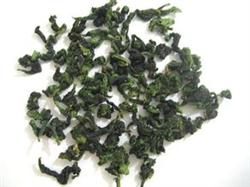
Goji leaves are rich in betaine, rutin, and various amino acids and trace elements. Regularly drinking goji leaf tea has health benefits such as nourishing the liver and improving eyesight, and softening blood vessels. The production method is as follows:
1. Picking leaves: Pick fresh goji leaves that are tender green in color, free of pests and diseases, and thick and plump. Wash off the dust and other dirt on the leaf surface with clean water. After draining the water, spread them evenly in a ventilated and dry place for 3 hours to 4 hours. During spreading, turn them 1 to 2 times, until the leaves are wilted and soft.
2. Fixing: Place the wok used for fixing on a stove built at a 35-degree incline. When the wok temperature reaches 120°C, add 2 kg of fresh goji leaves and stir-fry continuously for 4 minutes to 5 minutes, until the leaves are soft, form a ball when held, do not scatter when the hand is opened, and the grassy smell disappears when smelled, with a slight fresh fragrance, then remove from the wok.
3. Rolling: Place the fixed leaves in batches on a wooden board. While hot, alternately roll into balls and push-roll for 3 minutes to 5 minutes. Be careful to apply even pressure and do not press too hard. Roll until the leaves form strip shapes.
4. Drying: Put the leaf strips into a wok at about 79°C and stir-fry quickly. Be careful to heat them evenly. Stir-fry until the tea strips can be pinched into powder by hand and the moisture content is below 6%, then remove from the wok and spread to cool.
5. Packaging: Use a winnowing basket to remove broken bits, scales, and other debris from the tea strips, then grade and package according to color, shape, and taste. After sealing, store in a dry place free of peculiar odors.