How to Grow Ningxia Goji Berries: A Detailed Guide to Cultivation Techniques
Goji (Lycium barbarum) is a plant of the Solanaceae family, genus Lycium, also known as goji greens, goji tips, and so on. It is rich in protein, amino acids, carbohydrates, and various vitamins. Its fruit is used in medicine and has the effects of nourishing yin and tonifying the kidneys, benefiting qi and calming the spirit, strengthening the body, and delaying aging, and it can treat diseases such as diabetes, chronic hepatitis, and pulmonary tuberculosis. Ningxia goji...
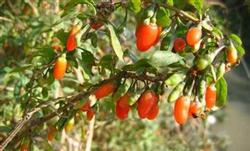
Goji (Lycium barbarum) is a plant of the Solanaceae family, genus Lycium, also known as goji greens, goji tips, and so on. It is rich in protein, amino acids, carbohydrates, and various vitamins. Its fruit is used in medicine and has the effects of nourishing yin and tonifying the kidneys, benefiting qi and calming the spirit, strengthening the body, and delaying aging, and it can treat diseases such as diabetes, chronic hepatitis, and pulmonary tuberculosis. Ningxia goji (Ningqi No. 1, Ningqi No. 2) is grown in northern regions, with a dry fruit yield per unit area of about 250 kg, calculated at 16 yuan per kg, giving an income of about 4000 yuan per 667 sq m, making it a good path for farmers to become wealthy.
I. Site Selection and Land Preparation. Goji has low soil requirements and is tolerant of drought, poor soil, salinity and alkalinity, and sandy wasteland. To obtain high quality and high yield, it is best to plant on sandy loam near a water source (with a pH of about 8.0). After the autumn crop harvest, apply 5000 kg of organic fertilizer and 100 kg of nitrogen, phosphorus, and potassium compound fertilizer per 667 sq m while preparing the land, plow to a depth of more than 30 cm, level the land, and water with winter irrigation water. Before sowing the next spring, shallow plow and harrow finely, and make flat beds 1 m wide, with north-south orientation being preferable.
II. Propagation Methods. Goji has strong propagation ability and can be propagated by seed, cuttings, and division. (1) Seed propagation: After harvesting ripe fruit in autumn, dry it in the shade and store it indoors in a dry, cold place. By mid-February of the following year, crush the fruit, wash off the skin, select the seeds, mix them evenly with 2 times their volume of fine sand, pile them in a cold room, stir frequently, and keep them moist; sow in late March. (2) Cutting propagation: Cutting propagation is the main method for growing goji north of the Yangtze River. Cuttings can be taken in March; select one-year-old vigorous shoots or strong branches, cut them into 10-15 cm long cuttings with 3-5 buds, cut the lower end into a slanted surface, insert them into the seedbed soil at a plant spacing of 10 cm and row spacing of 20 cm, with the insertion depth about two-thirds of the cutting, 2 per hole, and cover with a small arch shed for warmth, keeping the shed temperature above 12°C and the soil surface moist; roots will form and the plants will survive in about 10 days, and after survival the soil should be kept moist. When the plant height reaches 1 m and there are 4 fibrous roots, transplant; plant about 250 plants per 667 sq m, with a plant spacing of 1.2-1.5 m and row spacing of 1.8-2.0 m; ridge planting and furrow planting are both acceptable. (3) Division propagation: Suckering seedlings on horizontal roots 3-7 cm from the mother plant can be taken for transplanting.
III. Field Management. (1) Cultivation and weeding: Cultivate and weed 5-6 times a year, to a depth of 7-10 cm. Turn the garden twice each year to enhance soil aeration and moisture conservation and promote root development. The first time is in early spring in April, to a depth of 13 cm, and the second time is in late October, with deep turning to 20-25 cm. (2) Fertilization and irrigation: Goji avoids excessive moisture and poor drainage, while drought also affects its growth and fruiting, so watering should be done in a timely manner. If it is dry after the beginning of spring, irrigate once every 10-15 days; during the fruit-picking period, irrigate once after every 1-2 pickings; during the rainy season, drain water promptly; before the ground freezes, irrigate with winter water. In early to mid-November, apply 2000 kg per 667 sq m of decomposed barnyard manure, etc., in a ring-shaped ditch on one side of the tree, then cover with soil and water. During the peak flowering and fruiting period in May and June, apply nitrogen fertilizer 2-3 times as a top dressing, applying 50-100 grams of urea, ammonium sulfate, ammonium nitrate, etc. per plant, followed immediately by irrigation. (3) Pruning and training: For one-year-old goji, set the trunk height at 50-60 cm, cut off the top, and 4-5 cm below the cut, select and retain 3-5 evenly distributed, robust branches as main branches; for two-year-old goji, leave main branches 30-40 cm long, side branches 20 cm, and other branches in gaps 8-10 cm, forming the first layer of the canopy; for goji three years old and above, leave main and side branches 40-50 cm, branches on the side branches 20-30 cm, and retain one branch every 15 cm on the side branches, with tree height not exceeding 1.5 m and canopy diameter not exceeding 1.5 m. After the shape is formed, frequently prune dead, diseased, and weak branches to maintain a high-yielding, stable-yielding tree form.
IV. Disease Control. Goji has relatively strong stress resistance, and pests and diseases rarely occur. The main diseases of goji are black fruit disease and root rot. In the early stage of black fruit disease, spray Bordeaux mixture at 1:120-160, 50% wettable thiram 1000-fold solution, or 65% wettable zineb 500-fold solution, once every 7-10 days. Root rot: In the early stage, use 50% carbendazim 1000-1500-fold solution to drench the roots for control, or immediately pull out diseased plants and disinfect the soil around the diseased plants with lime. The main pests include goji fruit fly, gall mites, and so on. When fruit fly damage occurs, spray 90% trichlorfon 800-fold solution or 40% dimethoate emulsifiable concentrate 1500-fold solution for control, or pick diseased fruit and bury it deeply in a centralized place; to prevent gall mites, when leaves emerge in spring, spray with 40% dimethoate emulsifiable concentrate 1000-1500-fold solution, once every 10 days, for 3-4 consecutive times.
V. Fruit Harvest. Generally, harvesting begins 50-60 days after cutting (mid-June to early August). When picking, handle gently and place gently; the storage thickness of the fruit should not exceed 5-10 cm. Freshly picked fruit should not be exposed to strong midday sunlight within two days, and should not be turned by hand to prevent rupture; it should be dried in the shade until the skin wrinkles, then sun-dried until the outer skin is dry and hard and the flesh is soft.