Detailed Explanation of New Management Techniques for Ginseng Shade Net Sheds
1. Variety selection: The main vegetable varieties of goji are Fine-leaf Goji and Large-leaf Goji. In our city, Fine-leaf Goji, which has thick flesh and a rich flavor, is the main cultivar. 2. Cutting propagation: Vegetable goji does not flower or set fruit, so cuttings are used for propagation every year in production. Under protected cultivation, cuttings are usually taken in mid-September. During propagation,...
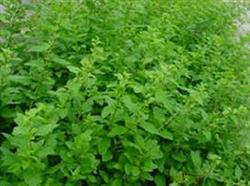 Burdock is a biennial herbaceous plant with a taproot in the genus Arctium of the Asteraceae family, also known as Japanese radish, and in traditional Chinese medicine it is called Dali Zi. Its fleshy root is rich in nutrients. According to analysis, every 100 grams of fresh root contains 4.1 grams of protein, 0.1 grams of fat, 3.5 grams of carbohydrates, 1.5 grams of fiber, as well as calcium, phosphorus, iron, thiamine, riboflavin, and others, and it has relatively high medicinal and nutritional value. It is mainly used to treat cough, sore throat, and other conditions. Regular consumption can help prevent diabetes and high blood pressure and prevent premature aging of the human body. Burdock is a nutritious health vegetable that Japanese people like to eat. As a new foreign-exchange vegetable, it yields 1500 kg per mu, with considerable benefits and good development prospects.
1. Site selection Burdock has a taproot, and under suitable soil conditions the root can reach more than 1 m in length. The root specification required for export to Japan is more than 65 cm long and free of lateral fibrous roots. Therefore, sandy loam soil that is fertile, loose in texture, well drained, and has a pH of 6.5-7.5 should be selected for cultivation. Other soil types must not be selected, otherwise the required root length cannot be achieved or lateral roots will develop, lowering the grade.
2. Land preparation The length of the burdock fleshy root is one of the main indicators for measuring its quality. To ensure quality, when preparing the land, loose planting strips 30 cm wide and 80 cm deep must be dug at a row spacing of 70-80 cm to facilitate downward root growth. When digging the planting strips, be careful not to make them too shallow, so as not to reduce yield and length standards. When digging the planting strip trenches, do not disturb the topsoil, and at the same time pick out stones completely.
3. Fertilization Burdock has a relatively high fertilizer requirement. For a plot with a yield of 1500 kg per mu, 6 cubic meters of high-quality farm manure, 5.3 kg of pure nitrogen, 12 kg of phosphorus pentoxide, and 7 kg of potassium oxide are needed as base fertilizer. Apply them into the 25 cm soil layer and mix evenly, otherwise lateral roots will form where the fertilizer is concentrated. After thinning to a stand, apply 15 kg of ammonium nitrate as topdressing on one side of the planting trench, 5 cm away from the seedlings.
4. Sowing Form ridges on the dug planting strips at a row spacing of 70-80 cm, a ridge spacing of 25 cm, and a ridge height of 15 cm. Soak the seeds in warm water at 40-50 degrees C for 4 hours, float off the shriveled seeds, wrap them in a wet cloth, and set aside for sowing. The more suitable sowing period is around May 5. Sow in holes at a plant spacing of 8 cm, with 3-4 seeds per hole, cover with 2 cm of soil, and press down lightly.
5. Thinning When burdock grows to 2-3 leaves, thin to a stand, leaving only 1 plant per hole and removing diseased and weak plants. Burdock grows luxuriantly, and only reasonable close planting will produce qualified fleshy roots. Missing plants and gaps will lead to oversized roots and short roots with lateral roots. Burdock is not suitable for transplanting, because after the root system of transplanted seedlings is damaged, growth will form lateral roots. Therefore, maintaining an even stand is the key to ensuring fleshy root length and absence of lateral roots.
6. Cultivation and weeding Weed when burdock grows 2-3 leaves. Be careful not to expose the leaf stalks above the topsoil, so as to avoid the tender white leaf stalks being killed by strong light and high temperature. Before the plants close the rows, carry out two cultivations and hillings to promote soil warming and root growth into deeper layers. After the rows close, remove weeds promptly. During continuous rainy days, pay attention to drainage to prevent root rot.
7. Pest and disease control The main diseases of burdock are bacterial black spot and powdery mildew. Black spot is likely to occur in the rainy season and can be controlled with Bordeaux mixture or 50% thiram wettable powder at 500 times dilution. Powdery mildew is likely to occur in high-temperature seasons and can be controlled with 75% chlorothalonil wettable powder at 500 times dilution or 50% thiophanate-methyl at 1000 times dilution. For underground pests, 50% phoxim can be applied together with the base fertilizer.
To control aphids, 40% dimethoate emulsifiable concentrate at 1000 times dilution can be used.
8. Harvest Burdock is harvested in early October; if too late, it will become hollow. At harvest, first cut off the leaves, leaving 10 cm long leaf stalks. Dig 50 cm deep on one side of the planting trench, being careful not to damage the root surface, and hold the leaf stalk with the hand and pull it out slightly diagonally upward. Immediately after harvest, clean and grade in the field. Those more than 65 cm long with no lateral roots are grade one; those between 40-64 cm with no lateral roots are grade two; the rest are substandard. After cleaning and grading, bury them in soil to prevent water loss, ready for sale or consumption. Before eating burdock, first peel off the outer skin of the root.