How can wheat combine harvester operations reduce losses?
How can wheat combine harvesting reduce losses? What methods can reduce losses during harvesting? To reduce losses during wheat combine harvesting operations, the following points should be followed: Choose the right harvest period and operating time. The best time to harvest wheat is the late dough stage and the early full-ripening stage. The operating time of the combine harvester should...
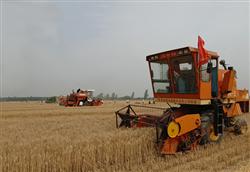
How can wheat combine harvesting reduce losses? What methods can reduce losses during harvesting?
To reduce losses during wheat combine harvesting operations, the following points should be followed:
Choose the right harvest period and operating time. The best time to harvest wheat is the late dough stage and the early full-ripening stage. The operating time of the combine harvester should be determined according to the specific weather conditions, generally following the principle of starting late and stopping late. The morning period when the crop is relatively damp can be used to carry out a relatively thorough technical maintenance of the machine, and harvesting can stop after the evening dew forms. Harvesting during this period not only gives high operating efficiency, but also results in relatively small operating losses.
Maintain a suitable stubble height. The stubble height should be determined according to the height of the wheat and the flatness of the field, generally 15-25cm is appropriate, and a high stubble should not be pursued one-sidedly for high productivity. Otherwise, because the wheat varies in height or the header fluctuates up and down when the machine crosses field ridges, some wheat will be missed by the cutter. At the same time, if the stubble is too high, the reel's ability to guide and push the wheat is weakened, making it easy for the cut wheat to fall to the ground, causing losses.
Correctly adjust the height and forward-backward position of the reel. The position of the reel should be adjusted according to the specific condition of the crop. In general, its height position should be such that the reel bats act at 2/3 of the cut crop; its forward-backward position should be determined by crop density and lodging degree. When the crop plants are dense and lodged, move it forward appropriately to enhance the ability to lift the crop. If the reel position is too high, the reel bats easily strike the wheat heads; if the position is too far forward, the reel strikes the crop more times. All of these easily cause grain shattering and increase operating losses, especially in the later stage of the operation.
During maintenance, pay attention to the wear condition of the threshing mechanism. The wear condition of the rasp bars or spike teeth, as well as the deformation and wear of the concave grate, will affect the wheat threshing cleanliness rate. Therefore, for combine harvesters that have been used for a relatively long time, inspections must be carried out before harvesting operations, and deformed parts or severely worn components should be repaired or replaced in a timely manner. It is worth noting that such repairs should be carried out at a professional repair shop to ensure the stable operation of the threshing cylinder.
The threshing cylinder speed and threshing clearance should meet technical requirements. The speed of the threshing cylinder and the size of the threshing clearance are important factors affecting the wheat threshing cleanliness rate. To ensure the stability of the cylinder speed, never change the vehicle speed by changing the throttle size, and do not reduce the vehicle speed by reducing the throttle when crossing field ridges. During operation, try to feed the crop evenly, and the feed amount should not be too large, so as not to affect threshing quality. For the threshing clearance, adjust it according to the specific conditions such as crop variety, maturity and moisture. The adjustment principle: on the premise of meeting the threshing cleanliness rate, the threshing clearance can be appropriately increased to reduce the wheat breakage rate and reduce the probability of cylinder blockage.
Frequently check the working condition of the straw walkers. In the entire operating process of a combine harvester, the separation mechanism is the weakest link. When the threshed material slightly exceeds the rated intake amount, or when the stems are damp and contain many weeds, separation losses will increase. Therefore, during operation, frequently check the blockage of straw in the straw walker key boxes and remove the fault in a timely manner. The most commonly used methods are reducing the feed amount, correctly choosing the harvest period and appropriately increasing the stubble height.
Correctly adjust the opening of the cleaning sieve and the fan air volume. The grain cleaning device of a combine harvester widely adopts the airflow-and-sieve type, and its operating quality largely depends on its adjustment and coordination. In general, increasing the sieve opening and appropriately reducing the fan air volume can reduce cleaning losses, but the cleanliness rate decreases; conversely, the cleanliness rate increases and cleaning losses increase. Therefore, adjustments must be considered comprehensively, and the cleanliness rate must not be emphasized one-sidedly. The adjustment principle: on the premise that the cleaning loss rate does not exceed the standard, appropriately reduce the sieve opening and increase the fan air volume to improve the grain cleanliness rate.
Correctly harvest lodged crops. Appropriately lower the stubble to reduce missed cutting; move the reel forward appropriately, and tilt the reel spring teeth backward 150-300 to enhance the crop-lifting effect; for more seriously lodged crops, adopt measures such as harvesting against the lodging direction, reducing machine speed or reducing the feed amount.
Click to get more wheat planting techniques
Click to get more grain planting techniques