What precautions should be taken before the wheat harvest?
What should be paid attention to before harvesting wheat? The following points should be noted when harvesting wheat: 1. The suitable harvest period for wheat. The most suitable harvest stage for wheat is from the late dough stage to the full ripe stage. Harvesting at the right time gives high yield, good quality and a high germination rate. Harvesting too early results in shriveled grains, low yield and poor quality. Harvesting too late...
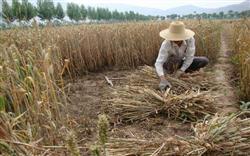
What should be paid attention to before harvesting wheat?
The following points should be noted when harvesting wheat:
1. The suitable harvest period for wheat
The most suitable harvest stage for wheat is from the late dough stage to the full ripe stage. Harvesting at the right time gives high yield, good quality and a high germination rate. Harvesting too early results in shriveled grains, low yield and poor quality. Harvesting too late causes the protein content of the grains to decrease due to respiration and rain leaching, carbohydrates to be reduced, and the thousand-grain weight, test weight and flour yield to decrease; the grains are easily shed in the field, sprout on the ear when it rains, and some varieties are also prone to stem breakage and ear loss.
2. Characteristics of wheat at the dough stage and the full ripe stage
At the early dough stage, the leaves are yellow but not dry, the grains are light yellow, the crease turns green, and there is no milky endosperm inside the grain. At the mid-dough stage, the lower leaves are dry and yellow, the stems are elastic, the grains turn yellow, plump and moist, and the seed moisture content is 25-30%. At the late dough stage, the whole plant turns yellow, the stems are still elastic, the grains are yellow and slightly hard, and the moisture content is 20-25%. At the full ripe stage, the leaves are withered and yellow, the grains become hard and show the true color of the variety, and the moisture content is below 20%.
3. Choice of harvest time
1. Manual harvesting and mechanical swathing. Harvesting and threshing are carried out in two stages. Taking advantage of the fact that wheat stems cut at the mid-to-late dough stage can still transport nutrients to the grains, allowing them to after-ripen, it is advisable to harvest from the mid-dough stage to the late dough stage. This harvesting method can start 5-7 days earlier than direct combine harvesting.
2. When using a combine harvester for direct harvesting, it is advisable to do so from the late dough stage to the full ripe stage.
3. Wheat fields for seed purposes should be harvested at the full ripe stage.
4. If the rainy season is approaching, or the next crop needs to be planted urgently, or the variety is prone to grain shedding, stem breakage, ear breakage or sprouting on the ear, the harvest should be advanced appropriately.
4. Drying and storage of wheat
After wheat is threshed, the impurities in the grains should be quickly removed and the grain should be dried to reduce its moisture content. The safe moisture standard for storing wheat grains is below 1.4%. During storage, the moisture content and temperature of the grains must be controlled to prevent mold, insects, rats, birds and fire; for seeds, attention must also be paid to preventing mixing of varieties.
Click to get more wheat cultivation techniques
Click to get more grain cultivation techniques