What should be noted when growing pepper seedlings in summer and autumn?
What should be noted when growing pepper seedlings in summer and autumn? An introduction is given here. Pepper seedling raising in summer and autumn is easily affected by high temperatures, heavy rain, drought and other weather conditions, and seedling diseases and pests occur severely. To ensure normal growth of the seedlings, the following measures should be taken: 1. Prevent high temperature damage. Choose a well-ventilated plot as the seedbed, build a shade shed,...
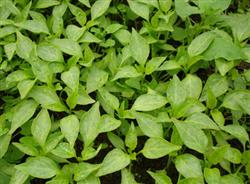
What should be noted when growing pepper seedlings in summer and autumn? An introduction is given here.
Pepper seedling raising in summer and autumn is easily affected by high temperatures, heavy rain, drought and other weather conditions, and seedling diseases and pests occur severely. To ensure normal growth of the seedlings, the following measures should be taken:
1. Prevent high temperature damage. Choose a well-ventilated plot as the seedbed, build a shade shed, cover it with a shade net or non-woven fabric, or use tree branches for shade, or spray muddy water on the plastic film. After sowing, cover the seedbed with rice straw, and remove the seedbed cover immediately when 60%-70% of the seedlings emerge. Shading lowers the temperature and reduces light transmittance, which is beneficial to seedling growth.
2. Prevent damage from strong winds and heavy rain. Choose a plot with higher terrain and drainage ditches around it as the seedbed, so that accumulated water can be drained promptly during heavy rain. For the covering method used for shading and cooling, it is best to use the "one net, one film" covering method, that is, covering the plastic film with a shade net as well. Its performance in shading, cooling and resisting heavy rain is better than covering with a single shade net. Before heavy rain arrives, pull down the plastic film, close the ventilation openings tightly, and bury the edges with soil to prevent rainwater from flowing into the seedbed. Fix the film-pressing lines well to prevent them from being blown open by strong winds. If water enters the seedbed, the soil will become compacted, which is unfavorable for seed germination and emergence and can easily cause a large number of dead seedlings.
3. Prevent drought damage. Before sowing, test the seed germination rate, determine the sowing rate according to the test results, water the seedbed thoroughly before sowing or irrigate fully, then prepare the soil. Water used for sowing must not be sewage or dirty water; groundwater is best. Before sowing, the seedbed should be shaded and kept moist. According to weather conditions, spray a small amount of water onto the seedbed with a watering can in the morning or evening to prevent the seedbed from drying out.
4. Prevent excessive seedling growth. The main reasons for excessive seedling growth are insufficient light, weak photosynthesis, and little nutrients produced; high temperature, especially high night temperature, strong respiration, and high nutrient consumption, which reduce the dry matter content in the plant; plus sufficient nitrogen fertilizer and water, which promote excessive growth. In addition, if seedlings are too dense and shade each other, light is insufficient, the seedbed is not ventilated, and the seedlings receive little light around them and more light only at the top, this prompts the young stems to elongate rapidly and causes excessive growth. The seedbed must never be flooded with large amounts of water; water can only be sprayed with a watering can, and the amount of water should not be too large. Keep the seedbed alternating between dry and moist, and thin and transplant seedlings in time. As long as it is not raining, the tunnel film should be opened to facilitate ventilation, light transmission and moisture removal. On cloudy and rainy days, remove the shading material and keep only the plastic film to prevent rain, so as to obtain more scattered light.
5. Prevent and control diseases and pests. Under the influence of high temperature, viral diseases, aphids, cabbage caterpillars and other diseases and pests are very likely to occur. When fertilizing, apply fully decomposed organic fertilizer. Disinfect the seedbed by treating it with agents such as carbendazim or formaldehyde. Seeds need to be soaked in warm water or treated with agents to avoid soil-borne diseases. After sowing, immediately scatter poisoned bait in and around the seedbed to kill underground pests such as mole crickets. Take the above measures to lower the seedbed temperature, which is helpful for preventing viral diseases. Choose disease-resistant varieties, use insect-proof nets for seedling raising, set up yellow and orange aphid traps in the seedling bed to trap and kill aphids, and spray pesticides in time. Commonly used agents include: 75% chlorothalonil, 50% carbendazim, 70% mancozeb, 20% Virus A, 1.5% Zhibingling emulsifiable concentrate, 50% thiram, Xinwansheng, 50% pirimicarb, 50% phoxim emulsion, 80% trichlorfon, etc.
Click to get more pepper growing techniques
Click to get more vegetable growing techniques