How to prevent and control rust disease when growing beans?
How to prevent and control rust disease when growing beans? Please give an introduction. Rust disease is very prone to occur in the middle and late stages of kidney bean growth, and can harm leaves, stems and vines, and pods. When it harms leaves, the diseased leaves have yellow-green raised spots, which quickly turn yellow. After the epidermis ruptures, pinkish substances are released, and black scab-like spots may also appear later. Some leaves have...
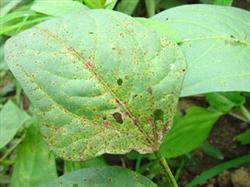
How to prevent and control rust disease when growing beans? Please give an introduction
Kidney beans are very prone to rust disease in the middle and late stages of growth, which can harm leaves, stems and vines, and pods. When it harms leaves, the diseased leaves have yellow-green raised spots, which quickly turn yellow. After the epidermis ruptures, pinkish substances are released, and black scab-like spots may also appear later. Some leaves have white raised spots on both sides, and severely affected leaves wither and die. When stems and vines are infected, there are yellow-green spots. After the epidermis ruptures, red powder is released, and black scab-like spots may also appear later. When pods are infected, the epidermis has yellow-green raised spots, and after rupturing, brown powdery matter is released. The pathogenic fungus mostly overwinters as teliospores with diseased residues in the field, invades plants through water flow on the leaves, and can spread via wind and rain or irrigation. The disease is likely to occur under conditions of high humidity and condensation with a temperature of about 20°C and relative air humidity above 85%. The prevention and control of kidney bean rust should adopt comprehensive control measures, adhere to the principle of "prevention first, comprehensive control," and organically combine agricultural control, biological control, and physical and mechanical control.
The prevention and control methods are as follows:
1. Plant disease-resistant varieties, such as Xinxiu No. 1, Lulong, Jiuli Bai, Chunfeng No. 4, etc.
2. Spring sowing should be early; when necessary, seedling raising and transplanting can be used to avoid the disease.
3. Clean the field, strengthen management, adopt formula fertilization technology, and plant at an appropriate density.
4. In the early stage of the disease, spray 50% carboxin emulsifiable concentrate at 800 times dilution, 50% sulfur suspension concentrate at 300 times dilution, 25% diniconazole emulsifiable concentrate at 3000 times dilution, 25% diniconazole emulsifiable concentrate at 4000 times dilution plus 15% triadimefon wettable powder at 2000 times dilution, 15% triadimefon wettable powder at 1000-1500 times dilution, 70% mancozeb wettable powder at 1000 times dilution plus 15% triadimefon wettable powder at 2000 times dilution, 30% solid lime sulfur mixture at 150 times dilution, 12.5% SYP-7017 wettable powder at 4000-5000 times dilution, once every about 15 days, for 1 or 2 treatments.
Click to get more bean growing techniques
Click to get more vegetable growing techniques