Key techniques for high-yield mint cultivation: grow it this way for higher yields
Mint is one of the main economic crops. The whole plant of this plant is used as medicine. It is highly adaptable, prefers a mild and humid environment, and has extremely strong vitality even under drought conditions. After the rhizomes are planted, seedlings can emerge once the daily average temperature reaches 6°C; growth is fastest in May and June, and the suitable temperature for growth is 20-30°C; when the temperature drops below zero...
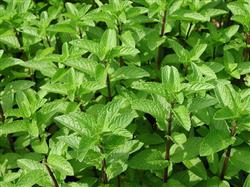
Mint is one of the main economic crops. The whole plant of this plant is used as medicine. It is highly adaptable, prefers a mild and humid environment, and has extremely strong vitality even under drought conditions. After the rhizomes are planted, seedlings can emerge once the daily average temperature reaches 6°C; growth is fastest in May and June, and the suitable temperature for growth is 20-30°C; when the temperature drops below zero, the aboveground parts wither and dry up, and growth stops. Mint has low soil requirements and can grow in clay, old soil, loam, and sandy soil; generally, a soil pH of 6.5-7.5 is optimal.
1. Land selection
The farming proverb says, "Mint grows well on continuous cropping land." Choose a plot with high, dry terrain, convenient drainage and irrigation, and fertile soil where mint has not been grown for 2-3 years.
2. Fine land preparation
Before planting, broadcast 60000 kg of decomposed organic fertilizer, 750 kg of ammonium bicarbonate, and 900 kg of superphosphate per hectare, apply them to the subsoil during plowing, then harrow and level the land, and make beds 1.5 m wide to facilitate irrigation.
3. Propagation methods
Mint can be propagated by seed, cuttings, division, and rhizomes. In production, rhizome propagation and division propagation are the main methods. Division propagation means pulling up seedlings and transplanting them. Select a field with good growth, no pests or diseases, and pure varieties as the seedling transplant field. In April-May, when the seedlings are 10-15 cm tall, they can be lifted and transplanted by division.
Rhizome propagation. The planting period is from late October to the end of April the following year, with late autumn planting being the best. Early planting results in fast rooting and more sprouting, and the roots and buds are robust. Before planting, turn up the rhizomes and select white, robust, one-year-old rhizomes with short nodes. The planting row spacing is 25 cm, and the density should be such that the rhizomes are placed end to end. The rhizomes can also be cut into 10 cm long sections and evenly scattered in the furrows, then covered with soil immediately, and harrowed repeatedly to prevent hollow, loose soil, cold wind intrusion, and freezing of the rhizomes. About 1200-1500 kg of seed rhizomes are needed per hectare.
4. Field management
Transplanted mint can emerge in mid-to-late March. In early April, when the seedlings are 10 cm tall, inspect the seedlings and transplant where needed, remove clustered seedlings, and leave 300000-450000 plants per hectare. After emergence, cultivate in time, once every 10 days, for 2-3 times in a row. Because mint rhizomes are shallow in the soil, cultivation should be shallow rather than deep to avoid damaging roots and breaking stems, which would affect growth and reduce yield.
During the mint growing period, keep the soil surface moist at all times, and irrigate promptly during drought, preferably with light flooding. In summer and autumn, rainfall is heavy, so drain field water to prevent the rhizomes from suffocating and dying. After the first harvest in August, apply 300-400 kg of urea per hectare as a topdressing. When the second-crop seedlings are about 10 cm tall, apply 15000-20000 kg of dilute human manure per hectare and remove weeds from the field. After the second harvest, cover with high-quality organic fertilizer to lay the foundation for early and rapid growth the following year.
5. Pest and disease control
The main pests and diseases of mint include leaf spot, rust, and silver-marked noctuid moths, among others. For leaf spot, promptly remove diseased leaves, take them out of the field, and bury or burn them deeply to reduce sources of infection, spray with 120 times Bordeaux mixture, or spray the leaves with 65% zineb 500 times solution. For rust, in the early stage of the disease, spray with 15% triadimefon wettable powder 1000 times solution or 40% carbendazim suspension concentrate 800 times solution. For silver-marked noctuid moths, spray with 90% trichlorfon 1000 times solution, or 2.5% deltamethrin, or 20% fenvalerate 1500 times solution.