How to Grow Mint Efficiently? A Detailed Guide to Practical Cultivation Techniques
Mint, also known as Su mint or Nan mint, is a plant of the Lamiaceae family, mint. The whole plant is used as medicine, and it has effects such as dispelling wind-heat, clearing the head and eyes, and regulating qi to relieve depression. Mint has strong adaptability. When grown in areas at an altitude of 300 m-1000 m, its oil and menthol content are relatively high. It prefers a warm and humid environment, and the optimal temperature for growth is 20°C...
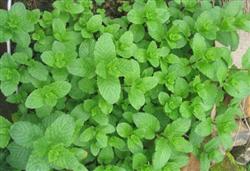
Mint, also known as Su mint or Nan mint, is a plant of the Lamiaceae family, mint. The whole plant is used as medicine, and it has effects such as dispelling wind-heat, clearing the head and eyes, and regulating qi to relieve depression.
Mint has strong adaptability. When grown in areas at an altitude of 300 m-1000 m, its oil and menthol content are relatively high. It prefers a warm and humid environment, and the optimal temperature for growth is 20°C-30°C. It is a long-day plant. It naturally prefers sufficient sunlight. During the budding and flowering period, it requires sufficient sunshine and dry weather. It prefers neutral soil. Sandy loam, loam, and humus soil with a pH of 6.5-7.5 can all be used for planting. Mint prefers fertilizer, especially nitrogen fertilizer, and is unsuitable for continuous cropping. The flowering period is July-October, and the fruiting period is September-November.
I. Rhizome propagation. From late October to early November, on a leveled bed surface, open horizontal furrows at a row spacing of 25 cm-30 cm and a depth of 10 cm. Then dig up rhizomes from the seed reservation field, select white, thick, and short-internode ones, cut them into small sections about 10 cm long, and immediately plant them into the furrows at a plant spacing of 15 cm. After planting, apply diluted manure water, cover with fine soil, rake level, and press firm. Generally, about 100 kg of white, tender new rhizomes are used per mu.
II. Seedling propagation. Select a field with good growth, uniform varieties, and no pests or diseases as the seed reservation field. After the autumn harvest, immediately carry out one intertillage, weeding, and topdressing. From April to May of the following year, when the seedlings are 15 cm tall, pull the seedlings and transplant them. In the transplanting field, dig holes at a row spacing of 20 cm and a plant spacing of 15 cm, and plant 2 seedlings per hole. After planting, cover with soil and press firm, then apply diluted human and livestock manure water to settle the roots. Transplanting is best carried out before "Qingming," which can increase leaf yield and oil yield.
III. Cultivation techniques. Land selection, land preparation, and fertilization. It is advisable to choose loam or sandy loam that is fertile, flat, convenient for irrigation and drainage, and with sufficient sunlight, and where mint has not been planted within 2-3 years. Soil that is too acidic or too alkaline, barren sandy soil, and land with insufficient sunlight and prone to drought or waterlogging are all unsuitable for planting. Before planting, carry out deep plowing and careful preparation. Apply about 2500 kg of decomposed barnyard manure, compost, or miscellaneous fertilizer per mu as base fertilizer, then make high beds 1.5 m wide and 15 cm deep, and open drainage ditches 30 cm-40 cm wide.