How should wheat seeds be treated before sowing?
How should wheat seeds be treated before sowing? Please give an introduction and guidance. Wheat seeds can be treated as follows before sowing: First, carefully select the seeds. For seeds saved by farmers themselves, the grains are often uneven in size and are often mixed with broken grains, grass seeds and other debris, as well as grains carrying pests and diseases. After sowing, this causes uneven growth of wheat seedlings...
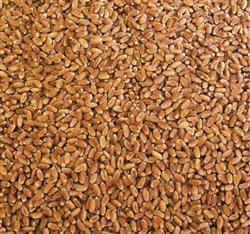
How should wheat seeds be treated before sowing? Please give an introduction and guidance
Wheat seeds can be treated as follows before sowing:
First, carefully select the seeds. For seeds saved by farmers themselves, the grains are often uneven in size and are often mixed with broken grains, grass seeds and other debris, as well as grains carrying pests and diseases. After sowing, this causes uneven growth of wheat seedlings and makes it easy to form weak seedlings, affecting high yield. Therefore, before sowing wheat, carefully select the saved seeds, remove broken grains, pest- and disease-carrying grains and debris, ensure seed quality, and lay the foundation for uniform, complete and strong seedlings.
Second, conduct a germination test. Before sowing, a germination test must be carried out to determine the germination rate and germination vigor of the seeds, avoid poor emergence caused by a low seed germination rate, and provide a basis for determining the appropriate sowing rate to ensure full emergence after sowing. Simple seed germination test method: take two portions of wheat seeds, 100 grains each, place the seeds in 30°C warm water and soak for 3-4 hours, then take two grease-free dishes, place 4-5 layers of toilet paper in each dish, then arrange the soaked seeds on the toilet paper, cover with another 3-4 layers of toilet paper, and finally moisten the toilet paper with 30°C warm water. Place the germination dishes in a warm place, and after 3 days and nights the germination rate can be counted.
Third, sun the seeds before sowing. Sunning wheat seeds before sowing can prevent mold and insects, promote after-ripening of the seeds, break seed dormancy, improve germination vigor and germination rate, and help produce strong seedlings and high yield. According to experiments, the germination rate of sunned seeds can increase by 14-16%, with an average yield increase of about 15%. As for the sunning time, generally sun the seeds once each at 25-30 days and 7-10 days before sowing, so as to significantly increase the seed germination rate.
Fourth, treat the seeds with chemicals. For saved seeds, use phoxim at 0.3% of the seed amount and triadimefon at 0.1% of the seed amount, mix with water at 8% to prepare a medicinal solution, spray it on the wheat seeds, stir evenly, then pile and cover for 8-10 hours, and they can be sown. This has a significant effect on controlling underground pests and seedling-stage pests and diseases.
Click to get more wheat cultivation techniques
Click to get more grain cultivation techniques