How to manage summer corn during the seedling stage? Key technical points explained in detail
How to manage summer corn seedlings well? Please provide guidance on managing summer corn. The period from emergence to jointing is the seedling stage. Its main characteristics are: aboveground growth is slow, while root growth is rapid. The central task of field management at this stage is to promote root growth, cultivate strong seedlings, and lay the foundation for high yield. Corn seedlings are sensitive to environmental...
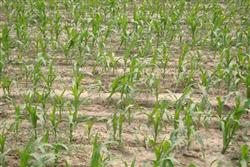
How to manage summer corn seedlings well? Please provide management guidance
The period from emergence to jointing in summer corn is the seedling stage. Its main characteristics are: aboveground growth is slow, while root growth is rapid. The central task of field management at this stage is to promote root growth, cultivate strong seedlings, and lay the foundation for high yield. Corn seedlings are sensitive to environmental conditions, and untimely or improper management can easily lead to uneven seedlings, weak seedlings, and diseased or disabled seedlings. Therefore, seedling-stage management of corn is very important, and comprehensive management measures should be adopted.
I. Checking and replanting seedlings
After corn emerges, seedling checking and replanting should be carried out immediately. Before the 3-leaf stage of corn, if more than 3 consecutive plants (hills) are found missing, replanting should be done in time. The method of transplanting seedlings with soil can be used to reduce the difference in seedling vigor between adjacent plants. Transplanting should be done on rainy days or on sunny afternoons, and watering should be done promptly after planting to shorten the recovery period and ensure survival. If fewer than 3 plants (hills) are missing, keeping double plants on one or both sides of the missing spot is sufficient, and replanting is unnecessary. Generally, reseeding is not recommended. The effect of reseeding is not as good as transplanting, and transplanting is not as good as keeping double plants.
II. Thinning and final singling of seedlings
Timely thinning and final singling are key to reducing the proportion of weak plants, improving population uniformity, and ensuring suitable density. Corn grows quickly, so thinning and final singling should be done early and in a timely manner. Generally, thin at 1~2 fully expanded leaves and final singling at 2~3 fully expanded leaves. The principle of thinning is to remove weak seedlings and keep strong ones, and remove diseased seedlings and keep healthy ones. Thinning and final singling should be done on sunny afternoons, because at this time diseased seedlings, insect-damaged seedlings, and poorly developed seedlings are prone to wilting, making them easier to identify and eliminate. For smut-infected seedlings that are short with dense leaves, thick at the base and thin at the top, and twisted plants, they should be thoroughly removed. On dryland and lower-production plots, thinning and final singling should be done early. On plots with severe pests and diseases, thinning and final singling should be done later. When keeping double plants, the spacing between the two plants should be 5~10cm. For interplanted corn, because there are many pests, many damaged seedlings, severe weed problems, and greater difficulty in maintaining the stand, thinning should be timely and final singling should be delayed. Generally, thin at 2 fully expanded leaves and final singling at 3~4 leaves.
III. Root promotion and seedling strengthening
Root promotion and seedling strengthening is an effective technical measure based on the growth characteristics of corn at the seedling stage, artificially controlling aboveground growth and promoting underground growth, and resolving the contradiction between aboveground and underground growth. It includes a set of measures such as controlling watering, deep intertillage and hoeing, and exposing roots by removing soil, promoting roots to develop deeper, shortening the lower internodes of the stalk, lowering the ear position, and enhancing lodging resistance. At the same time, it promotes ear differentiation, effectively alleviates the contradiction between aboveground and underground growth and between vegetative and reproductive growth, and lays the foundation for large ears and many grains. Corn root promotion and seedling strengthening should be flexibly controlled according to variety, density, and soil fertility. Generally, vigorous seedlings with dark green leaves, fertile soil, high density, and sufficient moisture should be treated; yellow, thin, and drought-stressed weak seedlings should not be treated. Therefore, there is the farming proverb of "three treat and three do not treat," namely "treat dark but not yellow, treat fertile but not thin, treat dry but not wet." Root promotion and seedling strengthening generally should begin at the seedling stage and end before jointing. Too short a time is ineffective, while too long affects young ear differentiation and forms "small old seedlings." When root promotion and seedling strengthening ends, topdressing and watering should be done immediately to promote growth. Interplanted corn generally should not be treated because sowing and growth conditions are poor; instead, water and fertilizer management should be strengthened to promote weak seedlings into strong ones.
IV. Intertillage, stubble clearing, and weeding
Intertillage is an important measure in corn seedling-stage management. According to research, intertilling twice at the corn seedling stage increases secondary roots by 5~6 and root depth by 6~7cm compared with no intertillage, increasing yield by about 10%. Generally, intertill 2~3 times. The first time is before final singling, with a depth of 3~5cm. At this time the seedlings are short, so pressing and injuring seedlings should be avoided. The second and third times are from final singling to jointing, with a suitable depth of about 10cm. The principle of intertillage is: shallow cultivation near the seedlings, deep cultivation between rows. Direct-seeded corn at the seedling stage coincides with the rainy season, so intertillage should be shallow. If intertillage is too deep, the soil stores too much water, which can easily cause bud flooding or seedling flooding. After wheat harvest, interplanted corn should be deeply intertilled immediately to clear stubble, loosen the soil, and promote root development.
V. Topdressing to promote seedlings
Topdressing at the seedling stage has effects such as promoting roots, strengthening seedlings, promoting leaves, and strengthening stalks. It is generally carried out after final singling and before jointing. The specific topdressing time should be determined according to seedling condition, soil fertility, and other conditions. For third-class seedlings, transplanted seedlings, plots without base fertilizer or seed fertilizer, low-lying wet plots, and interplanted plots, early and heavy topdressing to promote seedlings should be applied, generally around final singling. For strong seedlings, plots with high soil fertility, and plots with sufficient base fertilizer and seed fertilizer, topdressing to promote seedlings may be omitted or applied lightly. In addition to chemical fertilizers, decomposed organic fertilizer can also be applied. For seedling-stage topdressing amount, in principle all phosphorus fertilizer and potassium fertilizer should be applied, and the amount of nitrogen fertilizer topdressing should be determined according to soil and seedling condition. Generally, high-yield fields apply 20%~30% of total nitrogen, medium-yield fields 50%~60%, and low-yield fields more than 60%. Topdressing is generally applied in furrows or holes. The depth should be more than 5cm, and the distance from seedlings should be more than 10cm. Be careful not to burn the seedlings. Organic fertilizer should be applied deeply at about 10cm.
VI. Pest control
The main pests at the corn seedling stage are cutworms, armyworms, aphids, thrips, and others.
(1) Control of cutworms. After emergence, spray 2.5% Decis 800~1000 times dilution along the seedling rows in the evening, or scatter 0.05% poisoned sand on both sides of the seedling rows.
(2) Control of aphids. Spray 40% dimethoate emulsifiable concentrate 1000~1500 times dilution into the seedling whorl. 40% omethoate emulsifiable concentrate or 50% malathion emulsifiable concentrate or 25% phosmet emulsifiable concentrate, etc., at 1000 times dilution. It can also control pests such as thrips, Swedish stem flies, and planthoppers.
(3) Control of armyworms. The second-generation armyworm damages interplanted corn, and the third-generation armyworm damages summer direct-seeded corn. Spray 90% trichlorfon crystals or 40.7% Lorsban emulsifiable concentrate 1000~1500 times dilution, or 20% fenvalerate emulsifiable concentrate or 50% phoxim 1500~2000 times dilution for control.
(4) Control of corn borers and corn earworms (cotton bollworm, sorghum stem borer, etc.).
1. Whorl stage: use 1.5% phoxim granules 0.5kg, add fine sand 6~8kg, or BT emulsion 150~200 milliliters, mix with fine sand 5kg, or 1% 1605 emulsifiable concentrate granules (50% 1605 emulsifiable concentrate 0.5kg + water 10kg diluted, mixed with fine sand 25kg), and apply into the whorl. Alternatively, use 90% trichlorfon crystals diluted 1500 times or 50% dichlorvos emulsifiable concentrate 800~1000 times dilution, and pour into the whorl.
2. Tasseling stage: spray 90% trichlorfon crystals 2000 times dilution on the tassel, or apply 40% omethoate emulsifiable concentrate 40~60 times dilution or 50% monocrotophos emulsifiable concentrate 20~50 times dilution to the stalk internode below the ear position, which also controls aphids.
3. After silk pollination: use 2.5% Decis oil 400~500 times dilution or BT emulsion 200~300 times dilution for drip irrigation on the female ear.
VII. Disease control
The main diseases at the corn seedling stage are damping-off, seedling blight, and root rot caused by Pythium, Fusarium moniliforme, and others.
(1) Damping-off. Use 10% Celest water formulation, 50~100 milliliters per 50kg of seed for seed dressing, or 5% Genbao for seed dressing. When wilted diseased leaves or wilted diseased plants are found, spray 72.2% Previcur water formulation 500~800 times dilution, or 58% Ridomil-MZ wettable powder 500 times dilution, or 72% Curzate wettable powder 600 times dilution.
(2) Northern leaf blight. Spray 40% Kitazin or 70% mancozeb wettable powder 600 times dilution.
(3) Southern leaf blight. Spray 50% carbendazim wettable powder 500 times dilution, or 70% thiophanate-methyl wettable powder 500 times dilution.
(4) Viral disease. In the early stage of the disease, spray a mixture of 20% Virus Star 500 times dilution and Luyebao 400~500 times dilution, which has a certain effect. Omethoate emulsifiable concentrate 1500 times dilution or 50% pirimicarb wettable powder 2500 times dilution can also be sprayed to control aphids and small brown planthoppers and eliminate virus-transmitting insects.
Click to get more corn planting techniques
Click to get more food crop planting techniques