What are the key points for summer corn seedling-stage management
What should be paid attention to during the summer corn seedling stage? Please give an introduction. During the summer corn seedling stage, the following points should be done: 1. Check seedlings and fill gaps to prevent missing seedlings and broken rows. To ensure full stands, seedlings should be checked and gaps filled in time. Use early-maturing varieties after sprouting for reseeding, or before the seedlings reach the 4-5 leaf stage, transplant seedlings with soil in the afternoon or on cloudy days to fill gaps. When corn has 3-...
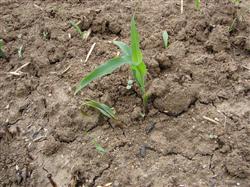
What should be paid attention to during the summer corn seedling stage? Please give an introduction
During the summer corn seedling stage, the following points should be done:
1. Check seedlings and fill gaps to prevent missing seedlings and broken rows
To ensure a full stand, seedlings should be checked and gaps filled in time. Use early-maturing varieties after sprouting for reseeding, or before the seedlings reach the 4-5 leaf stage, transplant seedlings with soil in the afternoon or on cloudy days to fill gaps. When corn has 3-4 leaves, thin the seedlings in time; when it has 5-6 leaves, set the final seedlings. Remove weak seedlings, small seedlings, diseased seedlings, and round-stalk seedlings, and keep healthy seedlings of uniform size.
2. Cultivate in time to prevent weed infestation
During the seedling stage, cultivation and weeding should be done 2-3 times. Before final thinning, cultivation should be shallow, with a depth of 5 cm being appropriate. Before jointing, cultivate to kill weeds 1-2 times to encourage secondary roots to grow deep, with a depth of 10 cm, deeper between rows and shallower near the seedlings. Chemical weeding is encouraged: use corn treasure or yi'a mixture at 100-120 ml per mu, mixed with 50 kg of water, and spray evenly.
3. Check for diseases and control insects to prevent disease and pest damage
Remove weeds at field edges, ridge borders, and field corners in time to eliminate aphids and planthoppers. Corn thrips damage the corn whorl in mid-to-late June, causing the whorl leaves to twist, and the damaged leaves show silvery-white streaks. In severe cases, the whorl leaves turn yellow and die. Control method: 40% omethoate 25-30 ml, mixed with 30-50 kg of water, or 50% phoxim emulsifiable concentrate at 1000 times dilution for spraying.
4. Apply extra fertilizer to weak seedlings to prevent strong plants from suppressing weak ones
For weak seedlings, measures should be taken early, managing individual plants to promote weak ones into strong ones, so they quickly catch up to the general plant height and avoid severe crowding later, which can cause empty stalks or small ears with bald tips and missing kernels. A common method is to apply extra fertilizer, applying 5-10 kg of quick-acting nitrogen fertilizer per mu, placed in holes near the plants, and loosening the soil in time after application.
5. Combine drainage and irrigation to prevent waterlogging damage to sprouts
A notable feature of the corn seedling stage is tolerance to drought and fear of waterlogging. As long as there is no severe drought, watering is generally not needed, but when waterlogging occurs, drainage should be done in time. During the corn seedling stage, there are many heavy rains and sudden rains. After rain, drainage should be done in time to prevent hot rain from damaging stems, leaves, and roots and causing seedling death. This is especially true for low-lying land and plots with poor land preparation, where drainage should be done even more promptly, along with timely cultivation to dissipate soil moisture and improve aeration, preventing waterlogging damage to sprouts.
Click to get more corn planting techniques
Click to get more food crop planting techniques