Detailed Explanation of Key Technical Points for Summer Soybean Planting and Management
How to plant and manage summer soybeans? A detailed introduction is given here. Soybean is an important cash crop in China's agriculture. Because summer soybean planting is affected by varietal characteristics and climatic conditions, after sowing it may fail to emerge on schedule, produce strong seedlings, or achieve full stands. During the seedling stage, growth can also be harmed by diseases, pests, and weeds, resulting in sparse and weak seedlings, low yield...
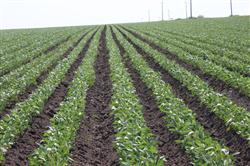
How to plant and manage summer soybeans? A detailed introduction is given here
Soybean is an important cash crop in China's agriculture. Because summer soybean planting is affected by varietal characteristics and climatic conditions, after sowing it may fail to emerge on schedule, produce strong seedlings, or achieve full stands. During the seedling stage, growth can also be harmed by diseases, pests, and weeds, resulting in sparse and weak seedlings, low yield, and poor quality and benefits. Many years of practice have proven that to grow summer soybeans well, the following key technical points must be grasped.
I. Key Points of Planting
(1) Select suitable varieties and plant at a reasonable density. When planting summer soybeans, varieties should be selected according to local rainfall conditions, varietal characteristics, and soil fertility. For example, in dry areas with little rain, it is advisable to choose varieties with many branches, lush plants, small to medium seeds, and indeterminate pod-setting habit; in areas with abundant rainfall, it is advisable to choose varieties with a well-developed main stem, strong stalks that do not lodge, and medium to large seeds with a determinate pod-setting habit. On high-fertility soil, keep about 15,000 plants per mu; on low-fertility soil, keep more than 20,000 plants per mu.
(2) Apply sufficient base fertilizer and cultivate strong seedlings. Soybean seedlings need a certain amount of nutrients for growth. Applying additional N, P, and K as base fertilizer before sowing can promote seedling growth and faster lignification of young stems, which helps produce strong seedlings resistant to disease. Generally, apply 40 kg of ternary compound fertilizer per mu (equivalent to 3.4 kg pure N, 3.2 kg pure P, and 3.4 kg pure K), or apply 1,500-2,000 kg of decomposed organic fertilizer as base fertilizer.
(3) Prevent waterlogging damage and sprout scalding, and strive for a full stand. After sowing, field drainage ditches should be opened in time so that ditches and channels are connected and drainage and irrigation are smooth, with no standing water on the bed surface after rainfall, to prevent seed rot; when drought makes cultivation impossible, water in time to build soil moisture so that soil moisture is suitable for land preparation and sowing; if drought continues, watering is still needed after sowing to ensure timely emergence and prevent soybean sprouts from dehydrating and being scalded. When fighting drought, never use flood irrigation, as it affects cultivation and emergence.
(4) Topdress at the right time, spray fertilizer on leaves, and prevent late-stage drought. The early flowering stage of soybean plants is when vegetative and reproductive growth proceed simultaneously. At this time, the nitrogen released by rhizobia in the root system cannot meet the plants' growth needs. Topdressing nitrogen at the early flowering stage can promote flower development and young pod growth. Generally, broadcast 3.5-5 kg of urea per mu before rain; if plants grow too vigorously, reduce the amount as appropriate or do not apply urea. For foliar spraying, at the soybean seedling stage and before flowering, choose ammonium molybdate diluted with water to a 0.05%-0.1% solution, or choose superphosphate diluted with water to a 2% solution, and spray 50 kg per mu plus 150 g potassium dihydrogen phosphate plus 100 g urea, once every 7 d, three times in a row, spraying both sides of the leaves until wet, to expand the absorption area, improve absorption, increase fertilizer efficiency, and significantly raise yield. From the early flowering stage to the pod-filling stage of soybean, if the weather is dry, irrigate at the right time to prevent drought from affecting yield.
II. Key Points of Chemical Weed Control and Disease and Pest Control
(1) Timely chemical weed control. For pre-emergence soil closure 1-3 d after sowing, the bed surface is required to be level, with fine soil uniform and without large or small clods, and the soil moist. Use 72% Dual EC 100-120 ml or 50% acetochlor EC 100-150 ml per mu, diluted with 30 kg water for spraying; alternatively, at the 1-3 compound leaf stage of soybean seedlings and the 3-5 leaf stage of various weeds, use 15% quizalofop-p-ethyl EC 75 ml plus 25% fomesafen AS 50-60 ml per mu, and if there are many nutsedge plants in the field, add 48% bentazone AS 100 ml, diluted with 50 kg water for stem and leaf spraying. To ensure the quality of chemical weed control, be sure to use the correct amount of herbicide and the correct amount of water, carry out chemical weed control at the right time, and prevent repeated spraying and missed spraying.
(2) Prevent diseases at the right time. During the soybean seedling stage, damping-off, root rot, and southern blight are very likely to occur. Before sowing, choose 50% carbendazim WP 500 g or 50% thiram WP 400 g, add 2 kg water, stir to dissolve, then evenly mix with 100 kg seed, and sow after drying; alternatively, at the true leaf stage of seedlings, choose 50% thiophanate-methyl WP or 65% zineb WP 100 g per mu, diluted with 50 kg water, and spray stems and leaves once. At the full flowering stage of soybean, use thiophanate-methyl again for control, which can effectively control the occurrence of downy mildew and anthracnose.
(3) Use pesticides scientifically to control insects. From the full flowering stage to the pod-filling stage of soybean plant growth, pests such as the cotton semilooper, soybean leaf roller, cotton bollworm, beet armyworm, and tobacco cutworm are very likely to occur. These pests occur mixed in the field, with overlapping generations, severe damage, and strong pesticide resistance. Control must be based on the pest forecast period; or from late July to early August, pay special attention to observing whether net-like and sawtooth-shaped leaves chewed by young larvae appear in the field. Once found, apply pesticide in time for control, once every 7 d, three times in a row. Each application should preferably mix and alternate different types of insecticides to prevent pests from developing resistance. In the early stage, choose 2.5% beta-cypermethrin EC, 2.5% kung fu EC, 4.5% cypermethrin EC, 5% chlorfluazuron EC, 40% phoxim EC, and 48% chlorpyrifos EC, all diluted 1,500 times, and spray 50 kg of pesticide solution per mu after 5 p.m. or from 6 to 8 a.m. Try to spray the pesticide solution directly onto the insect bodies for contact killing to improve control efficacy. For later-stage control, choose biological insecticides, such as compound BT emulsion, Bacillus thuringiensis BT preparation, and Bacillus cereus, each gram containing 10 billion viable spores, diluted with water 500-800 times, and spray 50 kg on stems and leaves per mu. They can also be mixed with any of the above insecticides. Never mix with fungicides, otherwise there will be no control effect.
Click to get more soybean planting techniques
Click to get more grain and oil crop planting techniques