Detailed Explanation of Summer Soybean Planting Methods and Technical Key Points
How are summer soybeans planted? Please provide an introduction to the methods. For summer soybean planting, you can refer to the following methods: 1. Pre-sowing irrigation: For plots with poor soil moisture, where irrigation conditions are available, irrigate once before sowing to facilitate seed germination after sowing. Combine irrigation with field closed weeding. 2. Carefully select seeds: Choose seeds with good...
How are summer soybeans planted? Please provide an introduction to the methods
For summer soybean planting, you can refer to the following methods:
1. Pre-sowing irrigation: For plots with poor soil moisture, where irrigation conditions are available, irrigate once before sowing to facilitate seed germination after sowing. Combine irrigation with field closed weeding.
2. Carefully select seeds: Choose seeds with good sowing quality, high yield and stable yield. Before sowing, carry out manual grain selection, and pick out diseased grains, insect-damaged grains, small grains, shriveled grains and broken grains. At the same time, according to the typical characteristics inherent to this variety, such as grain shape, grain color, seed size, hilum size and color depth, remove mixed seeds of different varieties to improve seed purity and germination rate. Strive for full emergence after one sowing, achieving uniform, even and strong seedlings.
3. Seed treatment: To control seedling-stage pests and diseases such as grubs, cutworms and root rot, seed dressing with phoxim or carbendazim can be used. Rhizobium seed dressing can also be used, but if rhizobium seed dressing is used, insecticides and fungicides can no longer be mixed in.
4. Sowing date: Because the summer sowing soybean growing season is relatively short, sowing early at the right time is very important. Sowing too early or too late is unfavorable to soybean growth and development, yield and quality. Sowing at the right time gives a high seedling retention rate, neat and robust emergence, good growth and development, and thick stems. If sowing is too late, high temperatures make emergence fast but not robust, and if soil moisture is poor, emergence will also be uneven.
5. Sowing methods:
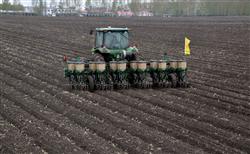
Summer-sown soybeans are mostly sown after wheat harvest, and some are relay intercropped with soybeans in wheat rows before wheat is mature and harvested. Relay intercropping is generally sown in late May (7-10 days before wheat harvest). For summer direct-seeding plots, land preparation and watering should be done promptly after wheat harvest, followed immediately by sowing. When labor is tight, the usual approach is to harvest wheat, clear stubble and sow while taking advantage of soil moisture all at the same time. If soil drought is severe, water immediately after sowing to facilitate emergence.
6. Reasonable close planting: Reasonable close planting means correctly handling the relationship between individual plants and the population under the specific local and current conditions, so that the population develops to the maximum extent and individuals also develop fully; so that light energy and soil fertility per unit area are fully utilized; and under the same cultivation conditions, the best economic benefits can be obtained. Reasonable close planting should grasp two principles
(1) Variety characteristics: The plant height, number of branches, leaf size and so on of a variety are closely related to density. For large-leaf varieties that are tall, have more branches and a loose plant type, the planting density should be sparse; for varieties that are short and have poor growth vigor, or varieties that are taller but have few branches and a compact plant type, a relatively larger density should be used.
(2) Fertilizer and water conditions: For the same variety, when fertilizer and water conditions are relatively good, the plants grow luxuriantly, so the density should be smaller; conversely, when fertilizer and water conditions are poor, the density should be larger.
Generally, for plots with fertile soil and irrigation conditions, keep 12,000-15,000 plants per mu. For plots with medium fertility and slightly poor fertility, keeping about 18,000 plants per mu is appropriate.
Click to get more soybean planting techniques
Click to get more grain and oil crop planting techniques