What are the control methods for the meadow moth on summer soybeans?
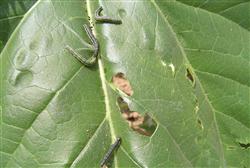
How to control the meadow moth on summer soybeans? Please allow me to explain. The meadow moth on soybeans has risen from a secondary key pest of summer soybeans in the past to a primary key pest. Newly hatched larvae feed on the mesophyll of tender young leaves, leaving the epidermis; after the 3rd instar their food consumption increases greatly, and they eat the leaves into notches with only the veins remaining. In ordinary years yield is reduced by 10%-15%, in severe years...
How to control the meadow moth on summer soybeans? Please allow me to explain
The meadow moth on soybeans has risen from a secondary key pest of summer soybeans in the past to a primary key pest. Newly hatched larvae feed on the mesophyll of tender young leaves, leaving the epidermis; after the 3rd instar their food consumption increases greatly, and they eat the leaves into notches with only the veins remaining. In ordinary years yield is reduced by 10%-15%, in severe years by 20%-30%, posing a serious threat to soybean production. The meadow moth can have 1-2 generations per year, overwintering as mature larvae in silken soil cocoons. The overwintering larvae pupate and emerge in April-May. The first-generation larvae mainly damage rapeseed. From mid-to-late August to early September the second-generation larvae damage soybeans. Adults are gregarious and have a strong tendency toward various light sources, especially blacklight lamps. Eggs are mostly laid on plants of the Chenopodiaceae, Asteraceae and Solanaceae. Larvae in the 4th and 5th instars have a large food intake, accounting for more than 80% of the larvae's total food consumption.
1. Agricultural control
During the egg-laying period of the meadow moth, before hatching, eliminate weeds in the field and along the field edges, and gather the cut weeds and bury them. In years when the meadow moth breaks out heavily, before the larvae enter the soybean field, dig insect-prevention trenches to block and kill them; pesticides can be applied in the trenches.
2. Chemical control
1. Fumigation: during the peak adult emergence period in August, mix 100-150 g of 80% dichlorvos with 4 kg of sawdust and wheat bran, make 40 piles per mu, and pile them evenly under the soybean plants; the efficacy usually lasts 8-10 days.
2. Spraying: 7-10 days after the peak adult emergence period is the peak hatching period of the larvae. When the larvae are at a young instar, usually from late August to early September, use per mu 25-35 ml of 50% fenitrothion emulsifiable concentrate; 20-30 ml of 2.5% deltamethrin emulsifiable concentrate; 20-30 ml of 20% fenvalerate emulsifiable concentrate, dilute evenly with 50 kg of water and spray.
3. Dusting: 2.5% trichlorfon powder; 3% mix-jiemingwei powder; 2% fenitrothion powder, dust 1.5-2 kg per mu.
3. Physical control
Set up blacklight lamps in the soybean field to trap and kill adults.
Click to get more soybean planting techniques
Click to get more grain and oil crop planting techniques