Detailed Explanation of Key Points for Pollution-Free Cultivation Techniques of Atractylodes macrocephala
Atractylodes macrocephala is distributed in the wild in Zhejiang, Jiangxi, Hunan, Hubei and Shaanxi, and can be cultivated in these provinces as well as in North China. Loose, fertile sandy loam with good water permeability is favorable for the growth of its root system and suitable for planting Atractylodes macrocephala; overly heavy, waterlogged soil or sandy soil with poor fertilizer retention is not suitable for planting it.
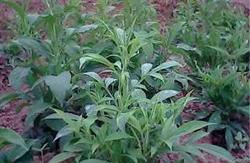 Atractylodes macrocephala is the dried rhizome of the Asteraceae plant Atractylodes macrocephala, also known as Yuzhu, Zhezhu, Dongzhu, etc. It has the functions of tonifying the spleen and strengthening the stomach, drying dampness and promoting diuresis, stopping sweating and preventing miscarriage.
I. Morphological Characteristics
Atractylodes macrocephala is a perennial herb, 30-80 cm tall. The rhizome is thick and large, slightly fist-shaped, grayish-yellow; the stem is erect and lignified at the base. The leaves are alternate; the lower stem leaves have long petioles, and the blades are 3-parted or pinnately 5-parted, with spiny teeth at the margins; the upper stem leaves have gradually shorter petioles, and the blades are undivided, elliptical or ovate-lanceolate. The capitulum is solitary at the branch tips and large; the involucral bracts are in 7-8 layers, and the base is surrounded by a whorl of pinnately parted leaf-like bracts; the flowers are numerous, borne on a flat receptacle, all tubular, with purple corollas; stamens 5, syngenesious, anthers linear; pistil 1, ovary inferior. The achene is oblong-elliptical, slightly flattened, covered with hairs on the surface, with a plumose pappus. The flowering period is July to September, and the fruiting period is September to November.
II. Growth Habits
Atractylodes macrocephala prefers a cool climate and fears high temperature and excessive moisture. The suitable temperature for rhizome growth is 26°C-28°C, and mid-August to late September is the period of fastest rhizome enlargement. The seeds germinate easily, with an optimum germination temperature of about 20°C, and require relatively more water, generally absorbing water at 3-4 times the seed weight. The seed lifespan is 1 year.
III. Cultivation Techniques
1. Site selection and land preparation For the seedling site, sandy loam with moderate fertility, good drainage, high and dry conditions, and cool ventilation should be selected. Apply 2000 kg of farmyard manure per mu as base fertilizer, plow 20 cm deep, rake level and fine, and make beds 1-1.2 m wide. For the field, sandy loam that is fertile, ventilated, cool and well-drained should be selected, and continuous cropping should be avoided. After the previous crop is harvested, apply 4000 kg of farmyard manure per mu, together with 50 kg of superphosphate as base fertilizer, plow 20 cm deep, and make beds 1-1.5 m wide.
2. Propagation method Seed propagation is used, and in production the seedling-raising and transplanting method is mainly adopted.
(1) Seedling raising. Select new seeds that are plump and free from pests and diseases, soak them in warm water at 25°C-30°C for 24 hours, then remove and sprout them. Sow from late March to early April, preferably by drilling or broadcasting. Before sowing, first spray water on the bed; after the water infiltrates and the surface soil is slightly dry, open furrows at a row spacing of 15 cm and sow, with a furrow depth of 4-6 cm and a sowing width of 7-9 cm. The furrow bottom should be flat. After sowing, cover with soil and level it, press lightly, and then water once. Use about 4 kg of seed per mu. For broadcasting, after the water infiltrates, scatter the seeds evenly and then cover with a shallow layer of soil; about 5 kg of seed can be used per mu. Seedlings emerge about 15 days after sowing. By the time of transplanting in winter, about 400 kg of fresh planting stock can be raised per mu.
(2) Transplanting. Transplanting can be done in the same winter, but because winters in Zhangye City are cold, the planting stock needs to be stored in winter and planted in spring. The best planting stock is that which has not bolted or flowered in the current year, has strong main buds, and has small, neat rhizomes the size of apricot kernels. Trim off the fibrous roots, open furrows 10 cm deep at a row spacing of 25 cm, and place the planting stock into the furrows at a plant spacing of about 15 cm, with the bud tips facing upward and level with the ground. After planting, press lightly on both sides; after all are planted, water thoroughly once. Generally, 50-60 kg of fresh planting stock is needed per mu.
3. Field management
(1) Management of the seedling (planting stock) site. After the seedlings emerge, weed promptly and thin them to a plant spacing of 4-6 cm. If the weather is dry, spread grass between the plants to reduce water evaporation. Where conditions permit, water in the early morning and evening or use sprinkler irrigation for drought resistance. If bolting is found in the later growth stage, remove it promptly.
(2) Field management. From seedling emergence to May, there are many weeds in the field, so intertillage and weeding should be done frequently. The first few intertillages can be deeper, and later ones should be shallow hoeing. After mid-May, the plants enter the vigorous growth stage, and generally no more intertillage is done; if there are weeds between the plants, they can be pulled by hand. In mid-June the plants begin to form flower buds. Generally in early to mid-July, after budding and before flowering, remove the buds in batches. Bud removal helps increase the yield and quality of the rhizomes of Atractylodes macrocephala. During the growth period, Atractylodes macrocephala needs sufficient water, especially during rhizome enlargement. If drought occurs, water and irrigate promptly. If water accumulates after rain, drain it promptly. Before and after budding, topdressing can be applied once, with 20 kg of urea and 30 kg of compound fertilizer applied in furrows between rows per mu, followed by covering with soil and watering. One week after bud removal, topdressing can be applied once more. It should be noted that field operations such as weeding, loosening soil, fertilizing and bud removal should all be carried out after the dew has dried.
4. Pest and disease control
Atractylodes macrocephala has relatively many pests and diseases. The commonly occurring ones are as follows:
(1) Damping-off. It occurs easily under low temperature and high humidity, mostly in the planting stock site, and damages the rhizome. Control methods: reduce field humidity; in the early stage of the disease, drench with 50% carbendazim 1000-fold solution.
(2) Iron leaf disease. Also called leaf blight. It begins in April and is especially severe from June to August, damaging the leaves. Control methods: remove diseased plants; in the early stage of the disease use 1:1:100 Bordeaux mixture, and in the later stage spray with 50% thiophanate-methyl or carbendazim 1000-fold solution.
(3) Southern blight. Also called rhizome rot. The onset period is the same as that of iron leaf disease, and it damages the rhizome. Control methods: rotate with gramineous crops; remove diseased plants, and disinfect the diseased holes with quicklime powder;
(4) Root rot. Also called rotten root disease. The onset period is the same as that of iron leaf disease, and it is especially severe when humidity is high, damaging the roots. Control methods: select and breed disease-resistant varieties; rotate with gramineous crops, or carry out paddy-upland rotation; before planting, soak the seeds in 50% carbendazim 1000-fold solution for 5-10 minutes; in the early stage of the disease, drench the affected area with 50% carbendazim or 50% thiophanate-methyl 1000-fold solution. In areas where underground pests are severe, drench with 1000-1500-fold dimethoate or 800-fold trichlorfon solution.
(5) Rust disease. It begins in May and damages the leaves. Control methods: clean the field; in the early stage of the disease, spray with 25% triadimefon 1000-fold solution. In addition, there are also damage from sclerotinia disease, mosaic disease, aphids, root-knot nematodes, southern dodder, cutworms, etc. The use of any pesticide is prohibited 7-10 days before harvest, and highly toxic pesticides are strictly prohibited throughout the entire growing season. IV. Harvesting From late October to mid-November, when the stems and leaves of Atractylodes macrocephala begin to wither, dig out the rhizomes and cut off the stems.
V. Seed retention techniques
Seed retention of Atractylodes macrocephala can be divided into plant selection and plot selection; the former can improve seed purity. Generally in July to August, select robust plants with few branches, large leaves, and flat and large flower buds as mother plants for seed production. Remove late-opening or early-opening flower buds, and it is better to retain 5-6 flower buds per plant. Harvest the seeds in early to mid-November. On a sunny day, dig up the plants and cut off the underground rhizomes, tie the aboveground parts into small bundles, hang them upside down under the eaves to after-ripen for 20-30 days, then sun-dry for 1-2 days, thresh, winnow away the fuzz and shriveled seeds, put them into cloth bags or gunny bags, and hang them in a ventilated and cool place for storage. Note that the seeds of Atractylodes macrocephala should not be sun-dried for too long, otherwise the germination rate will be reduced.