What are the control methods for lotus root rot?
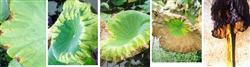
How do you control rot when growing lotus root? Please give an introduction. Lotus root rot, commonly called stalk rot, mainly damages the underground stem, and the leaves and stalks can also be affected. Affected leaves form green wilt-colored patches along the leaf margins and curl downward, then the whole leaf turns brown, and the leaf stalk shrivels and dies from top to bottom. When it occurs severely, the whole field turns a withered yellow, caus...
How do you control rot when growing lotus root? Please give an introduction
Lotus root rot, commonly called stalk rot, mainly damages the underground stem, and the leaves and stalks can also be affected. Affected leaves form green wilt-colored patches along the leaf margins and curl downward, then the whole leaf turns brown, and the leaf stalk shrivels and dies from top to bottom. When it occurs severely, the whole field turns a withered yellow, causing total crop loss.
Path of spread of the pathogen The pathogen is transmitted through diseased lotus root seed stock and soil, and can also spread through irrigation water from infected fields to surrounding lotus fields. At temperatures of 23-30 degrees and during continuous overcast and rainy weather, infection is fast and the disease is severe.
Methods for controlling lotus root rot can refer to the following:
1. Apply poisoned soil Use 2500 ml of 21% Lunfujing per mu mixed with 40 kg of fine soil, stir evenly, pile and cover for half an hour, then spread into the field. For old diseased plots, apply 2-3 times, once every 7 days; for plots with no disease, use 800 ml of Lunfujing per mu mixed with 10 kg of fine soil and spread it around the lotus field to prevent infection caused by water flowing in from pathogen-carrying lotus fields.
2. Apply lotus-growing fertilizer as a top dressing Along with disease control, use 40 kg of 45% ternary compound fertilizer and 10 kg of urea per mu, plus 1 kg of 75% chlorothalonil or 1 kg of 70% thiophanate-methyl, mix well and spread into the field. This both promotes lotus root growth and controls the disease.
3. Note When the lotus leaves in the field are dense, whether for disease control or top dressing, step lightly when moving through the field to avoid damaging the underground stem (lotus root). After applying pesticide and fertilizer, the field should maintain a 10 cm shallow water layer.
Click to get more lotus root growing techniques
Click to get more vegetable growing techniques