What are some practical methods to prevent onion rot in summer?
How do you prevent onion rot in summer? Onion rot in summer is mainly caused by the following factors: 1. Rot caused by diseases. The diseases that commonly affect onions are: soft rot (a bacterial disease) and stem rot (a fungal disease). The control methods are: 1. Pay attention to crop rotation, and avoid continuous cropping with scallion and garlic crops...
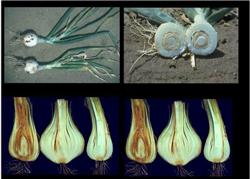
How do you prevent onion rot in summer? Please explain
Onion rot in summer is mainly caused by the following factors:
1. Rot caused by diseases. The diseases that commonly affect onions are: soft rot (a bacterial disease) and stem rot (a fungal disease).
The control methods are: 1. Pay attention to crop rotation, and avoid continuous cropping with scallion and garlic crops. Plow the cultivation site as deep as 30 cm; if a rotary tiller is used, spray a deep-plowing agent before planting, and after about 20 days the soil at a depth of 50 cm will be loose and permeable, which helps root growth and development and improves the plant's disease resistance. 2. Apply well-rotted fertilizer to prevent the fertilizer from carrying pathogens. 3. Use ridge planting as much as possible. 4. Control the amount of nitrogen fertilizer applied during the growing period, and apply fertilizer with a combination of nitrogen, phosphorus and potassium. 5. During bulb formation, pay attention to timely drainage to avoid prolonged waterlogging. 6. Control pests in a timely manner to avoid causing wounds. 7. Before the disease occurs, use the following agents: 72% agricultural streptomycin 4000-fold solution, 50% copper bis(alkylbenzenesulfonate) wettable powder 500-fold solution, 72% Kelu wettable powder 600-fold solution, and 405 Fuxing emulsifiable concentrate 8000-fold solution, sprayed alternately.
2. Rot caused by pests. After underground pests such as cutworms, wireworms and root maggots damage onions, the wounds they create easily allow mold to invade and cause rotting, and can also lead to infectious diseases. In addition to drenching with chemicals, in early June insecticides such as Wanling and Ando should be sprayed in the field to control adult pests.
3. Rot caused by nutrient deficiency. Because early-spring soil temperatures are low, ammonium nitrogen accumulates excessively in the soil, affecting the uptake of calcium, potassium, magnesium and other elements and causing physiological diseases due to the lack of these fertilizer elements. Applying too much nitrogen fertilizer during the growing period can also cause a deficiency of the above elements. The deficiency of these elements causes leaf margins to lose green color and leaf tips to dry up, and at the same time the outer and inner scales of the bulb also dry up and rot. For this reason, cultivation should pay attention to applying nitrogen, phosphorus and potassium together. During the growing period, high-energy red potassium and 0.2% calcium nitrate solution can be applied as a foliar topdressing to supplement potassium and calcium.
4. Rot caused by rain and standing water. In the later stage of onion growth, the leaf sheaths loosen and the gaps become larger; excessive standing water in the field will seep into the leaf sheaths of lodged plants, and rainwater will seep into the leaf sheaths of plants that have not lodged. All of the above factors can cause bulb rot. For this reason, pay attention to drainage and harvest early.
Click to get more onion growing techniques
Click to get more vegetable growing techniques