What are the control methods for onion soft rot?
How do you control onion soft rot? Please provide guidance. Onion soft rot can be controlled by referring to the following methods: 1. Early-stage control (1) Seedling preparation: choose disease-resistant varieties for raising seedlings in the nursery, eliminate diseased and weak seedlings, and cultivate healthy and strong seedlings. (2) Crop rotation selection: choose plots with good ventilation and light transmission, with relatively good previous crops such as corn and wheat; avoid continuous cropping, carrot stubble, and stubble of Liliaceae vegetables such as garlic, and try to avoid stubble such as autumn cabbage and potato that easily leaves soil-borne disease residues. (3) High-ridge planting: in areas where conditions permit, ridge planting is recommended, with onions transplanted on high beds, which can reduce waterlogging and lower the chance of pathogen infection. (4) Strengthen field management: timely cultivation and weeding, increase soil temperature, promote onion development, and help the onion population resist invasion and infection by soft rot pathogens.
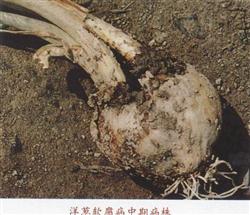
How do you control onion soft rot? Please provide guidance.
Onion soft rot can be controlled by referring to the following methods:
1. Early-stage control (1) Seedling preparation: choose disease-resistant varieties for raising seedlings in the nursery, eliminate diseased and weak seedlings, and cultivate healthy and strong seedlings. (2) Crop rotation selection: choose plots with good ventilation and light transmission, with relatively good previous crops such as corn and wheat; avoid continuous cropping, carrot stubble, and stubble of Liliaceae vegetables such as garlic, and try to avoid stubble such as autumn cabbage and potato that easily leaves soil-borne disease residues. (3) High-ridge planting: in areas where conditions permit, ridge planting is recommended, with onions transplanted on high beds, which can reduce waterlogging and lower the chance of pathogen infection. (4) Strengthen field management: timely cultivation and weeding, increase soil temperature, promote onion development, and help the onion population resist invasion and infection by soft rot pathogens.
2. Growing-season control (1) Actively prevent insects: timely control pests such as onion root maggots and thrips to reduce wounds caused by insect feeding and opportunities for soft rot infection. (2) Reasonable watering: avoid flood irrigation and running-water irrigation to reduce the spread and dissemination of pathogens in the field with water flow. (3) Chemical control: from early July, frequently inspect the field, and when central diseased plants are found, promptly carry out localized drenching-style spraying at the seedlings, while also spraying the whole field for prevention. Preferred options include 72% agricultural streptomycin 5000 times, veterinary penicillin 30000 times, Kocide 2000 500-600 times solution, and 72% agricultural streptomycin soluble powder 4000 times solution for spray control, spraying once every week for 3 consecutive times.
3. Late-stage control: burn onion residues in the field in a centralized manner.
Click to get more onion cultivation techniques.
Click to get more vegetable cultivation techniques.