What diseases should be prevented and controlled when growing tomatoes in summer?
What diseases should be prevented and controlled when growing tomatoes in summer? Please advise. For reference, the following diseases should be prevented and controlled when growing tomatoes in summer: Viral disease: high temperature and drought are the primary conditions for the disease to occur. The suitable temperature for viral disease is between 38-43°C; below 35°C or above 45°C is not conducive to the disease. In daily cultivation management, ...
What diseases should be prevented and controlled when growing tomatoes in summer? Please advise
For reference, the following diseases should be prevented and controlled when growing tomatoes in summer:
Viral disease: high temperature and drought are the primary conditions for the disease to occur. The suitable temperature for viral disease is between 38-43°C; below 35°C or above 45°C is not conducive to the disease. In daily cultivation management, artificially regulating the temperature can maximize the benefits and avoid the harm. The specific measures are as follows:
Water in time: from seedling transplanting to the middle fruit-setting stage, the soil surface in the greenhouse should be kept moist; the soil surface moisture content should be no less than 75-80%, and the air humidity in the greenhouse should be no less than 70%.
Temperature control: adopt the management method of opening the greenhouse film at night (under conditions of no rain at night) and shading and sheltering from wind at noon. Especially when the light intensity is high at noon, shading and sheltering from wind should be done earlier. The main purpose is to ensure a relatively high water content in the air inside the greenhouse and reduce water evaporation, so as to ensure that the young leaves and growing points of the plants do not wilt due to transpiration; to prevent the leaves of plants on both sides of the vent from being scorched and killed by direct strong light. The main methods are: (1) use a hand-pressed sprayer or a motorized sprayer to promptly spray and replenish water on the leaves; (2) use shade nets for physical control; generally, pull the sunshade net into place at 10 a.m. every day and uncover it to let in light after 5 p.m., which can effectively control the occurrence of viral disease.
Chemical control: for preventing viral disease, two formulas are recommended for reference: mix 25 ml of Kangbingwei plus 15 tablets of medical ribavirin plus 15 ml of Fengshou No. 1 plus 2.5 g of natural brassin with 15 kg of water and spray evenly on the plants; another formula is: mix 15 ml of Fengshou No. 1 plus 15 tablets of medical ribavirin plus 3 g of agricultural streptomycin plus zinc sulfate plus 20 ppm of naphthalene acetic acid with 15 kg of water and spray on the plants.
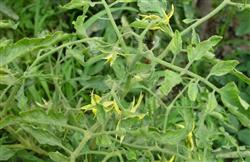
Bud blight: it is a physiological disease and is greatly affected by climate, among which high temperature and drought are the main factors causing the disease. The symptoms are: the growth of the growing point is obviously inhibited, appearing spherical; the leaves below the first inflorescence grow rapidly sideways, and the branches and leaves become thick and large.
Control methods: (1) Use shade nets to avoid strong light. The method is the same as the physical control method for viral disease; (2) Regulation method: use 1 g of 920 growth regulator mixed with 35 kg of water and quickly and evenly spray the top of the plants, with a cure rate of more than 95%. (3) Fengshou No. 1 conditioner can be sprayed appropriately.
Click to get more tomato growing techniques
Click to get more vegetable growing techniques