How can summer-cultivated eggplant be planted to achieve high yields?
How can summer-cultivated eggplant be planted for high yields? Here is an introduction. Summer-cultivated eggplant can be grown by referring to the following methods: 1. Sow early at the right time, sow thinly and grow strong seedlings. Eggplant following wheat is generally raised in seedbeds from late April to late May, choosing land that is high and dry with good drainage, and a shade shed must be built to prevent rain and sunscald. Choose varieties that are disease-resistant...
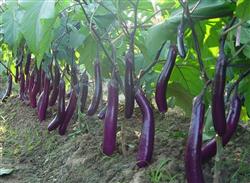
How can summer-cultivated eggplant be planted for high yields? Here is an introduction.
Summer-cultivated eggplant can be grown by referring to the following methods:
1. Sow early at the right time, sow thinly and grow strong seedlings
Eggplant following wheat is generally raised in seedbeds from late April to late May, choosing land that is high and dry with good drainage, and a shade shed must be built to prevent rain and sunscald. Choose varieties that are disease-resistant, heat-tolerant and vigorous in growth, and sow after sprouting. Disinfect the seedbed soil with a 50% carbendazim 800-1000 times solution. Sow somewhat thinly to prevent the seedlings from growing leggy, and plant them out directly after thinning without pricking out. To promote strong seedlings, spray 2-3 times during the seedling stage with a mixture of 0.3% monopotassium phosphate plus 0.2% urea.
2. Apply plenty of base fertilizer and cultivate on high ridges
After the wheat is harvested, promptly prepare the land and apply fertilizer: per 667 sq m apply 5000-7000 kg of organic fertilizer, 50 kg of phosphate fertilizer, 50 kg of urea and 30 kg of compound fertilizer, then form ridges. Eggplant following wheat must be grown on small high ridges so that it can drain in waterlogged conditions and be watered in drought. To prevent weeds from growing thickly, per 667 sq m apply 100 g of trifluralin with water sprayed on the bed surface and mixed evenly into the topsoil.
3. Plant out at the right time
Eggplant following wheat is planted out in mid-to-late June, with a ridge spacing of 80-100 cm and a plant spacing of 30-40 cm, planting 1500-2000 plants per 667 sq m. If planted out too early, the flowering period coincides with the hot, rainy season, which easily causes flower and fruit drop; if planted out too late, the plants enter the hot, humid season before they have recovered from transplanting, which easily leads to few roots, weak seedlings and severe disease, and they often fail because they cannot survive the summer. Therefore, plant out in a timely and reasonable manner so that the peak fruiting period falls after the heat of summer. When planting out, carry a soil ball to prevent wilting; planting after 4 p.m. is best, and water as you plant.
4. Strengthen fertilizer and water management
After planting out, cultivate and weed promptly, and pay attention to drainage to prevent waterlogging; straw can be spread between the ridges to lower temperature and humidity, suppress weeds and prevent fruit rot; top-dress and water at the right times. Before the first eggplant fruit sets, do not water unless the soil is dry, focusing on control to promote sturdy, strong seedlings. When most plants' first eggplant fruit has "opened its eyes," end the seedling-restraining period and promptly apply a fruit-promoting fertilizer, applying 10 kg of urea per 667 sq m. Entering the fruiting stage, when the "opposite eggplant" fruit quickly swells, the demand for water and fertilizer reaches its peak; depending on the weather, generally water once every 5-7 days, and apply a quick-acting fertilizer every other watering, with 10-15 kg of urea per 667 sq m. During the peak fruiting period, in combination with pesticide spraying, spray the leaves with 0.2% urea + 0.2% monopotassium phosphate + 0.8% superphosphate, best applied in the evening.
5. Prune and remove side shoots reasonably
Side shoots tend to sprout from the leaf axils of the leaves below the first eggplant fruit, so after the first eggplant fruit sets, promptly remove the side shoots below it and keep the two-forked branching. In the middle and late stages of eggplant growth, remove all the old leaves below the first eggplant fruit, mainly to reduce nutrient consumption, help ventilation and reduce the occurrence of disease.
6. Promptly prevent and control pests and diseases
The main diseases in summer cultivation of eggplant are Verticillium wilt and phytophthora fruit rot, and the main pests are red spider mites and broad mites. For Verticillium wilt in the early stage of onset, drench the roots with a 30% DT fungicide 350 times solution, or spray with 50% carbendazim 800 times plus 50% thiophanate-methyl 500 times solution. To cure it thoroughly, grafted cultivation using the disease-resistant rootstock red eggplant (Solanum integrifolium) must be adopted. In the rainy season, pay attention to preventing and controlling phytophthora fruit rot; alternate control with agents such as carbendazim, copper hydroxide, oxadixyl and metalaxyl. When broad mites damage young fruits, they mainly gather at the top of the fruit, leaving a large "scar" as the fruit grows, seriously affecting the appearance quality of the eggplant and reducing economic returns. In the early stage of broad mite occurrence, alternate control with abamectin 1000 times solution, hexythiazox 1500 times solution, and 20% clofentezine 1000 times solution, once every 7-10 days, spraying 3 times in a row; be sure to spray the backs of leaves and tender parts such as young stems, stem leaves and young fruits. While controlling broad mites, red spider mites can also be killed.
Click to get more eggplant growing techniques
Click to get more vegetable growing techniques