What are the new techniques for cultivating reishi mushroom? Read this article to understand
Are there any newer techniques for cultivating reishi mushroom? Where can you see and learn the following several cultivation methods for reishi mushroom for reference? Reishi mushroom (Ganoderma lucidum) is a traditional fungal medicine in China. As a traditional Chinese medicine and a tonic for prolonging life, it has a history of a thousand years. The domestic market potential is huge, and the prospects for developing the reishi mushroom production industry are broad....
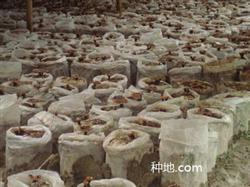
Are there any newer techniques for cultivating reishi mushroom? Where can you see and learn them
The following several cultivation methods for reishi mushroom are introduced for reference. Reishi mushroom (Ganoderma lucidum) is a traditional fungal medicine in China. As a traditional Chinese medicine and a tonic for prolonging life, it has a history of a thousand years. The domestic market potential is huge, and the prospects for developing the reishi mushroom production industry are broad.
The short-log cultivation technique for reishi mushroom is now introduced:
I. Raw and auxiliary cultivation materials
Good tree species for cultivating reishi mushroom include those of the families Fagaceae, Hamamelidaceae, Betulaceae, etc. Generally, for the logs, it is advisable to choose trees with relatively thick bark that does not easily come off, relatively hard wood, little heartwood, well-developed pith rays, abundant vessels, and a trunk diameter at breast height of 8 cm to 13 cm. Fell the trees in the early leaf-fall period, no later than the Awakening of Insects.
II. Selection of cultivation season
Reishi mushroom belongs to the high-temperature fruiting fungi. 10°C to 12°C is the period for making cultivation logs. After inoculation of short logs, they must be cultured for 60 to 75 days to reach physiological maturity.
III. Setting up the cultivation site
For outdoor cultivation, it is best to choose a site with loose soil, open terrain, a water source, and convenient transportation as the cultivation site. The cultivation site needs a shade shed 2 m to 2.2 m high and 4 m wide. Inside the shed, divide it into two beds, left and right. The bed surface is 1.5 m wide, and drainage ditches are left along the bed edges. If conditions permit, black shade netting can be used to cover the top of the shed, with a shading rate of 65%, so that relatively strong scattered light forms inside the shed, and the service life can reach more than 3 years.
IV. Filling materials
Choose low-pressure polyethylene tubes with a folded diameter of 15 to 24 cm x 55 cm x 0.02 cm. In production, plastic tubes of 3 specifications are mostly used, so as to suit short-log cultivation with different calibers. Insert the cut short logs into the plastic tubes, bring the two ends together, bend them, tie the folded ends with small ropes, and tie them tightly. Use plastic tubes 2 to 3 cm larger than the diameter of the logs for bagging. For a 30 cm long log, one segment per bag; for a 15 cm long log, two segments per bag. Several segments can also be tied into a bundle and put into a large bag for sterilization.
V. Sterilization
Then immediately carry out conventional atmospheric-pressure sterilization at 97°C to 103°C for 10 to 12 hours.
VI. Inoculation
Choose varieties that sell well, have good quality, and have high yield as production strains. Currently used strains include g801, g802, g6, g8, etc. The preparation method is the same as for wood-rotting fungi, and sawdust-cottonseed hull formulation spawn is better. When inoculating logs, it is better if the spawn has a slightly higher water content. Pre-select the cooled short-log plastic tubes and fumigate and disinfect them with an aerosol disinfection box. After 30 minutes, discard the spawn skin on the surface of the plastic bag and adopt the double-end inoculation method. With two people working together, one person unties the plastic tying rope, and the other sprinkles spawn broken into the size of peanut kernels near the alcohol flame mouth, and immediately seals and ties the opening tightly. The other end is then inoculated in the same way, and so on, then stacked in layers on shelf racks. During inoculation, the bag-opening time should be shortened as much as possible, the inoculation amount should be increased, and the cut sections should be sealed to reduce contamination, so that the mycelium spreads rapidly along the wood rays of the short logs.
VII. Culturing
In winter, when the temperature is relatively low, artificial heating should be used to raise it above 20°C. After 15 to 20 days of culturing, the ropes can be slightly loosened. The short logs become fully colonized after 45 to 55 days of culturing. After full colonization, another 15 to 20 days are needed to enter the physiological maturity stage, and only then can they be placed in the field.
VIII. Field arrangement
Place physiologically mature short logs horizontally and bury them in the bed surface, with a lateral spacing of 3 cm between logs. This horizontal burying method gives better mushroom production results than vertical placement. Finally, cover the whole area with soil to a thickness of 2 to 3 cm. Water heavily for two consecutive days. Every 200 cm, set up low curved arches with bamboo strips, 15 cm above the ground, cover with plastic film, and open the two ends slightly. The soil moisture for buried soil is 20% to 22%, and the relative air humidity is about 90%.
IX. Management of mushroom emergence
The fruiting body development temperature is 22°C to 35°C. After entering the bed, keep the bed surface moist, with the degree being that soil particles crack when pinched with fingers; it is better to keep it somewhat dry. In mid-to-late May, young reishi mushrooms gradually break through the soil and appear. Water management is mainly based on alternating dry and wet conditions. At night, close the plastic film at both ends of the small shed over the bed to increase humidity, and open it again during the day to prevent carbon dioxide on the bed surface from being too high, exceeding 0.1%, which would produce "antler-shaped reishi" that does not differentiate a cap and only grows a stipe. Ventilation is the key to ensuring normal expansion of the reishi mushroom cap. After June, the film on top of the arched shed must always remain covered, with the two sides opened, to prevent rain from causing excessively high humidity in the soil and logs. In mid-to-late June, in order to ensure relatively high air humidity at the bed surface, thicker shading materials are often used. When the surface shows a lacquer-like luster, spores can be collected or the fruiting bodies can be harvested.
X. Harvesting and drying
When the cap no longer enlarges, the white edge disappears, the cap margin has multiple layers of thickening, the color of the stipe and cap is uniform, and spores are dispersing, it can be harvested. After harvesting, the fruiting bodies should have the sediment-bearing stipes trimmed off and be baked at 40°C to 60°C until the water content is below 12%, and finally sealed in plastic bags for storage.
Mushroom yield increase? Artificial stimulation? Ten methods
Temperature difference stimulation method: During the fruiting body formation stage of oyster mushroom, giving a temperature difference stimulation of 7°C to 12°C every day can promote earlier mushroom emergence. The method is: cover with film during the day to keep warm, and on sunny days uncover the film at morning and evening to expose the bed, thereby lowering the temperature and increasing the temperature difference, and combine with watering at high temperature to induce mushroom emergence. High-temperature stimulation method: First dry the mushroom bed (or mushroom bags) for 1 to 2 days, then continuously spray water heavily so that a large amount of standing water remains on the mushroom surface, allowing the mushroom bed (or mushroom blocks) to slowly absorb it, spraying water 2 to 3 times a day for 2 to 3 consecutive days. Finally, use cotton cloth to blot up the standing water on the mushroom surface, cover with plastic film to keep warm, and after a few days buds can appear.
Bacteria-shocking stimulation method: After the substrate is fully covered with mycelium, use relatively elastic wooden strips to press, pat, and vibrate the surface of the substrate to promote accelerated mycelial growth and rapid differentiation of fruiting bodies, generally increasing yield by about 15%. However, the force must be even so as not to damage the substrate surface.
Pressure stimulation method: Use disinfected old newspapers, gunny bags, fine soil, etc. to cover the surface of the substrate. Under pressure stimulation, rapid growth of the mycelium can be promoted.
Light induction method: When oyster mushroom is cultivated in a mushroom house, a certain amount of scattered light is needed during fruiting body formation. After sowing oyster mushroom, it is advisable to develop mycelium under dark conditions, and after the mycelium has developed well, exposing it to light can induce mushroom emergence.
When light is insufficient, electric lights can be used instead, and they also have a good stimulating effect.
Hormone stimulation method: Spraying 0.5 to 1 ppm triacontanol at the young bud stage can increase yield by 10% to 15%. At the mushroom bud stage, young mushroom stage, and cap expansion stage, 500 ppm ethylene can be sprayed 3 times continuously, 50 ml of solution per square meter each time, which can increase yield by 20%.
Compound agent stimulation method: Use 5 g of the regulator daminozide (B9), add 20 g of magnesium sulfate, 5 g of boric acid, 10 g of zinc sulfate, 250 g of vitamin B1, and 50 g of urea, and add 50 kg of water to prepare a compound liquid agent. Spray it on the substrate surface during the mushroom bud formation period, which can promote fruiting body formation and enlargement.
Alcohol stimulation method: 2% ethanol, 0.1% potassium dihydrogen phosphate, plus 0.02% vitamin C. Spraying during the mushroom bud stage can increase yield by more than 15%, but use it cautiously in stuffy, hot weather.
Monosodium glutamate stimulation method: 0.1% monosodium glutamate (sodium glutamate), 1% glucose, plus 100 tablets of vitamin B1, diluted with water. Spray about 7 days after the first flush of mushrooms is harvested, using 0.5 to 1 kg of solution per square meter, for a total of 3 to 4 times, which can increase yield by 15% to 20%.
Plant ash stimulation method: Take a 5% plant ash soak and clarified liquid for spraying, which can promote mycelial growth, make mushroom emergence robust, and prevent the mycelium from turning red. Generally, spray after each batch of mushrooms is harvested, which can increase yield by about 20%.
View more reishi mushroom cultivation techniques
View more medicinal herb cultivation techniques