Garlic Cultivation Techniques: How to Fertilize Garlic?
How do you fertilize garlic when growing it? Here is an introduction. When growing garlic, you can refer to the following methods for fertilizing: base fertilizer. The base fertilizer should be mainly organic fertilizer. Organic fertilizer usually refers to barnyard manure, chicken manure, duck manure, stable manure, compost, cake fertilizer, etc. Whether the base fertilizer is applied in sufficient quantity directly affects the marketability of the garlic bulbs and the...
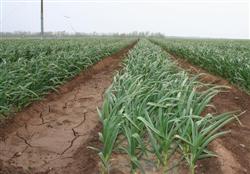
How do you fertilize garlic when growing it? Here is an introduction.
When growing garlic, you can refer to the following methods for fertilizing:
Base fertilizer. The base fertilizer should be mainly organic fertilizer. Organic fertilizer usually refers to barnyard manure, chicken manure, duck manure, stable manure, compost, cake fertilizer, etc. Whether the base fertilizer is applied in sufficient quantity directly affects the marketability of the garlic bulbs and the overwintering performance of the plants, so sufficient base fertilizer should be applied in production.
The application rate of the base fertilizer should be determined by comprehensively considering various factors such as the target yield of garlic and the fertilizer requirement per unit area for that yield. Apply 2500-3000 kg of pigpen manure, or 4500-5000 kg of stable manure. Where conditions permit, 50-100 kg of cake fertilizer such as cottonseed cake can be applied. Green manure crops such as alfalfa can also be turned under, or fresh grass composted, for use as base fertilizer. The chemical fertilizers usually applied together with organic fertilizer as base fertilizer include superphosphate, nitrogen-phosphorus compound fertilizer, nitrogen-potassium compound fertilizer, or ternary compound fertilizer, etc. Apply about 75 kg of standard nitrogen fertilizer per 667 sq m. Two-thirds of the nitrogen fertilizer should be applied as base fertilizer and one-third as topdressing. The vast majority of phosphorus and potassium fertilizers should be applied as base fertilizer. For phosphorus fertilizer, use about 30 kg of superphosphate. When phosphorus fertilizer is applied as base fertilizer, whether it is superphosphate or calcium-magnesium phosphate, it must be mixed with organic fertilizer and turned into the plow layer with shallow tillage. As for the amount of potassium fertilizer, generally apply about 30 kg of potassium sulfate per 667 sq m.
As for the method of applying the base fertilizer, generally half of the organic fertilizer is applied before plowing, spread evenly on the soil surface, and turned underground with plowing; the other half is applied in concentrated furrows at sowing time, mixed with soil, and then the seed is sown. If ammonium bicarbonate or organic fertilizer is used as the base fertilizer, it should be buried in furrows or applied with irrigation water, and after application it should be mixed evenly with the soil during land preparation. Phosphorus fertilizer is best applied shallowly, in a concentrated way, or in layers. One portion can be applied before plowing, and the other portion after plowing when planting garlic, or after land preparation it can be applied shallowly at a depth of 6-10 cm underground, so as to facilitate absorption and utilization by the seedlings, cultivate strong seedlings, and increase the seasonal utilization rate of phosphorus fertilizer. Potassium fertilizer can be spread while plowing and turned underground.
② Topdressing. During each growth period from the garlic seedling stage to before the bulbs are harvested, fertilizer is applied in stages according to the characteristics of its growth and development and its fertilizer requirements and uptake; this is topdressing. Topdressing for garlic is generally mainly nitrogen fertilizer, and when needed, nitrogen, phosphorus, and potassium fertilizers and various elements should be applied in combination, which is beneficial to the normal growth and development of garlic, helps promote the absorption and utilization of nutrients, and improves quality. Nitrogen fertilizer has a significant yield-increasing effect on garlic. When topdressing with nitrogen fertilizer, attention should be paid to possible adverse effects. In addition, according to experiments, the effect of nitrogen topdressing is closely related to the size of the seed garlic cloves; the smaller the seed garlic cloves, the greater the yield increase from nitrogen application. Therefore, when small cloves are used as seed garlic, the amount of nitrogen fertilizer applied should be appropriately increased.
Topdressing with phosphorus and potassium fertilizers can improve the balanced absorption and utilization of nitrogen fertilizer, promote the growth and development of garlic, and increase the yield of garlic scapes and bulbs. In the later stage of garlic, it is not only necessary to topdress with nitrogen fertilizer, but also with phosphorus and potassium fertilizers; nitrogen, phosphorus, and potassium fertilizers should be applied in a ratio of 2:1:1, or a compound fertilizer should be applied. This is beneficial for preventing premature aging of the leaves in the later stage of garlic and promoting the transport of leaf nutrients to the bulbs, and can significantly increase the yield of garlic scapes and bulbs.
The topdressing periods can generally be divided into topdressing before overwintering, topdressing at the green-returning stage, topdressing during the garlic scape elongation stage, and topdressing during the bulb growth stage.
Topdressing before overwintering: Topdressing before overwintering mainly promotes normal germination and emergence of garlic and cultivates strong seedlings. The appearance of strong seedlings before winter is: 5 leaves, plant height about 25 cm, fresh weight per plant about 10 g, and a uniform root system with about 30 roots. After sowing, autumn-sown garlic generally has complete emergence in 7-9 days. To improve the safe overwintering performance of garlic, apply seedling-promoting fertilizer. Seedling-promoting fertilizer generally accounts for about 25% of the total topdressing amount. For varieties prone to outer-layer cross growth, seedling-promoting fertilizer should be applied sparingly or not at all. When garlic enters the overwintering period, overwintering fertilizer, that is, winter manure, can be applied. Winter manure is commonly applied as a cover using compost, soil-and-miscellaneous manure, or horse manure, etc., to thicken the protective layer for the root system during overwintering, improve the overwintering performance of the seedlings, and ensure safe overwintering. At the same time, it also helps the next year's early green returning and rapid growth.
Topdressing at the green-returning stage: When the average daily temperature in spring reaches 7°C, garlic seedlings begin to return green and grow. At this time, the covering should be removed promptly, and the seedlings should be exposed to the sun for 2-3 days. Around the Spring Equinox, before the plants start to grow vigorously, apply 1 round of green-returning fertilizer. Generally, apply 1000-1500 kg of organic fertilizer per 667 sq m, or 10-15 kg of standard nitrogen chemical fertilizer. For those that have already been given seedling-promoting fertilizer and overwintering fertilizer, topdressing may be omitted at the green-returning stage, or the green-returning fertilizer may be postponed and applied together with the scape-promoting fertilizer.
Topdressing during the garlic scape elongation stage: Topdressing during the garlic scape elongation stage refers to topdressing from the beginning of clove differentiation to before scape removal. This period is when garlic scapes and bulbs grow simultaneously. In Shandong, this is generally late March to early April, that is, before Qingming, when garlic enters the stage of scape and clove differentiation, and May 20, that is, around Xiaoman, when it enters the scape-emerging stage. During this period, the elongation of the garlic scape and the early growth of the bulb overlap, and the plant is in a vigorous growth period. At this time, all leaves have grown out, the aboveground growth of the plant has reached its maximum, the yield of the underground bulbs has already formed nearly 50%, the root system is actively expanding laterally, and growth and absorption gradually reach a peak, so the topdressing amount should account for about 40% of the total topdressing amount. Increase the application of compound fertilizer and potassium fertilizer to promote scape emergence and bulb expansion in garlic.
Topdressing during the bulb growth stage: Before the garlic scapes are harvested, bulb growth is mainly an increase in volume; after the garlic scapes are harvested, bulb growth is mainly an increase in weight, with an average daily weight gain of about 1 g and a daily diameter increase of about 0.06 cm. During the bulb growth stage, quick-acting nitrogen fertilizer should be the main type, combined with phosphorus and potassium fertilizers. The amount of this topdressing should account for 25%-30% of the total topdressing amount.
The methods of topdressing garlic generally use band application, application with irrigation water, or buried application. When applying soil-and-miscellaneous manure, furrows can be opened along the rows and the fertilizer scattered in strips; when applying chemical fertilizer, furrow application or hole application is generally used, followed by covering with soil and watering, or application with irrigation water, or broadcasting during rain. Attention should be paid to strengthening intertillage and weeding, keeping the soil loose and preserving soil moisture, so as to speed up the root system's absorption and utilization of nutrients.
③ Foliar fertilization. Foliar fertilization allows nutrients to enter the plant body from the leaves and directly participate in the plant's metabolic processes and the synthesis of organic matter. Its effect responds more quickly than soil fertilization, and it is an economical and reasonable fertilization technique. Research has shown that after applying Suanzhuangsu to garlic, the enzyme activity in the roots, stems, and leaves of garlic seedlings can increase by 15%-31%, and the yield can increase by 12%-14%. To spray Suanzhuangsu on the leaves, dilute it with clean water; use about 125-150 g of the stock solution per 667 sq m each time, adding 50 L of water. The spraying periods can be once each during the garlic growth period (March), the garlic scape differentiation stage, the bulb growth stage, and 2-3 days after harvesting the garlic scapes. When spraying, both the front and back of the leaves should be covered. It is best to spray after 4 p.m., and the weather should be clear when spraying. If it rains within 24 h after spraying, it should be sprayed again.
Garlic should be fertilized in combination with watering, and intertillage, ridge trimming (bed ridges), and weeding should be carried out in a timely manner. After the seedlings have emerged completely, shallow hoeing and weeding should be done at the 2-3 leaf stage to loosen the soil and preserve moisture. At the 4-5 leaf stage, hoe deeply about 15 cm; after green returning the next year, hoe shallowly, and every 4 rows of garlic, trim one bed ridge, so as to facilitate topdressing and irrigation.
Click to get more garlic cultivation techniques
Click to get more vegetable cultivation techniques