Buckwheat Cultivation Techniques and Field Management Key Points
Buckwheat (also called wumai, huamai or triangular wheat) has a very short growing period, generally only 70-80 days, and is highly adaptable, making it an ideal replanting crop after a disaster. Its main cultivation technique key points: Land preparation Buckwheat is not strict about soil conditions, and can be planted in sandy loam, light loam, acidic soil, slightly alkaline soil and newly reclaimed...
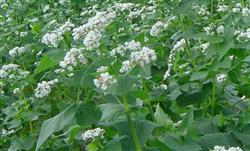
Buckwheat (also called wumai, huamai or triangular wheat) has a very short growing period, generally only 70-80 days, and is highly adaptable, making it an ideal replanting crop after a disaster. Its main cultivation technique key points:
Land preparation Buckwheat is not strict about soil conditions, and can be planted in sandy loam, light loam, acidic soil, slightly alkaline soil and newly reclaimed land. Before sowing, deep plowing and fine harrowing are required to make the soil loose.
Fertilization Buckwheat is a crop with relatively high fertilizer requirements. For every 100 kg of buckwheat produced, it needs to absorb 3.3 kg of nitrogen, 1.5 kg of phosphorus pentoxide, and 4.3 kg of potassium oxide. According to other research, the buckwheat root system has a strong ability to absorb phosphorus and potassium fertilizers, and has a special ability to utilize phosphorus fertilizers that are difficult to dissolve; applying phosphorus and potassium fertilizers can significantly increase buckwheat yield; nitrogen fertilizer should not be applied too much, otherwise it is prone to lodging. The base fertilizer is mainly farmyard manure, phosphate fertilizer and plant ash, with appropriate topdressing during the growing period.
Sowing Before sowing, select large and plump seeds and sun-dry the seeds to promote after-ripening and improve germination vigor and germination rate. The sowing rate is 2-4 kg per mu, and the sowing period can continue to mid-to-late July. Sowing methods include broadcasting, dibbling and drilling, with drilling being the best, with a row spacing of 35-50 cm and a sowing depth of 3-4 cm; when the soil is dry, it can be deepened to 5-6 cm.
Management After sowing, press the soil according to soil moisture conditions; after emergence, hoe the ground to eliminate weeds and prevent water evaporation; before flowering, combine hilling and topdressing to carry out the second intertillage.
Harvest Buckwheat has a very long flowering period, the seeds mature very unevenly, and the grains are easy to shatter, so timely harvesting is very important; generally, when 2/3 of the fruits on most plants turn brown, this is the suitable harvest period. The harvest time is best chosen in the morning when the dew has not yet dried, and care should be taken to cut and place gently to reduce grain shattering losses. If frost damage or windy weather occurs before harvest, harvesting should be rushed.
Click to get more buckwheat cultivation techniques
Click to get more grain crop cultivation techniques