Detailed Explanation of Summer Corn Planting Methods and Technical Key Points
How is summer corn planted? Please give a detailed introduction. To plant summer corn, you can refer to the following methods: 1. Seize the farming season and sow early at the right time. "Spring competes for the day, summer competes for the hour." Summer corn sowing must emphasize seizing the time and sowing early. Timely early sowing can increase the effective accumulated temperature, extend the effective growth period of corn, and make full use of...
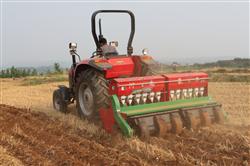
How is summer corn planted? Please give a detailed introduction.
To plant summer corn, you can refer to the following methods:
1. Seize the farming season and sow early at the right time.
"Spring competes for the day, summer competes for the hour." Summer corn sowing must emphasize seizing the time and sowing early. Timely early sowing can increase the effective accumulated temperature, extend the effective growth period of corn, make full use of fertilizer, water, light and heat resources, avoid "bud waterlogging" and the effects of low temperatures later on, achieve full maturity and reduce grain moisture. The sowing time is generally early to mid-June. After the previous crop of wheat is harvested mechanically, no-till sowing into standing stubble is carried out. In areas with complete agricultural machinery support, strive to complete summer corn sowing on the same day the wheat is harvested, achieving "zero farming delay."
2. Do a good job in sowing quality to ensure uniform seedlings and strong seedlings.
1. Seed treatment. Purchase seeds that have already been coated. If the seeds have not yet been coated, use a seed coating agent for coating treatment before sowing.
2. Mechanical sowing into standing stubble. Flat sowing is conducive to mechanical operations and increasing the number of corn ears per mu. In flat-sown fields, vigorously promote the technology of mechanical wheat harvest with straw return and no-till mechanical corn sowing into standing stubble.
3. Ensure soil moisture. Before wheat harvest, irrigate sufficiently with "wheat yellowing water" to ensure moisture-competition sowing after wheat harvest. If soil moisture is insufficient at sowing, in areas with conditions, promptly use sprinkler irrigation to apply "head-covering water" after sowing.
4. Appropriately increase the sowing rate. To ensure a reasonable density, the sowing rate is generally 3 kg per mu, with a minimum of no less than 2 kg, to ensure enough seedlings emerge.
5. Suitable sowing depth. Generally, for fields with good soil moisture, a sowing depth of 4-5 cm is appropriate; for clay or overly wet soil, shallow sowing at 3-4 cm is appropriate; when subsoil moisture is insufficient, especially in sandy soil, sandy loam and wheat field intercropping plots, the sowing depth should be increased to 6-7 cm. Sowing depth should be consistent and the population uniform.
6. Scientific fertilization. According to soil testing and formula fertilization, implement balanced fertilization. Summer-sown corn can use the residual effects of organic fertilizer and phosphate fertilizer applied to winter wheat, so it is not necessary to apply organic fertilizer and phosphate fertilizer. Apply 10-15 kg of pure N and 8-10 kg of K2O per mu. In zinc-deficient plots, apply 1-1.5 kg of ZnSO4 per mu. All potassium fertilizer should be applied as base fertilizer; 1/3 of nitrogen fertilizer as base application and 2/3 as topdressing. When using corn-specific long-acting controlled-release fertilizer, it can be applied once as base fertilizer at sowing. Base fertilizer and seed fertilizer applied at sowing should be separated from the seed and must not be too close to the seed to prevent fertilizer "seedling burn."
7. Prevention and control of diseases, insects and weeds. In areas with severe underground pests, use granular insecticides such as phoxim to spread poisoned soil or poisoned bait for control. To control weeds after sowing and before emergence, soil-treatment herbicide varieties such as atrazine and acetochlor can be selected; for weed control at the seedling stage, post-emergence stem and leaf treatment herbicide varieties can be selected.
3. Strengthen field management.
1. Reasonable close planting and appropriately increased density. Check seedlings and replant missing ones in time, and promptly reseed or transplant with soil for areas with severe missing seedlings or broken rows. Thin and finalize seedlings at the 3-5 leaf stage to ensure a reasonable seedling density of about 4,000 plants per mu. Some tall-stalk, large-ear varieties that are not suitable for close planting are generally 3,000-3,500 plants/mu, while density-tolerant varieties can be further increased to 4,500 plants or even 5,000 plants. In mid-season management, promptly remove small plants, weak plants, tillers and empty stalks to reduce wasted nutrients.
2. Intertillage and topdressing. From jointing to the small trumpet stage (6-leaf stage to 10-leaf stage), fertilize in combination with intertillage. Through intertillage, kill wheat stubble, loosen soil and control weeds. Topdressing should mainly be N fertilizer. Do not broadcast on the soil surface; instead, concentrate it in holes or bands near the roots and then cover deeply with soil, and prevent seedling burn and improve fertilizer use efficiency.
3. Timely drainage and irrigation. Throughout the entire growth period of corn, the seedling stage is drought-tolerant and afraid of waterlogging. In case of heavy rain and accumulated water, drain water promptly to prevent bud waterlogging and seedling waterlogging; from booting to grain filling, the demand for water is large and it is relatively tolerant of waterlogging. When drought occurs, irrigate promptly, which can greatly increase corn yield.
4. Prevent lodging. On the basis of selecting density-tolerant and lodging-resistant varieties, take measures such as reasonable close planting, fertilization, seedling hardening, intertillage and hilling, and removal of small, weak and empty plants to prevent lodging. In plots with excessive density and serious lodging risk, plant growth regulators can be sprayed in advance for prevention. For example, spray 200-fold dilution of 50% chlormequat aqueous solution before booting.
5. Disease and insect pest control. The main diseases in summer corn areas include leaf spot disease, stalk rot (bacterial wilt) disease and dwarf mosaic disease. The main insect pests include corn borer, armyworm, cotton bollworm, aphids, underground pests and thrips. Based on local disease and insect pest forecasts, adopt preventive and control measures.
4. Harvest at the appropriate time.
At present, a common problem in various places is premature harvest, resulting in relatively high moisture content (>40%), low bulk density, many moldy and broken kernels, poor commercial quality, and impacts on yield, quality and price. Through rational variety layout, timely early sowing, and early promotion and early management, summer-sown corn should reach full maturity and then be harvested at the appropriate time to improve yield and quality.
Click to get more corn planting techniques
Click to get more food crop planting techniques