How can large-scale summer corn planting be made to increase yields?
How can large-scale summer corn planting be made to increase yields? Please explain the methods. To achieve a high yield when growing corn, you need to start with the following points: (1) Select good varieties according to local conditions. According to the planting purpose and production area, choose approved varieties, dominant varieties released by the government, and excellent varieties selected from local official demonstrations; ...
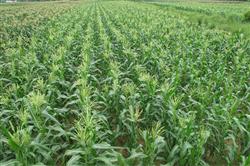
How can large-scale summer corn planting be made to increase yields? Please explain the methods
To achieve a high yield when growing corn, you need to start with the following pointsstartwith:
(1) Select good varieties according to local conditions. According to the planting purpose and production area, choose approved varieties, dominant varieties released by the government, and excellent varieties selected from local official demonstrations; guide farmers to choose suitable varieties according to their own soil fertility levels and avoid blindness. At present, varieties with high quality, high yield and strong stress resistance in the Huang-Huai-Hai region include Zhengdan 958, Nongda 108, Ludan 981, Jinhai No. 5, etc.
(2) Improve seed quality. Seed management departments must strictly enforce the law to ensure that the purity of seeds used in production is >=98%, the germination rate is >=85%, the cleanliness is >=98%, and the moisture content is <=13%.
(3) Change the planting method, changing interplanting to summer direct-seeded corn, in order to improve sowing quality, avoid corn viral diseases and adverse weather conditions such as high temperature, excessive rain and insufficient sunlight during the flowering period, and increase the seed-setting rate.
(4) Reasonable close planting and improved sowing quality. Determine the suitable planting density according to variety characteristics. Improve wheat harvesting and corn sowing machinery, leave as little stubble as possible during wheat harvest, and crush the wheat straw. Generally, for plots with good soil moisture, a sowing depth of 4-5 cm is suitable; for clay or overly wet soil, 3-4 cm is suitable.
(5) Scientific fertilization. Determine the suitable fertilization amount according to the soil fertility level. Achieve balanced fertilization of nitrogen, phosphorus, potassium and various micronutrients; apply seed fertilizer, mid-season topdressing and flowering-grain stage topdressing in separate applications to avoid fertilizer shortage in the later stage. Phosphorus and potassium fertilizers should be applied earlier at the sowing stage. New types of fertilizers such as slow-release fertilizers can also be applied once as base fertilizer.
(6) Make timely forecasts and predictions for diseases, insect pests and weeds, and guide farmers to take preventive measures and implement scientific prevention and control. Guide farmers to use efficient, low-toxicity, ecological and safe seed dressings, herbicides and insecticides. Where conditions are suitable, black light lamps or biological control methods can also be used. According to the principle of "prevention first, comprehensive control", give priority to agricultural control, biological control and physical control, and use chemical control rationally.
(7) Harvest at full maturity. Make full use of the light and temperature resources in the later stage of corn growth, and harvest only when the corn kernel milk line disappears, the black layer appears, and the husk leaves dry up.
(8) Straw return to the field. In the face of the prominent problems of insufficient organic fertilizer input in farmland and deterioration of soil physical and chemical properties, implementing straw return or return after passing through livestock is an effective way to improve soil structure, increase resource utilization efficiency and reduce environmental pollution.
Click to get more corn planting techniques
Click to get more food crop planting techniques