Can mulberry branches be used to cultivate reishi mushroom?
Can mulberry branches be used to cultivate reishi mushroom? What should be noted? The differences between mulberry branch cultivation technology for reishi mushroom and general reishi mushroom cultivation methods are mainly shown in: reishi mushroom strains, substrate formula and cultivation period, cultivation mode, and other aspects. 1. Screening of reishi mushroom strains Through introducing from Guangdong, Fujian...
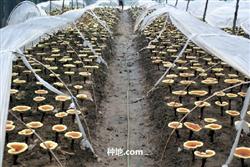
Can mulberry branches be used to cultivate reishi mushroom? What should be noted?
The differences between mulberry branch cultivation technology for reishi mushroom and general reishi mushroom cultivation methods are mainly shown in: reishi mushroom strains, substrate formula and cultivation period, cultivation mode, and other aspects.
1. Screening of reishi mushroom strains
By introducing 23 leading reishi mushroom strains from Guangdong, Fujian, Shandong, Hunan and other places, and conducting multiple screenings using mulberry branches as substrate, 7 strains with relatively good performance were initially selected; then after large-scale pilot screening, "Youxuan No. 6" and other reishi mushroom strains suitable for mulberry branch cultivation with relatively low contamination rates and high economic traits were finally selected for application in mulberry branch cultivation of reishi mushroom.
2. The best substrate formula
There are two cultivation methods for mulberry branch reishi mushroom: the bundled short log cultivation method using mulberry branches, and the bagged substrate cultivation method using mulberry branch sawdust. Bagged substrate cultivation using mulberry branch sawdust requires mixing materials according to the substrate formula. After multiple experiments and large-scale pilot verification, in the bagged substrate cultivation method, using a substrate formula of 78-83% mulberry branch sawdust, 15%-20% wheat bran, 1% white sugar, 1% gypsum, and 60% water content gave the highest reishi mushroom yield and a low contamination rate.
3. Timely cultivation of reishi mushroom
In the Guangdong area, reishi mushroom cultivation bags are made around the winter solstice when mulberry branches are pruned, cultivated from late February to early March, and harvested from April to May. Around the winter solstice is the period for pruning mulberry branches, when a large number of mulberry branches are available, and it is also the idle period in silkworm rearing, matching the seasonal arrangement of sericulture production; the temperature and humidity conditions from March to May meet the growth requirements of reishi mushroom, making it a good period for obtaining high yields of reishi mushroom (this is the best cultivation season explored through many years of production practice).
4. Suitable reishi mushroom cultivation modes
Many years of production trials have proved that using the fresh mulberry branch sawdust bagged substrate cultivation method, or using the bundled short log cultivation method with mulberry branches and simulated wild cultivation, are important measures for obtaining high yields in mulberry branch cultivation of reishi mushroom. In particular, the bundled mulberry branch mode, because it does not require crushing the mulberry branches, saves labor and cost, and the cultivated reishi mushrooms are large and thick with perfect shape, making it a relatively ideal cultivation mode.
Bagged substrate cultivation method with fresh mulberry branch sawdust: after pruning mulberry branches, directly crush the fresh mulberry branches into sawdust, mix the substrate, and bag it. Bundled short log cultivation method with mulberry branches: after pruning mulberry branches, air-dry them naturally for 15 days, then cut them into 10-15 cm small sections and bag them; simulated wild cultivation: after making the reishi mushroom cultivation bags, place them indoors for mycelial growth; after the mycelium fills the bags and reaches physiological maturity, remove the bags and bury them in soil under an outdoor shade shed to produce mushrooms.
Click to view more reishi mushroom cultivation techniques
Click to view more medicinal herb cultivation techniques