Detailed Explanation of Spring Seed Propagation Methods for Japanese Honeysuckle
Harvest black fruits in January. After harvesting, pile them at a thickness of 30 cm and let them undergo after-ripening for 5-7 days, then put them in clean water and rub and wash away the fruit skin and flesh, and dry them in a shaded place. Avoid direct sunlight, then winnow away the shriveled seeds and store them for later use. Seed treatment: before sowing, soak the seeds in warm water at 35-40°C for 24 hours, take them out and mix with...
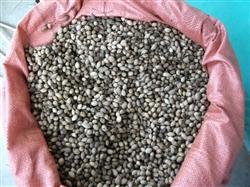
Harvest black fruits in January. After harvesting, pile them at a thickness of 30 cm and let them undergo after-ripening for 5-7 days, then put them in clean water and rub and wash away the fruit skin and flesh, and dry them in a shaded place. Avoid direct sunlight, then winnow away the shriveled seeds and store them for later use.
Seed treatment: before sowing, soak the seeds in warm water at 35-40°C for 24 hours, take them out and mix with 2-3 times their volume of wet sand, cover with plastic (11385,-75.00,-0.65%) film, and place in a warm place to promote germination. When the seed cracking rate reaches 50%, they can be sown.
Sowing time: spring sowing can be done in early March.
Seedbed preparation before sowing: drought-resistant plowing of the seedbed, generally plow 50 cm deep, apply sufficient base fertilizer, apply 6000-7500 kg of base fertilizer per 667 sq m, 40-50 kg of ammonium bicarbonate, harrow fine and level, and remove residual weeds. To prevent underground pests, 1.5-2 kg of jia di fen can be broadcast per 667 sq m, or 0.15-0.25 kg of phoxim emulsion. An appropriate amount of zinc sulfate or ferrous sulfate can be applied to prevent seedling-stage diseases. Beds can be made 1 m wide, 20 cm high, and 10-15 m long.
Sowing: use full-bed broadcasting, with a seeding rate of 1.0-1.2 kg per 667 sq m. First level the bed surface, water thoroughly, and after the water infiltrates, add another 1 part sand to the soaked or stored sand seeds, evenly broadcast into the bed, cover with fine sandy soil 0.5-0.7 cm, then cover with straw curtains or plastic film.
Management after sowing: water management after sowing is very important and directly affects the emergence rate. Because Japanese honeysuckle seeds are very small, before the seedlings emerge, strictly prevent the soil from crusting and cracking. Check daily; for beds covered with straw curtains, spray water once with a watering can in the morning or evening; for beds covered with film, spot-spray, that is, spray water on dry patches. When about 30% of the seedlings have emerged, remove the covering, and after the seedlings are fully emerged, water frequently to keep the bed surface moist. During the seedling growth period, frequently weed, loosen the soil, and water. Depending on seedling condition, topdress nitrogen fertilizer, 7-10 kg per 667 sq m.
When the seedlings are 15-20 cm tall, pinch off the growing tips to promote new branches, and repeat this 2-3 times continuously. By July, each plant can have 4-8 branches, and in autumn they can be lifted from the nursery for planting.
Click to get more Japanese honeysuckle cultivation techniques
Click to get more medicinal herb cultivation techniques