How to Top-Dress Summer Corn: Methods and Precautions Explained
How to top-dress summer corn? Here is an introduction to the methods. Summer corn is mostly grown with no-till methods, and base fertilizer is generally not applied much; for intercropped summer corn, seed fertilizer is also rarely applied. Therefore, the nutrients needed for the growth and development of summer corn are mainly met through top-dressing, so top-dressing plays a key role in achieving high yields of summer corn. When top-dressing, you should...
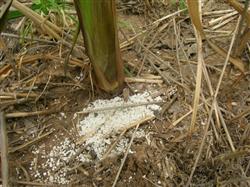
How to top-dress summer corn? Here is an introduction to the methods
Summer corn is mostly grown with no-till methods, and base fertilizer is generally not applied much; for intercropped summer corn, seed fertilizer is also rarely applied. Therefore, the nutrients needed for the growth and development of summer corn are mainly met through top-dressing, so top-dressing plays a key role in achieving high yields of summer corn. When top-dressing, you should focus on the following fertilization periods to achieve high-quality, high-yield corn and improve economic returns.
Seedling fertilizer. Seedling fertilizer is a fertilizer applied after corn thinning is completed. Seedling fertilizer should be applied early (when there are 3-4 leaves) and unevenly (more for small and weak seedlings). After the 3rd leaf of corn unfolds, the nutrients in the seed endosperm are nearly exhausted, and the root system begins to absorb nutrients from the soil. At this time, the vegetative organs of corn are already growing vigorously. If the soil lacks nutrients at this stage, it will seriously affect the growth and development of corn. Timely top-dressing helps form strong seedlings and lays the foundation for high yield. The amount of seedling fertilizer applied can account for about 40% of the total top-dressing amount. If seed fertilizer was applied at sowing, the amount of seedling fertilizer can be appropriately reduced and the application time delayed. Generally, apply 500-750 kg of decomposed organic fertilizer and 3-4 kg of urea per mu, or 7.5-10 kg of ammonium bicarbonate. Corn is sensitive to zinc, and zinc deficiency has a great impact on yield. For fields lacking zinc, in combination with seedling fertilizer, applying 1-1.5 kg of zinc sulfate per mu is appropriate.
Jointing fertilizer. Jointing fertilizer must not only meet the needs of extensive growth of roots, stems, and leaves, but also ensure the nutrient supply for the development of reproductive organs, so that vegetative growth and reproductive growth proceed in a coordinated manner. Therefore, jointing fertilizer is usually applied in holes around the jointing stage when corn has 7-9 leaves. For fertile soil and strong seedlings, apply later and less; for poor soil and weak seedlings, apply earlier and more heavily. Apply 15-20 kg of ammonium bicarbonate and 600-750 kg of human and livestock manure per mu. This helps the root system develop robustly, produces strong stalks and more ears, larger ears with more grains, and can prevent empty stalks and lodging.
Ear-setting fertilizer. When corn reaches the large trumpet stage, it is already at the stage of vigorous development of female and male floral organs, a critical period that determines ear size, grain number, and pollen viability. If fertilizer is lacking, it often leads to bald tips, increased shriveled grains, and a serious decline in yield, so ear-setting fertilizer cannot be ignored. Generally, apply 500-600 kg of human and livestock manure per mu, together with 7.5-10 kg of urea, applied in holes and then covered with soil, or 35-40 kg of 45% compound fertilizer for better results. The specific fertilization time should be controlled 10-15 days before corn tasseling, when the tassel can be felt by hand. For weak seedlings, it can be appropriately earlier; for vigorous seedlings, slightly later. Ear fertilizer generally accounts for about 40% of the fertilization amount.
Supplementary grain fertilizer. Grain fertilizer should be applied according to the growth of corn. If ear-setting fertilizer is insufficient, there are many yellow leaves below the ear node, and signs of nutrient deficiency appear, grain fertilizer should be applied; conversely, it should not be applied to vigorous-growing corn. Grain fertilizer is generally applied when the corn ear is silking, using 2-3 kg of urea per mu, diluted with water and splashed on. It can also be applied when the corn silks turn red after pollination, using 25-30 kg of ammonium bicarbonate per mu as top-dressing, which can promote grain filling and increase grain weight. Grain fertilizer generally accounts for about 20% of the fertilization amount.
Clever use of foliar fertilizer. Spraying 0.2%-0.3% monopotassium phosphate 2-3 times during the corn jointing stage can increase corn yield by about 10%. Spraying 0.1%-0.3% zinc sulfate aqueous solution at the seedling stage and jointing stage can prevent the occurrence of corn white seedling and mosaic disease.
For top-dressing summer corn with nitrogen fertilizer, the application depth should be about 10 cm, and soil should be covered after application to prevent volatilization. Seedling fertilizer should be 10-12 cm from the plant, and ear fertilizer and grain fertilizer should be 15-20 cm from the plant.
Click to get more corn planting techniques
Click to get more food crop planting techniques