How to manage summer corn in the middle and late stages? These key points must be mastered
How to manage summer corn well in the middle and late stages of cultivation? Please introduce the management methods. For managing summer corn in the middle and late stages, you can refer to the following methods: 1. Skillfully use water and fertilizer, promote throughout. Summer corn has a short growth period and a relatively concentrated demand for water and fertilizer, so it should be promoted throughout. 1. Irrigate the jointing water early and apply the jointing fertilizer early. Summer corn...
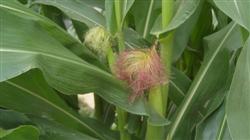
How to manage summer corn well in the middle and late stages of cultivation? Please introduce the management methods
For managing summer corn in the middle and late stages of cultivation, you can refer to the following methods:
I. Skillfully use water and fertilizer, promote throughout. Summer corn has a short growth period and a relatively concentrated demand for water and fertilizer, so it should be promoted throughout.
1. Irrigate the jointing water early and apply the jointing fertilizer early. During the jointing stage of summer corn, its growth is characterized mainly by vegetative growth, with leaves and stems growing above ground and roots spreading below ground, and it has a large demand for nutrients with a tight fertilization window. Therefore, before corn jointing, it is necessary to promptly break the stubble, irrigate, fertilize, and promote early seedling growth. Generally, for fields with medium fertility, apply 1500-2500 kg of decomposed organic fertilizer per mu, and for chemical fertilizer, formula fertilization is preferable, applying 20 kg of urea, 40 kg of superphosphate, and 10 kg of potassium sulfate per mu. Fertilization methods should use hole application or band application; unscientific fertilization methods such as broadcast application, surface application, and application with irrigation water are prohibited.
2. Irrigate the tasseling water to full and irrigate the grain-filling water well. About half a month before tasseling is exactly the period of female ear floret differentiation. If drought occurs at this time, artificial full irrigation should be carried out to prevent "neck-stuck drought"; irrigation during the grain-filling stage is also very important. If soil moisture is poor and the weather is dry at this time, "flower scorching" is likely to occur and cause large yield reductions.
3. Apply sufficient booting fertilizer (at the 11-leaf stage) and apply grain-promoting fertilizer as appropriate. Booting fertilizer generally accounts for 10%-15% of the fertilization amount (10-12 kg/mu). This is exactly the period when vegetative growth and reproductive growth proceed together, so it is also a key topdressing period for corn. For some late-maturing varieties or plots with relatively sandy soil, if fertilizer deficiency occurs around tasseling, grain-promoting fertilizer can be topdressed. Grain-promoting fertilizer should not be too large in amount, and it should also be applied early.
II. Prevent lodging and yield reduction. Recently, due to relatively high rainfall and the fact that strong winds are common in summer, preventing corn lodging in the middle and late stages is especially important. Generally speaking, before irrigation, close attention should be paid to local weather forecasts. When violent storms are approaching, irrigation should be prohibited. After the rain passes and the wind stops, irrigation can be carried out. If lodging occurs, it should be promptly straightened.
III. Artificial detasseling and supplementary pollination. Combining detasseling with artificial pollination makes the yield-increasing effect more significant. Detasseling method: carry it out when the tassel has just emerged but has not yet flowered and shed pollen. Generally, remove the tassels of one row every other row or every two rows, or detassel every other plant. Detasseling should be carried out in fields with uniform growth, relatively high density, and relatively light pest damage.
IV. Timely prevention and control of pests and diseases. In recent years, pest and disease damage to summer corn in the middle and late stages has been relatively serious, especially for varieties such as Zhengdan 958 and Jundan 20, where aphid damage is very common. Therefore, preparations should be made early and forces organized promptly for control. Commonly used pesticides: spray control with 40% omethoate 1000-fold solution; spray control with 25% imidacloprid 4-8 g/mu. When spraying, it can be combined with one foliar fertilizer spray.
Click to get more corn planting techniques
Click to get more food crop planting techniques