How should seed fertilizer be applied reasonably when sowing summer corn?
How should seed fertilizer be applied when sowing summer corn? Please give an introduction. The main reasons why improper application of seed fertilizer when sowing corn causes bud burn and seedling burn: First, the amount of seed fertilizer applied is too large, causing the seeds or the root system during emergence to come into contact with chemical fertilizer, resulting in seed burn and seedling burn. Second, the seed fertilizer is mixed with the seeds during sowing, and although the amount of seed fertilizer applied is not too large, because the seeds and fertilizer are mixed together during sowing, the seeds and fertilizer come into direct contact, causing seed burn and seedling burn.
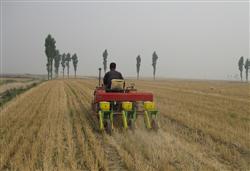
How should seed fertilizer be applied when sowing summer corn? Please give an introduction.
The main reasons why improper application of seed fertilizer when sowing corn causes bud burn and seedling burn:
First, the amount of seed fertilizer applied is too large, causing the seeds or the root system during emergence to come into contact with chemical fertilizer, resulting in seed burn and seedling burn.
Second, the seed fertilizer is mixed with the seeds during sowing, and although the amount of seed fertilizer applied is not too large, because the seeds and fertilizer are mixed together during sowing, the seeds and fertilizer come into direct contact, causing seed burn and seedling burn.
Third, pure nitrogen fertilizer is used as seed fertilizer. Some pure nitrogen fertilizers are highly volatile (such as ammonium bicarbonate), and some contain components that have a certain corrosive effect on seeds or young buds (such as biuret in urea), making them extremely likely to cause seedling burn. Fourth, a large amount of seed fertilizer is applied when sowing while taking advantage of soil moisture. Because the soil moisture is relatively good when sowing while taking advantage of soil moisture, after a large amount of seed fertilizer is applied to the soil, the fertilizer will quickly absorb moisture and form a dispersed high-concentration fertilizer film in the soil, causing damage to seeds or seedlings.
In order to prevent seed fertilizer from burning buds and seedlings, farmers are reminded to pay attention to several issues when applying seed fertilizer:
First, choose granular fertilizers such as nitrogen-phosphorus-potassium compound fertilizer and diammonium phosphate as seed fertilizer. This type of fertilizer has relatively strong flowability, is more suitable for application with a seeder, and the fertilizer is applied evenly.
Second, do not choose pure nitrogen fertilizers such as urea and ammonium bicarbonate as seed fertilizer.
Third, in order to avoid seedling burn and reduce waste, the amount of seed fertilizer applied must be controlled. Generally, applying 15-20 kg of nitrogen-phosphorus-potassium compound fertilizer per mu is appropriate. Especially when sowing while taking advantage of soil moisture, the amount of seed fertilizer applied must be strictly controlled. Fourth, seed fertilizer must be applied separately from the seeds, and it must be applied deeply. The lateral spacing between the seed fertilizer row and the seed row should be no less than 5 cm, and it is best to apply it below and to the side of the seed row.
Click to get more corn planting techniques
Click to get more food crop planting techniques